
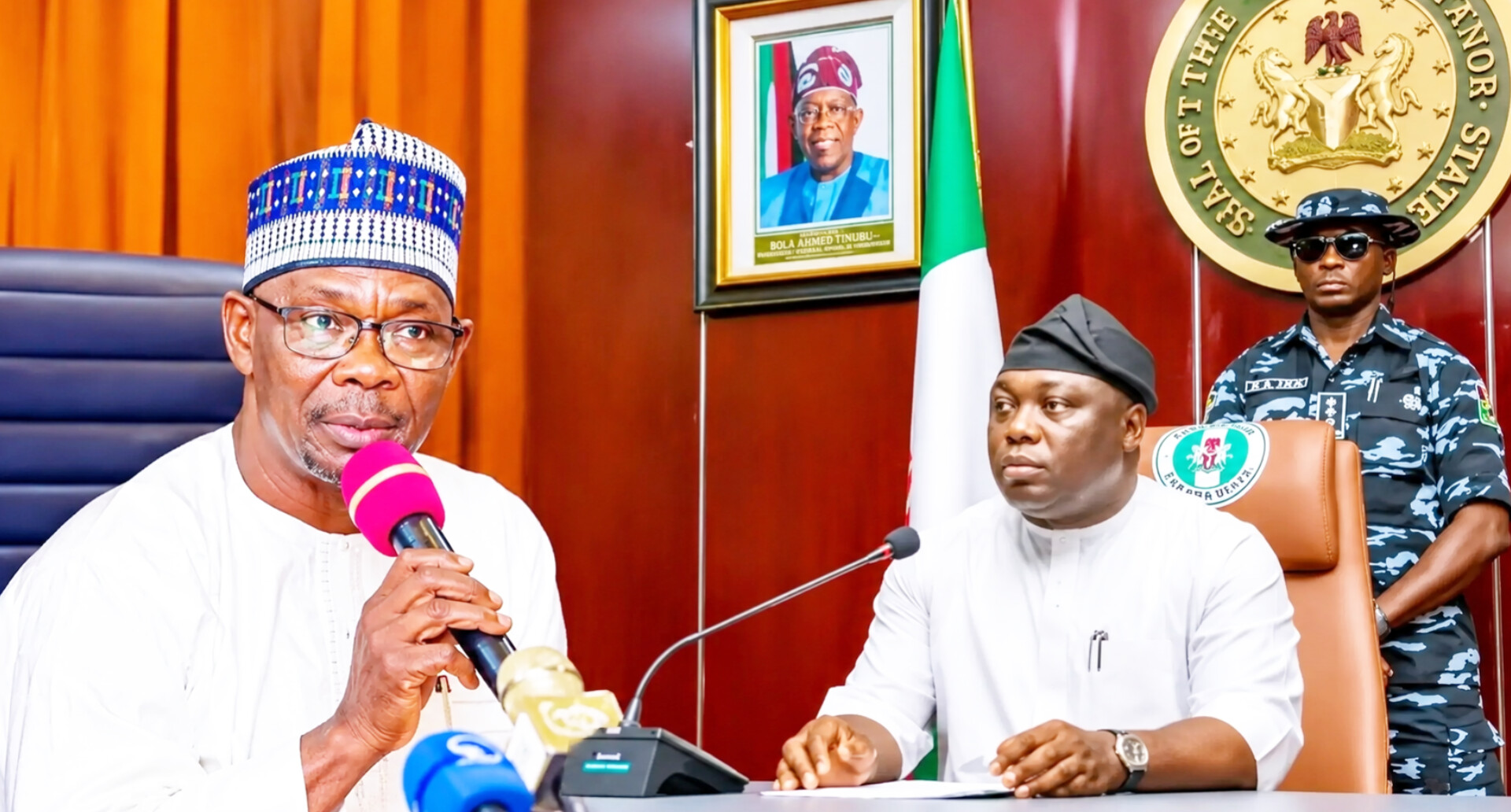
The recent remarks by Nasarawa State Governor, Abdullahi Sule, about the state’s increased federal revenue and how his administration is deploying the funds to infrastructure and development projects deserve attention beyond the boundaries of Nasarawa.
For neighbouring states, including Taraba, the development raises a broader question about public revenue, fiscal management and the extent to which increased government resources are being translated into tangible benefits for citizens.
Governor Sule said Nasarawa’s monthly federal allocation has increased to between ₦14 billion and ₦16 billion, compared with approximately ₦3.8 billion to ₦4.5 billion before 2023.
According to the governor, the increase in revenue has enabled his administration to undertake major development projects without resorting to bank borrowing. He reportedly put the value of projects completed or currently being executed at about ₦90 billion.
Among the projects he cited are the ₦16.7 billion Mararaba Dual Flyover, ₦11.4 billion Keffi Flyover, ₦7.1 billion Akwanga Township Dualisation and ₦6.6 billion Akwanga Underpass.
He also listed projects covering drainage, healthcare, agriculture and skills development as part of the state’s broader development programme.
While claims concerning public expenditure should ultimately be assessed against official financial and project records, the figures presented by the Nasarawa governor naturally invite a wider conversation about how states are managing increased revenue.
And that conversation leads to Taraba.
WHAT IS HAPPENING IN TARABA?
Taraba State, like other states across Nigeria, has benefited from changes in federal revenue following the Federal Government’s fiscal reforms.
With increased allocations and other sources of government revenue, citizens have a legitimate interest in understanding how public funds are being managed and what measurable impact those resources are having across the state.
The question, therefore, is not simply whether Taraba is receiving more money.
The more important question is how effectively those resources are being managed and what value the people of Taraba are receiving in return.
This should not be interpreted as an attack on Governor Agbu Kefas or the Taraba State Government.
It is also not an attack on Taraba State.
More importantly, it should not become another political battle between supporters and opponents of the administration.
It is fundamentally a question of accountability and transparency.
When governments receive public funds, citizens have a right to know how those funds are being spent and what outcomes are being achieved.
If Taraba’s finances are healthy, official figures should provide the evidence.
If the state’s debt position differs from figures or claims circulating in the public space, the government has an opportunity to clarify the situation by publishing accurate and verifiable financial information.
If major infrastructure projects represent value for money, details such as contract sums, contractors, project timelines, locations and levels of completion can help the public understand what is being achieved.
And if the Kefas administration has accomplished more than the public currently recognises, documented projects and measurable achievements should provide the strongest response.
THE NEED FOR TRANSPARENCY
The comparison with Nasarawa should not necessarily be interpreted as a demand for Taraba to replicate every project being undertaken by another state.
Every state has its own population, economic circumstances, infrastructure needs, inherited liabilities and development priorities.
However, the comparison raises an important principle: increased public revenue should ideally translate into improved public services and visible development.
For Taraba, this means that roads, healthcare facilities, schools, agriculture, water supply, employment initiatives and other government programmes should be assessed not merely by announcements or budgetary allocations, but by their actual impact on citizens.
Transparency can also strengthen public confidence.
Regular publication of revenue figures, expenditure details, debt obligations and project information would allow citizens, civil society organisations, journalists and other stakeholders to better assess the government’s performance.
The people of Taraba deserve to know what resources are available to the state, where those resources are going and what results are being achieved.
That is not an unreasonable demand.
It is part of responsible democratic governance.
Ultimately, the debate should move beyond political loyalty and partisan arguments.
The most convincing defence of any government is not the volume of political statements made on its behalf.
It is the evidence contained in official records, completed projects and measurable improvements in the lives of citizens.
Nasarawa’s reported increase in revenue and its ongoing infrastructure programme therefore present Taraba with an opportunity—not necessarily for political comparison, but for greater transparency.
The question is simple:
As government revenue increases, what is Taraba getting in return?
The answer should come from the figures, the projects and, most importantly, the people.
