
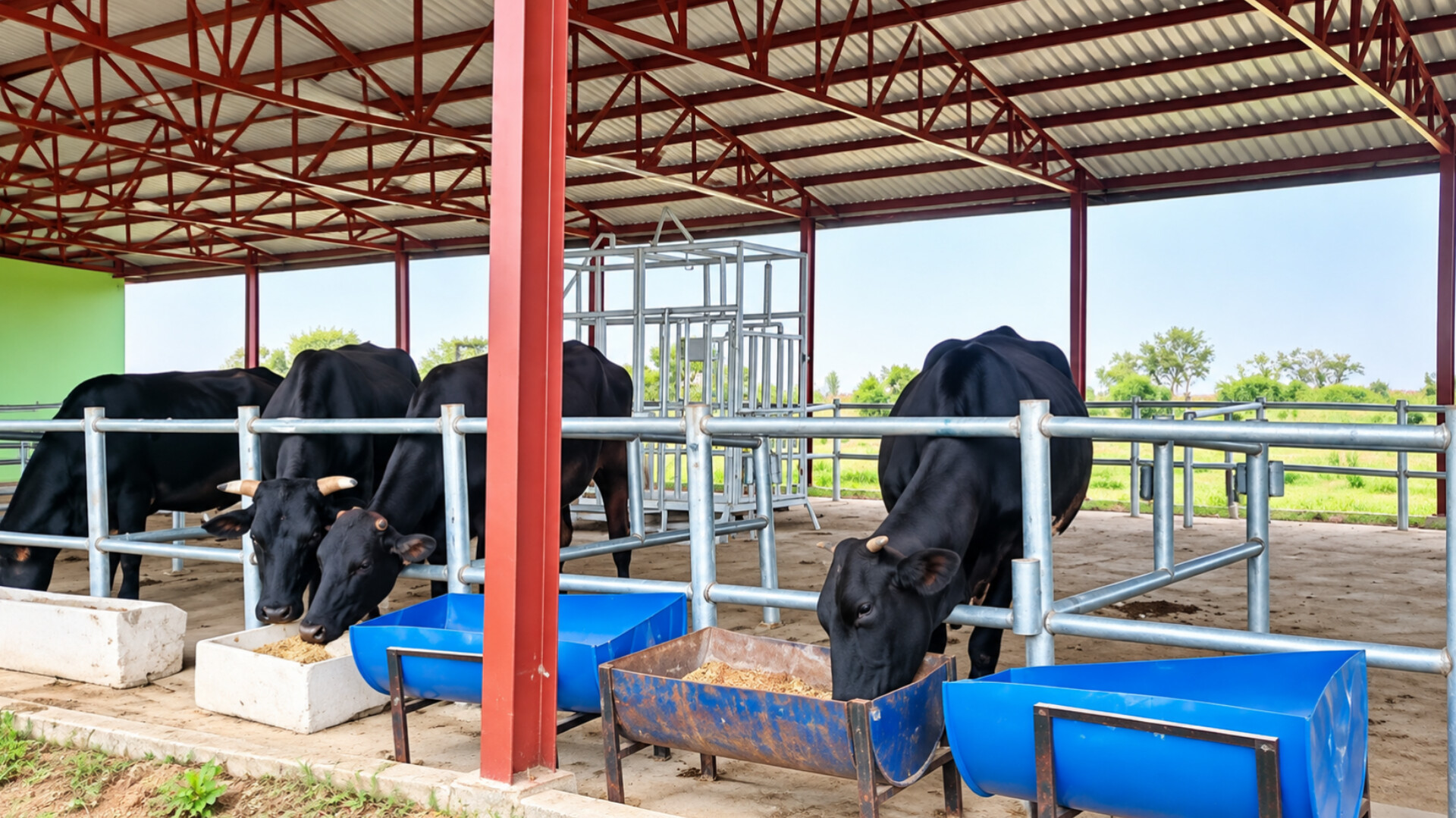
FG Opens Animal Quarantine Facility in Adamawa to Protect Livestock Trade
The Federal Government has commissioned an animal quarantine facility in Mubi, Adamawa State, in a fresh move to strengthen livestock disease surveillance, improve animal health and support safer movement of livestock across Nigeria’s borders.
The facility is expected to provide an important line of defence against the spread of animal diseases, particularly in a state where livestock production and cross-border trade contribute significantly to local livelihoods.
Adamawa shares an international boundary with Cameroon and has long been an important livestock-producing and trading area in North-East Nigeria.
That strategic position creates considerable economic opportunities for farmers and livestock traders, but it also makes effective disease surveillance particularly important.
Animals moving between communities, states and countries can potentially carry diseases over long distances if appropriate veterinary controls are absent.
The new quarantine facility is intended to strengthen that protection.
Government Targets Animal Diseases
Animal quarantine facilities play an important role in preventing the introduction and spread of infectious livestock diseases.
Rather than allowing animals to move freely without appropriate checks, quarantine systems enable veterinary officials to inspect, monitor and, where necessary, isolate animals suspected of carrying diseases.
This can protect both livestock populations and the people whose livelihoods depend on them.
The Mubi facility therefore has significance beyond the immediate community where it is located.
If properly equipped and maintained, it could support disease surveillance across livestock movement corridors connecting Adamawa with other parts of Nigeria and neighbouring countries.
For pastoralists and livestock traders, controlling disease outbreaks can also reduce potentially devastating economic losses.
A disease capable of spreading rapidly through cattle, sheep or goats can wipe out years of investment within a short period.
Prevention is consequently far less costly than responding after an outbreak has become widespread.
Mubi’s Strategic Location Matters
The decision to locate the facility in Mubi is particularly significant.
Mubi is an important commercial centre in northern Adamawa and sits within a wider economic corridor linking Nigerian communities with neighbouring Cameroon.
Agricultural commodities and livestock contribute to economic activity across the area.
Cross-border commerce can provide income for thousands of households, but international livestock movement requires effective veterinary oversight.
Countries seeking to expand livestock exports must demonstrate that animals meet relevant health requirements.
A functional quarantine system can therefore support not only disease prevention but also trade.
Animals intended for regulated movement may require veterinary inspection, documentation or monitoring before reaching their destination.
Strengthening such systems can help improve confidence in livestock originating from the area.
Livestock Economy Could Benefit
Nigeria has one of Africa’s largest livestock populations, but the economic potential of the sector remains constrained by challenges ranging from animal diseases and limited veterinary services to poor market infrastructure and recurring farmer-herder conflicts.
Improving veterinary infrastructure is one component of addressing those problems.
For Adamawa, where cattle, sheep and goats are an important part of rural economic activity, stronger animal-health services could provide direct benefits.
Healthy animals generally produce greater economic value.
Disease can reduce weight, fertility and milk production even when it does not kill an animal.
That means veterinary intervention can improve productivity as well as prevent mortality.
A stronger animal-health system could also benefit consumers by supporting safer livestock products entering the food chain.
Quarantine Is Only One Part of the Solution
Building a facility is an important step, but infrastructure alone will not guarantee effective disease control.
The centre will require qualified veterinary personnel, reliable laboratory support, equipment, medicines and appropriate operational funding.
Officials will also need to work closely with livestock owners and traders.
If animals are moved through unofficial routes to avoid inspection, even a well-equipped quarantine facility may have limited impact.
Community engagement therefore becomes critical.
Livestock owners need to understand that veterinary checks are not designed simply to delay trade. They help protect their animals and prevent diseases from spreading into previously unaffected herds.
Authorities may also need to strengthen surveillance at markets and livestock movement points.
Border Surveillance Remains Crucial
Adamawa’s proximity to an international border makes cooperation between agencies particularly important.
Animal diseases do not recognise national boundaries.
An outbreak in one country can potentially move across borders through livestock migration, informal trade or wildlife.
Effective prevention therefore requires coordination among veterinary authorities, border agencies, local governments and livestock associations.
Information sharing is equally important.
When outbreaks are detected quickly, authorities have a better chance of containing them before they spread.
Delays can allow infections to move across large geographical areas.
The Mubi facility could consequently become part of a wider early-warning network rather than functioning merely as an isolation centre.
Opportunity for Modern Livestock Production
Nigeria has increasingly emphasised livestock-sector reform as part of efforts to improve food security and reduce dependence on inefficient production systems.
Modern livestock development requires reliable animal identification, vaccination, disease surveillance, improved breeds, better feed systems and access to markets.
Veterinary infrastructure sits at the heart of many of these reforms.
Farmers are unlikely to invest heavily in higher-value livestock if diseases can repeatedly destroy their herds.
Likewise, international buyers are unlikely to accept animals or animal products from locations where health certification cannot be trusted.
Quarantine and veterinary services can therefore support the transition from largely informal livestock production towards more organised commercial activity.
Farmers Must Be Included
The success of the new facility will ultimately depend on whether livestock owners see practical value in using it.
Government agencies should therefore work with pastoralist groups, farmers, livestock traders and community leaders to explain procedures and responsibilities associated with animal movement.
Information should also be accessible to small-scale livestock owners.
Large commercial operators may have greater access to veterinarians and regulatory information, while rural farmers can struggle to obtain basic animal-health services.
Ensuring that veterinary interventions reach both groups will make disease-control programmes more effective.
Mobile veterinary services could complement the quarantine facility by extending surveillance into remote communities.
Protecting Livelihoods and Food Security
Livestock disease is not merely an agricultural problem.
For households that depend on cattle, sheep or goats, losing animals can mean losing savings, income and food simultaneously.
At a larger scale, widespread animal disease can reduce meat and milk supply and contribute to higher food prices.
Disease prevention therefore contributes to food security.
The commissioning of the Mubi quarantine facility should be viewed within that broader context.
Its real value will not be determined by the commissioning ceremony or the physical structure alone.
Success will depend on how many disease threats are detected, how effectively outbreaks are prevented and whether livestock owners receive better access to veterinary services.
For Adamawa, the facility offers an opportunity to strengthen one of the state’s important economic sectors while improving public and animal health.
The task now is to ensure that the investment remains functional, properly staffed and integrated into a wider livestock disease-surveillance system.
If that happens, Mubi’s new quarantine facility could become more than another government project.
It could become a critical gateway for healthier livestock, safer cross-border commerce and stronger livelihoods for communities that depend on Adamawa’s livestock economy.
