
Taraba at 35: Kefas Unveils Development Roadmap, Admits Challenges Remain
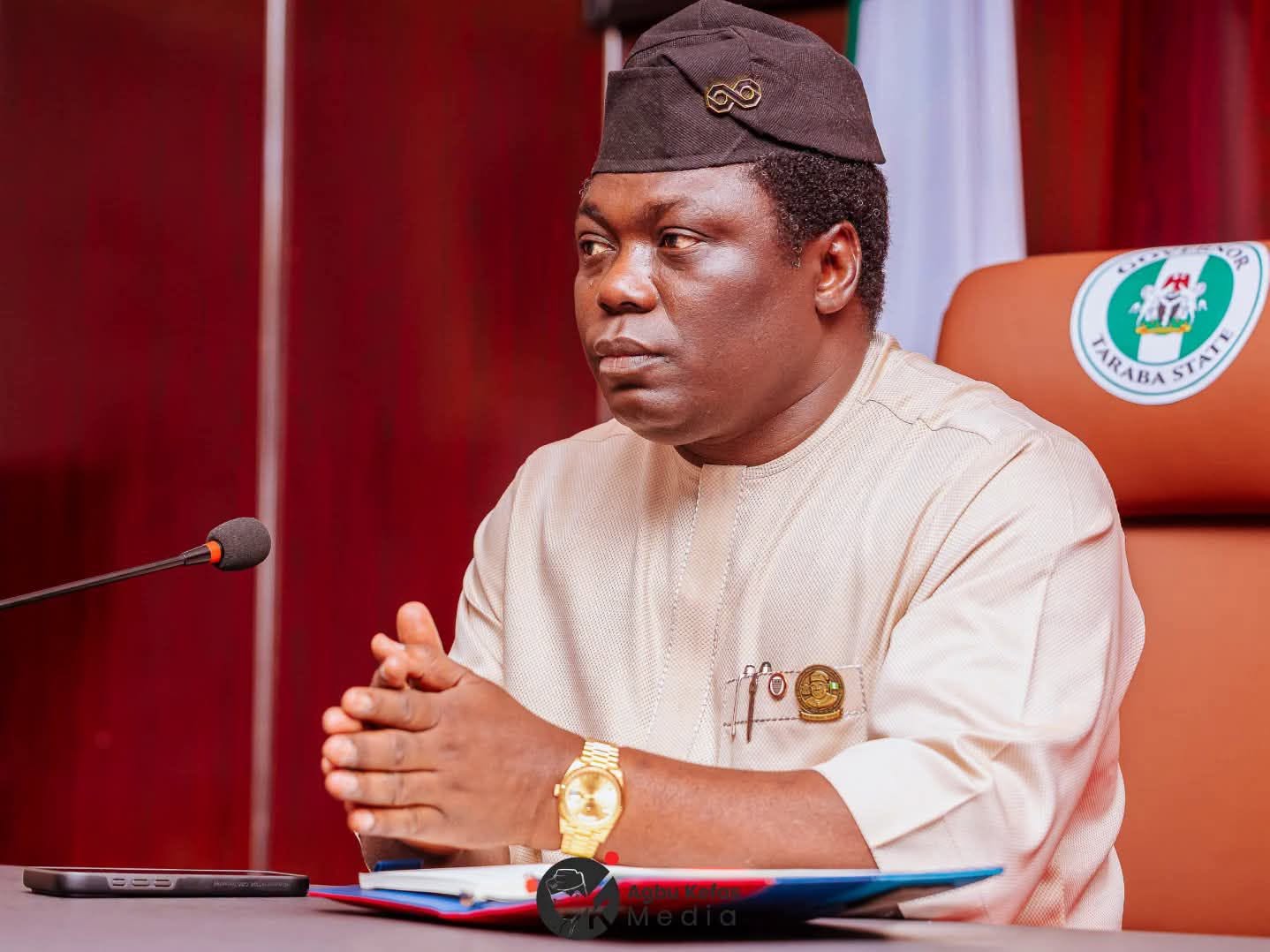
Taraba State Governor, Dr Agbu Kefas, has outlined his administration’s development direction as the state marks its 35th anniversary, highlighting achievements recorded across key sectors while acknowledging that significant challenges remain.
Taraba was created on August 27, 1991, and the 35th anniversary provides another opportunity to reflect on the state’s journey, assess progress and consider priorities for the years ahead.
In his anniversary message, Kefas described the occasion as more than a celebration, presenting it as a period for reflection on the sacrifices, resilience and aspirations that have shaped Taraba since its creation.
The governor said the state has made progress over the years but maintained that more work is required to translate Taraba’s enormous human and natural potential into improved living conditions for its people.
Central to the administration’s development agenda is education, which has remained one of the major areas of focus under the Kefas government.
The administration has consistently presented education as a foundation for long-term development, with emphasis on expanding opportunities for children and young people.
The governor’s approach reflects the belief that investment in education can produce benefits extending beyond the classroom by developing the human capital needed to drive economic and social transformation.
For a state with a large youthful population and communities spread across difficult terrain, improving access to quality education remains an important development challenge.
The administration has therefore placed the sector prominently within its broader roadmap.
Beyond education, the governor identified infrastructure as another area requiring sustained attention.
Roads and other public infrastructure play a crucial role in connecting communities, improving access to markets and enabling residents to reach schools, healthcare facilities and economic opportunities.
This is particularly important in Taraba, where many communities depend heavily on agriculture and require reliable transport connections to move produce to markets.
Infrastructure development can also help attract investment by reducing the difficulties businesses face in moving people, goods and services.
The government’s development direction therefore links infrastructure to wider economic growth rather than treating road construction as an isolated activity.
Agriculture is another major component of the administration’s agenda.
Taraba possesses substantial agricultural potential, with farming supporting the livelihoods of a significant proportion of its population.
Harnessing that potential requires more than increasing production. Farmers need access to inputs, improved methods, processing opportunities, markets and infrastructure capable of supporting agricultural value chains.
The governor’s development roadmap places agriculture among the sectors expected to contribute significantly to employment, food production and economic growth.
Greater attention to value addition could also help ensure that agricultural products generate more economic benefits within the state instead of leaving communities largely as raw-product suppliers.
Healthcare also features in the administration’s development priorities.
Access to functional and affordable healthcare remains essential to improving the quality of life of residents, particularly those in rural communities.
The state’s long-term development will depend partly on its ability to strengthen healthcare institutions, improve access to services and ensure that residents can receive appropriate care when needed.
Security remains equally critical.
No development programme can achieve its full potential in an environment where communities and businesses do not feel secure.
Taraba has experienced different security challenges over the years, making peace-building and protection of lives and property important components of governance.
The Kefas administration has repeatedly emphasised the importance of peace and unity among the state’s diverse communities.
Taraba’s diversity remains one of its defining characteristics, but managing that diversity requires deliberate efforts to encourage peaceful coexistence and prevent disputes from undermining development.
The governor used the anniversary to call for unity among residents irrespective of ethnic, religious or political differences.
Such cooperation is particularly important because the development challenges confronting the state affect communities across political and social boundaries.
While highlighting his administration’s priorities and achievements, Kefas acknowledged that Taraba still faces significant challenges.
That acknowledgement is important at a time when anniversary celebrations can easily become occasions dominated by political praise rather than critical assessment.
Thirty-five years after the creation of the state, expectations remain high.
Residents continue to demand better roads, improved schools, quality healthcare, reliable public services, employment opportunities and stronger economic conditions.
Rural communities also require greater access to infrastructure and government services.
Addressing these needs will require sustained investment and effective management of available resources.
The governor’s roadmap therefore faces a practical test: translating policy declarations and government programmes into improvements that residents can experience in their everyday lives.
Development cannot be measured only by announcements or projects launched. Its impact is ultimately determined by whether people experience better opportunities and improved public services.
The administration will consequently be expected to demonstrate measurable progress across the sectors it has identified as priorities.
Economic development will also remain central to Taraba’s future.
The state possesses considerable opportunities in agriculture, tourism and other areas, but turning those advantages into sustainable prosperity requires investment, infrastructure and an enabling environment for businesses.
Supporting entrepreneurs and expanding economic activities could help create employment opportunities for the growing number of young people seeking livelihoods.
The state’s internally generated revenue drive is also connected to this objective.
A stronger economy can expand the revenue base available to government, while better revenue administration can provide additional resources for development.
However, economic growth and revenue mobilisation must be pursued in ways that support rather than discourage legitimate businesses.
The anniversary also offers an opportunity to assess Taraba’s journey beyond the lifespan of any particular administration.
Since its creation in 1991, successive governments have contributed to the development of institutions and infrastructure across the state.
The task before the present administration is to build on existing foundations while addressing areas where progress has remained slow.
For Kefas, the 35th anniversary represents both recognition of past achievements and a call for renewed commitment to Taraba’s future.
The governor appealed to residents to support efforts aimed at building a peaceful and prosperous state, stressing the importance of collective responsibility in achieving sustainable development.
Government has the primary responsibility for policy formulation and delivery of public services, but communities, traditional institutions, businesses, civil society groups and individual residents also have roles to play in maintaining peace and supporting development initiatives.
The state’s future will depend on how effectively these different actors work together.
At 35, Taraba has reached a stage where the conversation is increasingly shifting from its creation and early development to the quality and sustainability of the progress it can achieve.
The state has abundant natural resources, agricultural potential and a youthful population capable of contributing to its transformation.
The challenge is converting those advantages into jobs, infrastructure, better public services and higher standards of living.
Kefas’ development roadmap sets out the direction his administration intends to follow, but implementation will determine its lasting impact.
As the anniversary celebrations conclude, attention will return to the practical responsibilities of governance and the expectations of residents.
For Taraba, the next chapter will be defined not merely by how far the state has travelled in 35 years, but by how effectively it addresses its remaining challenges and harnesses its resources for the benefit of its people.
