
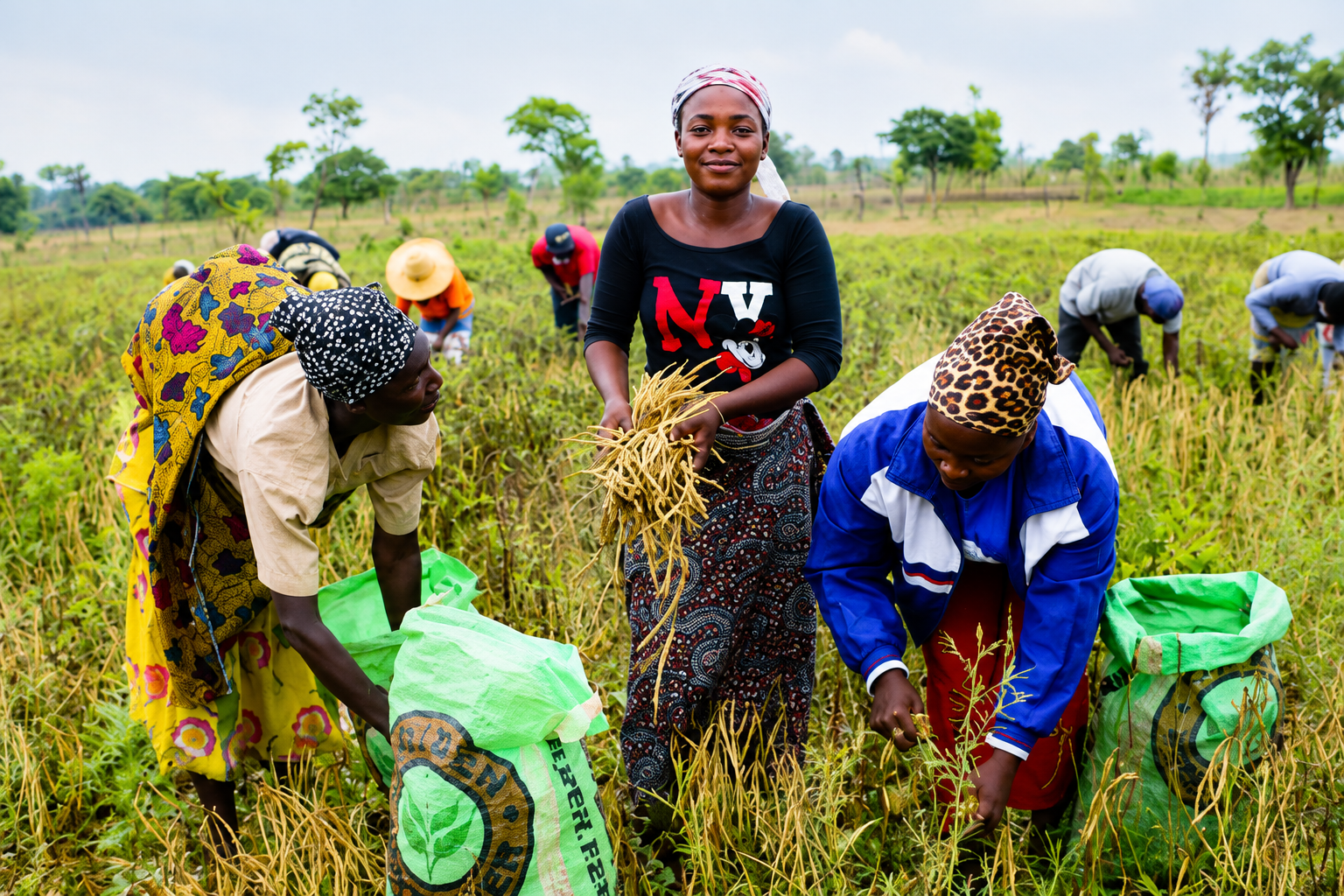
Taraba, IFAD-VCDP Honour Women Farmers for Agro-Processing Innovation
The Taraba State Government, in partnership with the Federal Government and the International Fund for Agricultural Development-assisted Value Chain Development Programme (IFAD-VCDP), has honoured women farmers for outstanding achievements in agro-processing and agricultural marketing.
The recognition was presented during an event marking the International Year of the Woman Farmer, with beneficiaries celebrated for transforming locally produced agricultural commodities into value-added products and building sustainable businesses around farming.
The initiative highlighted the changing role of women in Taraba’s agricultural sector, particularly as more female farmers move beyond subsistence production into processing, entrepreneurship and participation in agricultural value chains.
Taraba State Commissioner for Agriculture and Food Security, Prof. Nicolas Nemessan, said the achievements recorded by the women demonstrated their growing contribution to the state’s agricultural economy.
Represented at the event by the ministry’s Permanent Secretary, Dr Sara Ali, the Commissioner noted that members of the Taraba VCDP Women Network were increasingly moving beyond conventional subsistence farming and becoming active participants in processing and competitive agribusiness.
The development is significant for a state where agriculture remains an important source of livelihood for many households.
For decades, women have played major roles in farming, processing and marketing agricultural products, particularly at the household and community levels. However, much of their contribution has traditionally remained within small-scale production.
Value addition provides an opportunity to change that pattern.
Instead of selling agricultural produce only in its raw form, farmers and processors can transform crops into products with greater commercial value, potentially increasing income and creating additional business opportunities.
Some of the women participating in the VCDP initiative have developed products from rice and cassava, including rice cakes, confectionery and other processed foods.
The innovations demonstrate how locally produced crops can be converted into consumer products capable of generating additional income.
They also illustrate the broader economic potential of agricultural processing.
When farmers sell only raw produce, a significant portion of the economic value associated with processing, packaging and marketing may be captured elsewhere.
Developing local processing capacity can help retain more of that value within farming communities.
It can also create opportunities beyond primary production.
Processing agricultural commodities requires labour, packaging, transportation, marketing and distribution, potentially creating additional sources of livelihood along the value chain.
For women farmers, this transition can be particularly important because it creates opportunities to build enterprises around agricultural skills and resources already available within their communities.
The Rural Institution, Gender and Youth Mainstreaming Officer, Mrs Altine Nuhu, expressed satisfaction with the range of products displayed by the women during the programme.
The products showcased the practical outcomes of training and support provided to beneficiaries and demonstrated how agricultural empowerment can move beyond the distribution of inputs to building entrepreneurial capacity.
The programme also places emphasis on economic inclusion.
According to the organisers, VCDP will continue to promote the participation of women and persons with disabilities through training, empowerment and other livelihood-support interventions.
Such inclusion is important because access to economic opportunities can determine the extent to which vulnerable groups participate meaningfully in development.
Agricultural programmes that provide knowledge, business skills and opportunities for value addition can help beneficiaries become more productive and financially independent.
Taraba State Coordinator of VCDP, Mr Irimiya Musa, described the event as a demonstration of the growing innovation and enterprise among women participating in agribusiness.
He encouraged beneficiaries to maximise the opportunities available through the programme to expand their businesses and improve their livelihoods.
Musa also commended Governor Agbu Kefas for keeping Taraba State’s counterpart funding obligations to the programme up to date, saying the support had enabled VCDP to sustain interventions for beneficiaries.
Counterpart funding remains an important element of development programmes involving governments and development partners because the continuity of interventions can depend on participating institutions meeting their respective financial obligations.
For beneficiaries, sustained programme implementation can mean continued access to training, technical support and opportunities capable of strengthening their enterprises.
The experiences shared by some of the women provided an indication of the programme’s impact at individual level.
Two beneficiaries, Mrs Aisha Mohammed and Mrs Lady Musa, said the training and empowerment they received had improved their economic conditions and enabled them to become self-employed.
They said the programme had strengthened their entrepreneurial skills and improved their ability to participate more effectively in the agricultural value chain.
Their experiences underscore an important aspect of agricultural empowerment: improving production alone may not be enough.
Farmers also need knowledge of processing, marketing and enterprise management if agriculture is to become a stronger source of sustainable income.
For women in particular, developing these skills can improve economic independence while strengthening household livelihoods.
The recognition of women farmers also sends a wider message about their place in Taraba’s agricultural economy.
Women are not merely supporting actors in agriculture. They participate directly in production, processing, marketing and household food security.
Providing them with greater access to training and economic opportunities can therefore contribute to broader agricultural development.
The transition from subsistence farming to agribusiness is especially important as governments seek ways to create jobs and improve rural incomes.
Agriculture can provide more opportunities when farmers participate across different stages of the value chain rather than limiting their activities to primary production.
Rice and cassava, for instance, can serve as raw materials for different food products.
Processing them locally can increase their commercial usefulness, reduce dependence on selling unprocessed produce and create opportunities for small businesses.
The achievements recognised by Taraba and IFAD-VCDP demonstrate what can happen when farmers are supported to think beyond cultivation.
However, sustaining such businesses will require continued attention to product quality, packaging, access to markets and business management.
Innovation must ultimately translate into products that consumers are willing and able to purchase.
Women processors will therefore need opportunities to expand beyond local exhibitions and reach wider markets where possible.
Improved market access can determine whether small agro-processing initiatives remain at subsistence level or develop into sustainable enterprises capable of employing others.
Training can also help beneficiaries understand pricing, record keeping and other essential aspects of running a business.
The broader objective should be to create women-led agricultural enterprises capable of operating sustainably even beyond the lifespan of individual empowerment programmes.
For Taraba State, supporting such enterprises could contribute to its wider ambition of strengthening agriculture and increasing value addition.
The state possesses considerable agricultural resources, but the economic impact of those resources depends partly on the ability to transform agricultural output into marketable products.
Women farmers can play an important role in that transformation.
Their participation also contributes to household welfare because income generated by women-led enterprises can support education, nutrition and other family needs.
The recognition ceremony therefore went beyond celebrating individual beneficiaries.
It showcased a model of agricultural development in which women are encouraged to become producers, processors, marketers and entrepreneurs.
The challenge now is to sustain and expand the progress.
Beneficiaries who have developed viable products will need continued access to knowledge, markets and opportunities to improve their businesses.
At the same time, successful participants can serve as examples to other women who may be considering agriculture as a pathway to entrepreneurship.
By honouring women who have converted locally produced rice, cassava and other agricultural commodities into value-added products, Taraba State and IFAD-VCDP have placed attention on an important development principle: agriculture becomes more economically rewarding when production is connected to processing and enterprise.
For the women recognised, the achievement represents more than an award. It reflects a gradual transition from subsistence farming towards entrepreneurship, self-employment and stronger participation in Taraba’s agricultural economy.
