
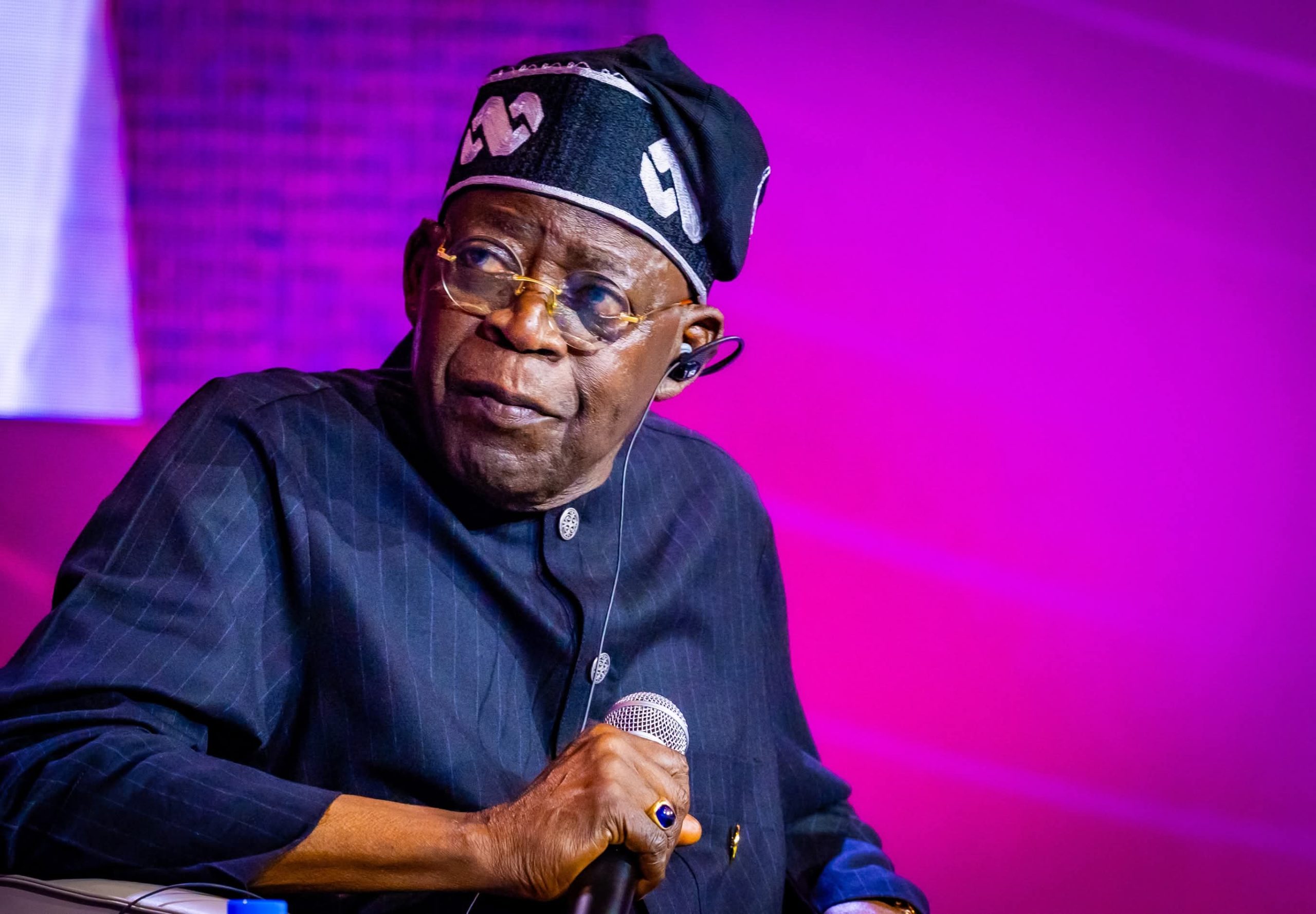
Tinubu Targets Cheaper Transport Fares From October as Governors Back CNG, Electric Vehicles
President Bola Ahmed Tinubu has announced a fresh federal-state push to reduce transportation costs across Nigeria, with governors agreeing to pursue measures that could translate cheaper Compressed Natural Gas and electric mobility into lower fares for millions of commuters.
Tinubu said the intervention is expected to begin delivering benefits to Nigerians from October 1, declaring that cheaper fuel must ultimately result in cheaper transportation.
The President disclosed the development following discussions with the Nigeria Governors’ Forum, saying governors had resolved, on their own initiative, to take immediate steps to reduce transportation costs within their respective states.
The plan will focus heavily on expanding the use of Compressed Natural Gas (CNG) and electric vehicles as alternatives to petrol-powered transportation.
“I am pleased with my discussion with the Governors’ Forum this afternoon,” Tinubu said.
According to the President, intra-state transportation represents one of the areas where Nigerians feel rising costs most directly, making state governments crucial to efforts aimed at providing relief.
The initiative could become an important test of the government’s CNG programme: whether cheaper energy can move beyond infrastructure and vehicle conversions to produce measurable reductions in what Nigerians actually pay to travel.
Tinubu: Cheaper Fuel Must Mean Cheaper Fares
At the centre of the new intervention is a straightforward expectation from the President — savings enjoyed by transport operators through cheaper CNG should be reflected in passenger fares.
Tinubu said vehicles operating on CNG could spend substantially less on fuel compared with vehicles powered by petrol.
“A vehicle running on CNG spends 60 to 80 per cent less on fuel than one running on petrol,” the President said.
“From October 1, our goal is that Nigerians begin to partake in those savings through lower transport fares.”
He added: “We have agreed that cheaper fuel should result in cheaper fares!”
The statement signals a shift in emphasis from merely expanding Nigeria’s alternative-fuel infrastructure towards ensuring that ordinary commuters experience the economic benefits.
For many Nigerians, transportation represents a significant component of daily household expenditure. Increases in transport fares can also affect food prices, school transportation, commercial activities and the movement of goods.
The success of the proposed intervention will therefore likely be judged by a simple question: Will passengers actually pay less?
Governors to Drive Intra-State Implementation
Tinubu acknowledged that while the Federal Government can provide infrastructure, financing and national policy direction, state governments have significant influence over intra-state transportation systems.
This is particularly important for buses, taxis, tricycles and other commercial vehicles responsible for moving millions of Nigerians within cities and communities every day.
“Intra-state transport is where Nigerians feel the cost most directly, and it is where the states hold the levers,” Tinubu said.
“I am encouraged that our Governors are moving to bring these benefits closer to the people they serve.”
The President announced that the Federal Government and states had agreed to establish a joint Federal and State committee to begin implementing the measures immediately.
Details of how individual states will translate the agreement into lower fares are expected to become crucial as the October target approaches.
Possible measures could involve expanding CNG-powered public transportation, supporting commercial operators with vehicle conversions, increasing access to refuelling infrastructure and developing arrangements that connect lower operating costs to reduced passenger fares.
Over 120,000 Vehicles Converted to CNG
Tinubu said the Federal Government had already committed significant resources to Nigeria’s transition towards alternative transportation fuels.
According to figures provided by the President, more than 120,000 vehicles have been converted to CNG nationwide through the Presidential CNG Initiative.
He added that more than 100,000 additional conversion kits are being prepared as the government works to expand the programme.
The administration is simultaneously increasing the number of conversion centres and refuelling facilities across the country.
The availability of such infrastructure remains critical to widespread CNG adoption. Commercial transport operators are unlikely to abandon petrol if conversion facilities remain inaccessible or drivers struggle to find stations where they can conveniently refuel.
The challenge for government will therefore be ensuring that infrastructure expands beyond major urban centres and becomes accessible across different parts of the federation.
Tinubu Orders 500 Additional CNG Stations
The President also announced a significant expansion of Nigeria’s planned CNG refuelling network.
According to Tinubu, the Federal Government, through the Midstream and Downstream Gas Infrastructure Fund, is financing more than 100 gas projects nationwide.
These include 15 CNG mother stations and 86 daughter stations, which are expected to support the distribution and availability of compressed natural gas.
Tinubu said he had directed the rollout of another 500 CNG refuelling stations nationwide.
The latest directive comes in addition to 500 stations earlier ordered through the Fund, bringing the planned programme to 1,000 stations across Nigeria.
If successfully delivered and strategically distributed, the expansion could address one of the most significant practical barriers facing the CNG transition: reliable access to fuel.
Tinubu also recalled commissioning four gas-related projects in Lagos, Abuja and Owerri in May.
According to the President, the projects included a 15-station refuelling network in Lagos as well as an Abuja facility capable of serving approximately 1,000 cars and tricycles and 50 trucks and buses daily.
From Energy Transition to Household Savings
Nigeria’s CNG programme gained greater prominence following the removal of petrol subsidy and the resulting increase in fuel and transportation costs.
The government has promoted the country’s large natural gas resources as an opportunity to provide motorists with a potentially cheaper transportation fuel while gradually diversifying the country’s mobility system.
But infrastructure numbers alone will not determine whether the programme succeeds.
For commuters, the most important outcome is affordability.
If commercial vehicles achieve substantial reductions in their fuel expenditure after converting to CNG but transport fares remain unchanged, ordinary Nigerians may see little direct financial benefit from the programme.
Tinubu’s latest agreement with governors appears designed to address precisely that challenge.
By setting October 1 as the point from which Nigerians should begin experiencing savings through reduced fares, the administration has attached a public-facing target to its CNG investment.
That target will create expectations among commuters and place pressure on federal and state authorities to demonstrate measurable results.
Implementation Will Be the Real Test
Several questions will determine how significant the initiative ultimately becomes.
Authorities will need to establish how transport operators benefiting from cheaper CNG will be encouraged or required to reduce fares.
States will also need mechanisms for engaging transport unions, commercial vehicle owners and other stakeholders responsible for setting or influencing fares.
The geographic distribution of CNG infrastructure will matter as well.
A transport operator cannot take advantage of cheaper gas if the nearest reliable refuelling facility is too far away. Likewise, conversion costs and the availability of qualified conversion centres could influence how quickly operators switch from petrol.
Electric vehicles present another opportunity, but their wider deployment will require charging infrastructure, reliable electricity supply and affordable vehicles.
These implementation challenges mean the October target represents the beginning rather than the end of the process.
Nigerians Await Relief at the Bus Stop
Tinubu’s announcement comes with a clear political and economic promise: government investment in cheaper transportation energy should translate into savings for citizens.
For Nigerians dealing with the daily cost of travelling to work, markets, schools and businesses, the impact will ultimately be measured not by the number of stations announced or vehicles converted, but by the amount demanded when they board a bus, taxi or tricycle.
The creation of a joint federal-state implementation committee could provide the coordination required to bridge that gap.
But delivering lower fares across a country of 36 states and the Federal Capital Territory will require cooperation beyond government. Transport unions, vehicle owners, CNG operators, investors and regulators will all have roles to play.
Tinubu has now established the administration’s expectation.
More than 120,000 vehicles have already been converted, another 100,000 conversion kits are expected, hundreds of gas infrastructure projects and facilities are being developed, and the planned nationwide refuelling programme has been expanded to 1,000 stations.
The next stage is making those investments visible in Nigerians’ pockets.
From October 1, the President wants commuters to begin benefiting directly from the lower operating costs associated with CNG.
His message following the meeting with governors was unequivocal: if the fuel powering commercial transportation becomes cheaper, passengers should also pay less to travel.
For millions of Nigerians facing daily transportation expenses, October will provide an early indication of whether that promise can move from government policy to meaningful relief at the bus stop.
