
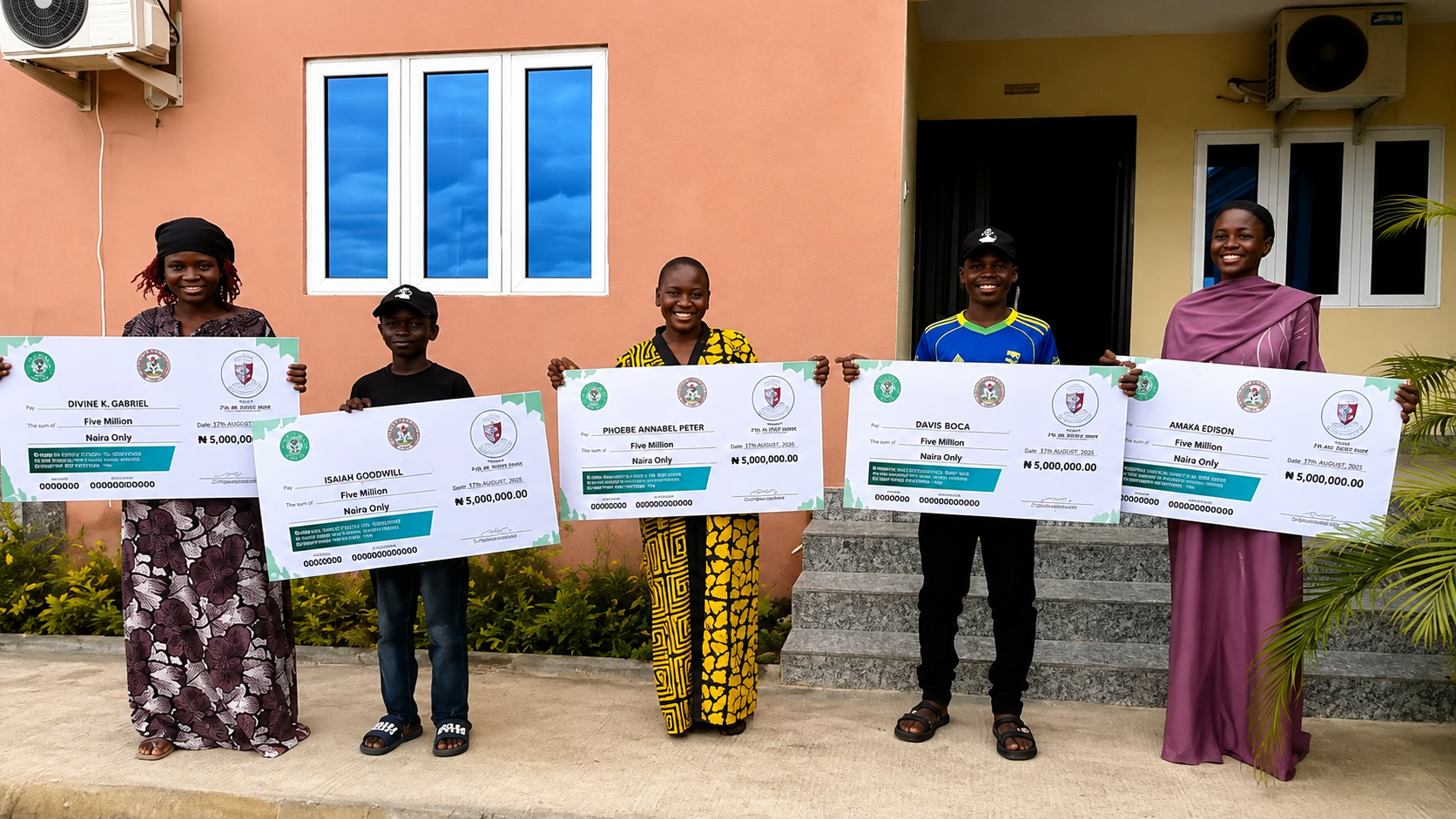
Kefas Rewards Rwanda Debate Students with ₦5m Each
Taraba State Governor Agbu Kefas has announced a ₦5 million reward for each student who represented the state at an international debate competition in Rwanda, recognising their performance and highlighting the growing importance of academic excellence in the state’s education agenda.
The students participated in the competition as representatives of Taraba State and returned with an achievement that attracted the attention of the state government. Their recognition by the governor has since generated interest, particularly because of the financial reward attached to their performance.
Beyond celebrating the students, the development offers an opportunity to examine the role incentives can play in encouraging academic excellence, public speaking, critical thinking and greater participation by young people in intellectual competitions.
For Taraba, where the government has repeatedly identified education as an important area of development, recognising students who distinguish themselves beyond Nigeria could also send a message to thousands of other young people that achievements outside conventional examinations deserve attention.
Reward for Academic Excellence
Debate competitions are considerably more demanding than simply delivering memorised speeches before an audience.
Competitive debating requires participants to research complex issues, develop arguments, evaluate opposing positions and communicate their ideas within strict time limits.
Students must often respond to arguments they did not anticipate, meaning success depends on critical thinking, confidence and the ability to organise information quickly.
International competitions add another level of difficulty because participants may encounter students from different educational and cultural backgrounds.
For students from Taraba to participate on such a platform therefore represents exposure that can contribute to their academic and personal development regardless of the final outcome.
The ₦5 million reward announced by Governor Kefas recognises that effort and could encourage other students to take extracurricular academic activities more seriously.
More Than a Cash Prize
While much of the attention surrounding the recognition may naturally focus on the monetary value, the wider significance extends beyond the cash reward.
Public recognition can have a strong motivational effect on young people.
In many communities, sporting and entertainment achievements often receive greater public attention than academic accomplishments. Celebrating students who perform well in debate, science, innovation, writing and other intellectual activities can help broaden society’s understanding of excellence.
A student who sees another young person rewarded for debating internationally may begin to view academic competitions as worthwhile opportunities.
Schools may also become more interested in establishing debate clubs, literary societies and other programmes capable of identifying talented students.
The long-term value of the governor’s gesture will therefore depend partly on whether it inspires a broader culture of academic competition across Taraba.
Building Critical Thinkers
Debating has benefits that extend far beyond competitions.
Students involved in structured debate learn how to investigate claims, identify credible evidence and distinguish strong arguments from weak ones.
These abilities have become increasingly important in an era when young people encounter enormous volumes of information through social media and digital platforms.
The ability to question information before accepting or sharing it is essential for responsible citizenship.
Debate also teaches students that disagreement does not necessarily require hostility. Participants are expected to challenge opposing arguments using evidence and reasoning rather than personal attacks.
Such skills can be valuable in universities, workplaces, community leadership and public service.
Supporting debate programmes can therefore be seen as an investment in developing young people who are confident communicators and independent thinkers.
Opportunity for Taraba Schools
The recognition of the Rwanda participants could become a starting point for a wider debate and public-speaking programme across secondary schools in Taraba State.
Rather than waiting until talented students emerge independently, education authorities could establish structured competitions beginning at school and local government levels.
Successful students could progress to zonal and state championships before representing Taraba at national and international competitions.
Such a structure would create opportunities for students outside major urban centres.
Talented young people exist across rural communities, but their potential can remain undiscovered when schools lack extracurricular programmes, qualified mentors or opportunities to participate in competitions.
A state-wide programme could deliberately include public and private schools and ensure that students from less privileged backgrounds have opportunities to participate.
Teachers responsible for debate clubs could also receive training and educational resources.
Investment Must Reach Classrooms
Celebrating exceptional students is valuable, but sustainable educational development requires simultaneous investment in the everyday conditions under which the majority of students learn.
Rewards for outstanding performance should therefore complement broader improvements in schools.
These include qualified teachers, functional classrooms, laboratories, libraries, digital learning facilities and access to appropriate instructional materials.
A student may have enormous intellectual potential but struggle to develop it in an environment without books, competent instruction or opportunities for extracurricular learning.
The recognition of high-performing students becomes even more meaningful when accompanied by policies designed to expand opportunities for thousands of others.
Taraba’s challenge is therefore to convert individual success stories into institutional improvements.
Mentorship Could Extend the Impact
The students recognised following the Rwanda competition could also become valuable ambassadors for academic excellence.
Rather than allowing their experience to end with a reception and financial reward, schools and education authorities could create opportunities for them to interact with other students.
They could visit schools, participate in debate workshops and share their experiences of preparing for and participating in an international competition.
Young people often respond strongly to examples from their peers.
Hearing directly from students who have travelled outside Nigeria for an academic competition could make such opportunities appear more achievable to pupils who previously considered them distant possibilities.
Their experience could therefore become an educational resource for the state.
Ensuring Transparent Rewards
As with any financial commitment involving public resources, clarity surrounding the implementation of announced rewards is important.
Where government promises financial awards to students, beneficiaries and the public should be able to confirm that the commitment has been fulfilled.
Transparent implementation strengthens confidence in government incentive programmes and prevents ceremonial announcements from becoming disconnected from actual delivery.
It would also be beneficial for education authorities to document the students’ achievement, the competition in which they participated and the process through which they qualified to represent Taraba.
Such documentation could help create an official record while providing inspiration for future participants.
A Message to Taraba’s Young People
Perhaps the strongest impact of the recognition is the message it sends to students across the state.
Academic effort can be celebrated.
Public speaking can create opportunities.
Critical thinking can take young people beyond their immediate communities.
International exposure does not have to be reserved for students from Nigeria’s largest cities or most expensive schools.
Young people from Taraba can compete on wider platforms when they receive the necessary preparation, mentorship and opportunity.
The challenge now is to ensure that the Rwanda experience does not remain an isolated achievement.
Schools need stronger academic clubs, students need access to competitions and teachers need support to identify and develop talented young people.
Government, educational institutions, parents and private organisations can all contribute to building that ecosystem.
Governor Kefas’ ₦5 million reward to each of the students provides immediate recognition for an impressive achievement. Its greater value, however, could emerge if it stimulates sustained investment in debate, innovation and academic competitions across the state.
For Taraba, celebrating a few outstanding students should be the beginning rather than the end.
The ultimate measure of success will be whether their achievement inspires more young people from Jalingo to the state’s most remote communities to believe that their ideas, knowledge and voices can take them to national and international stages.
