
₦1.365bn Taraba South Agriculture Fund Sparks Debate
A ₦1.365 billion agricultural intervention reportedly earmarked for Taraba South Senatorial District has triggered public discussion over the nature, beneficiaries and expected impact of the programme, with questions emerging over whether the initiative represents genuine agricultural empowerment or another short-term political intervention.
The debate comes as agriculture remains one of the most important economic activities across southern Taraba, where thousands of households depend on farming, livestock production, processing and agricultural trading for their livelihoods.
According to a report by Taraba News Weekender, the agricultural provision is linked to Taraba South and has attracted commentary over what the newspaper framed as the difference between sustainable empowerment and temporary political benefits.
The development raises broader questions about how large agricultural interventions should be designed, implemented and monitored to ensure public resources produce measurable benefits for farmers and communities.
Beyond the ₦1.365 billion figure, the central issue is what the intervention is intended to achieve, who will benefit, how beneficiaries will be selected and whether the programme will deliver improvements that can be independently verified.
Agriculture Remains Critical to Taraba South
Taraba South comprises communities where agriculture is deeply connected to household income, food security and local economic activity.
Farmers across the zone cultivate different crops and participate in livestock production and agricultural value chains. Consequently, interventions capable of improving productivity could have effects extending beyond individual beneficiaries.
When farmers have better access to quality inputs, machinery, extension services, storage facilities and markets, increased production can support traders, transporters, processors and other businesses connected to agriculture.
However, the success of any agricultural programme depends heavily on its design.
A large budget does not automatically translate into significant improvements in farmers’ livelihoods. What matters is how resources are allocated and whether the intervention addresses problems farmers actually face.
For that reason, the reported ₦1.365 billion provision should ultimately be assessed by its implementation and outcomes rather than the size of the announced amount alone.
What Does Agricultural Empowerment Mean?
Agricultural empowerment can take several forms.
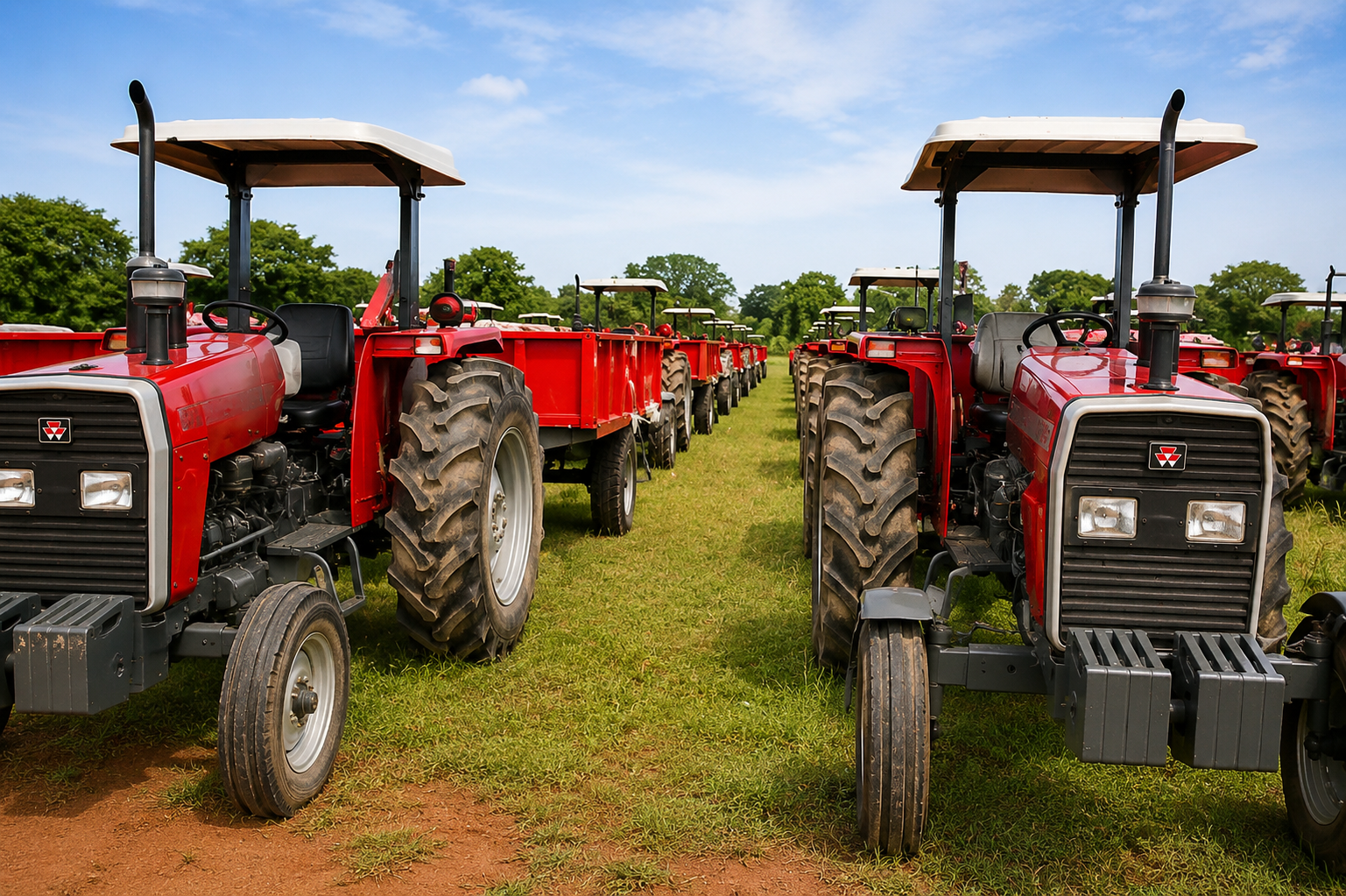
Farmers may receive improved seeds, fertiliser, pesticides, machinery, irrigation equipment, livestock, training or financial support. Others may benefit from processing equipment, storage facilities or programmes designed to improve access to markets.
Each approach can be useful when properly targeted.
However, distributing agricultural materials without adequate planning may produce only temporary benefits.
For example, providing equipment to farmers without training, maintenance arrangements or access to spare parts can result in expensive assets becoming unusable within a short period.
Similarly, distributing farm inputs without considering local soil conditions, crop suitability and planting seasons may reduce the effectiveness of an otherwise well-funded intervention.
Sustainable agricultural empowerment should therefore go beyond distributing materials during public ceremonies.
It should improve farmers’ productive capacity and help them become more economically independent over time.
Transparency Will Be Crucial
With a reported value of ₦1.365 billion involved, transparency should be a central part of the programme.
Residents have a legitimate interest in understanding what the money is intended to finance and how beneficiaries are selected.
Clear information about the programme could include the number of targeted farmers, communities covered, types and quantities of agricultural support being provided and the criteria used to identify beneficiaries.
Such disclosure would help the public distinguish between the approved value of an intervention and the actual resources delivered to farmers.
It would also make subsequent evaluation easier.
If, for instance, an agricultural intervention targets a specific number of farmers, authorities and citizens should eventually be able to determine how many beneficiaries received support and what impact that support produced.
Transparency protects both beneficiaries and public officials because it creates a verifiable record against which claims can be assessed.
Beneficiary Selection Matters
One of the greatest challenges facing public empowerment programmes is ensuring that assistance reaches genuine beneficiaries.
Agricultural interventions are most effective when farmers are identified using credible records rather than political connections.
A transparent beneficiary database could include information about farming activities, location and type of production while respecting appropriate privacy safeguards.
Farmer associations, traditional institutions, agricultural extension officers and community organisations can assist in identifying genuine farmers, but safeguards are necessary to prevent favouritism.
Women, young people and farmers living in rural communities should also have fair opportunities to benefit.
If the programme is intended to transform agriculture across Taraba South, support should not be concentrated exclusively in politically influential communities or among individuals with access to decision-makers.
From Empowerment to Measurable Results
The real test of the intervention will be what changes after implementation.
If farmers receive inputs, does crop production increase?
If machinery is provided, does it reduce production costs or increase the amount of land cultivated?
If financial assistance is given, are beneficiaries able to expand their farms and generate sustainable income?
These are the kinds of questions that can transform public discussion from political claims into evidence-based evaluation.
Monitoring should ideally begin before resources are distributed.
Establishing baseline information about participating farmers would make it possible to compare conditions before and after the intervention.
Authorities could then measure changes in production, income, cultivated area or other relevant indicators.
Without such information, it becomes difficult to determine whether an agricultural programme succeeded beyond the number of items distributed.
Infrastructure Remains a Major Challenge
Agricultural empowerment should also be considered alongside the wider challenges affecting farmers.
Producing more food is only part of the agricultural value chain.
Farmers must be able to move their produce to markets, store it safely and sell it at prices capable of covering production costs.
Poor rural roads can increase transportation expenses, while inadequate storage facilities can contribute to post-harvest losses.
Limited processing capacity can also force farmers to sell raw produce at relatively low prices instead of benefiting from value addition.
For large agricultural interventions to have lasting impact, policymakers should therefore consider how input support connects with infrastructure, storage, processing and market access.
A farmer who produces substantially more crops but cannot efficiently transport or preserve the harvest may still struggle to achieve meaningful economic improvement.
Opportunity for Young People
A well-designed agricultural intervention could also create opportunities for young people across Taraba South.
Modern agriculture extends beyond traditional crop cultivation. Opportunities exist in mechanisation, agricultural technology, logistics, processing, packaging, irrigation, livestock production and digital agricultural services.
Programmes targeted at young people could combine training with access to equipment, finance and mentorship.
This would position agriculture as a viable business rather than simply a subsistence activity.
Encouraging young entrepreneurs to participate across the agricultural value chain could also create jobs and strengthen local economies.
Public Accountability Should Follow Spending
Public funds ultimately require public accountability.
The reported ₦1.365 billion agricultural provision presents an opportunity to demonstrate how agricultural interventions can be implemented transparently and evaluated based on measurable outcomes.
The public debate should therefore move beyond whether the amount sounds large or whether the programme carries political significance.
The more important questions concern implementation.
Residents deserve clarity about what has been approved, what will be supplied, who will receive support and what mechanisms will ensure that resources reach intended beneficiaries.
Equally important is what happens months after distribution.
If the intervention enables farmers to increase production, create jobs, strengthen local agricultural businesses and improve household income, it could represent a meaningful investment in Taraba South’s economy.
If implementation lacks transparency, proper targeting and monitoring, however, the opportunity for long-term impact could be diminished.
For a region with substantial agricultural potential, the priority should be converting public investment into productive assets and sustainable livelihoods.
Ultimately, the success of the reported ₦1.365 billion agricultural intervention will not be determined by the size of the allocation or the publicity surrounding it. It will be determined by what reaches farmers, how effectively the resources are used and whether communities across Taraba South can point to measurable improvements after the programme has been implemented.
