
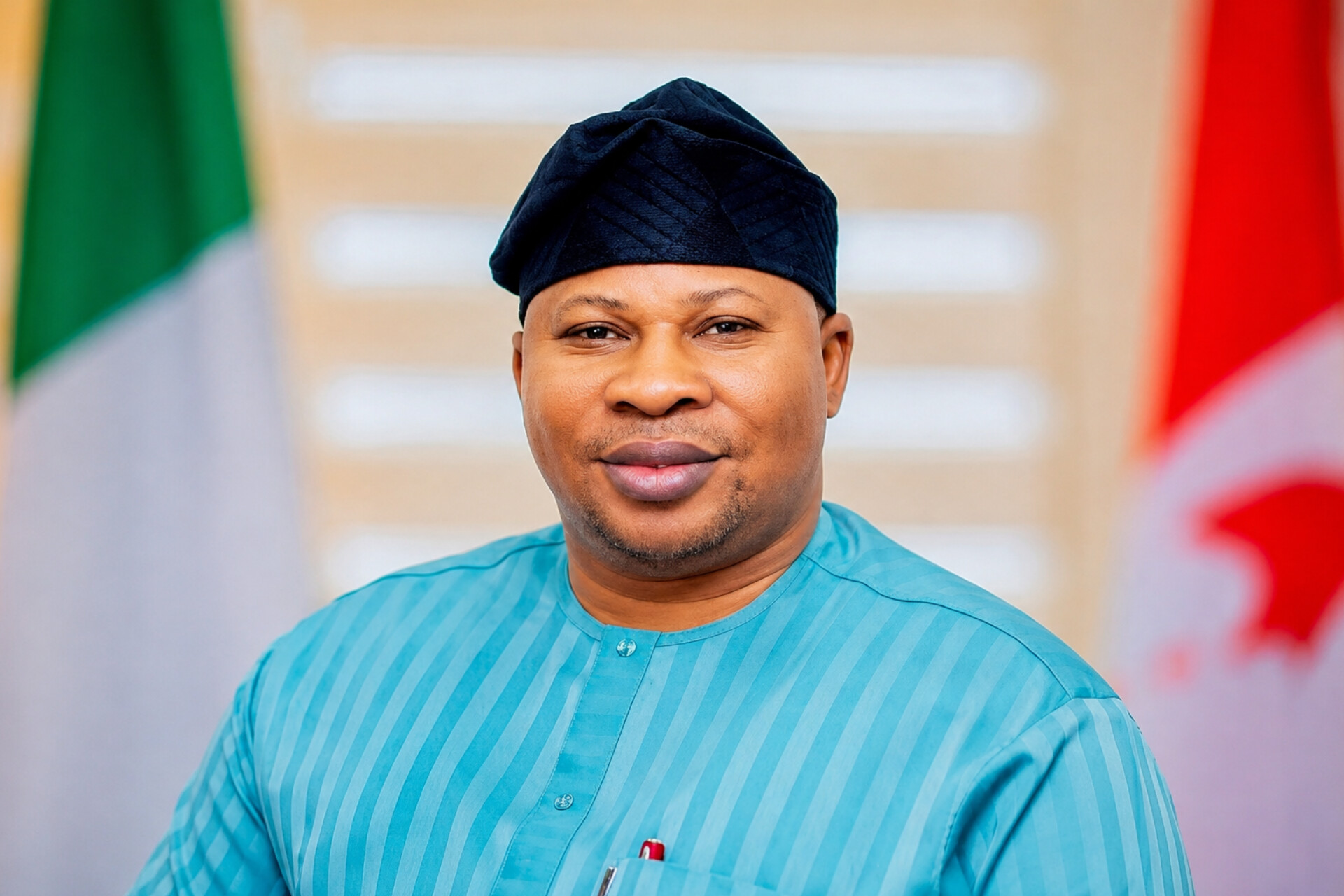
Jimkuta Unleashes Mega Farm Empowerment Drive Across Taraba South
Senator representing Taraba South Senatorial District, David S.U. Jimkuta, has rolled out a major agricultural empowerment programme targeting farmers across the five local government areas of the senatorial district, putting mechanisation and increased food production at the centre of the intervention.
The programme covers Wukari, Ibi, Donga, Takum and Ussa local government areas, where thousands of residents depend directly or indirectly on agriculture for their livelihoods.
Flagged off on Saturday, August 29, 2026, the initiative features agricultural machinery, equipment and farm inputs intended to strengthen production and improve opportunities for farmers across Southern Taraba.
The intervention comes at a time when many farmers are struggling with rising production costs, expensive fertiliser, limited access to tractors and other mechanised equipment, as well as difficulties moving agricultural produce from rural communities to markets.
For a region with significant agricultural potential, the programme could become more than another empowerment exercise if the resources ultimately translate into increased production, lower farming costs and stronger rural economies.
Agriculture Takes Centre Stage
Agriculture remains one of the pillars of economic activity across Taraba South.
From farming communities around Wukari and Ibi to settlements across Donga, Takum and Ussa, residents cultivate crops including rice, maize, yam, cassava and soybeans.
Despite this potential, farming in many communities remains largely small-scale and dependent on manual labour.
That creates a major productivity challenge.
A farmer relying almost entirely on hoes and other basic implements cannot cultivate the same amount of land within the same period as one with reliable access to tractors and other machinery.
Mechanisation can therefore determine how much land a farmer cultivates, how quickly farming operations are completed and, ultimately, how much food reaches the market.
However, tractors and other agricultural machines remain beyond the financial reach of many smallholder farmers.
Hiring machinery can also become particularly expensive during critical periods of the farming season when demand rises sharply.
Jimkuta’s latest intervention attempts to address part of that gap by putting agricultural production at the centre of the empowerment programme.
Five LGAs Targeted
The programme targets farmers across all five local government areas making up Taraba South Senatorial District — Wukari, Ibi, Donga, Takum and Ussa.
These areas constitute an important agricultural belt in Taraba State, with farming supporting households as well as traders, transporters, labourers and small businesses.
The potential impact of agricultural machinery could therefore extend beyond the immediate beneficiaries.
A tractor placed under an effective management system could serve multiple farmers and enable communities to cultivate larger areas.
Irrigation equipment could potentially support production outside the conventional rainy season, while increased farm output could create additional opportunities for transporters, produce traders, processors and other businesses connected to agriculture.
That means the success of the programme should not be measured simply by the number of items distributed.
The bigger question is what those resources eventually produce.
Building on Previous Empowerment Programmes
The agricultural programme is not Jimkuta’s first large-scale constituency empowerment intervention.
In March 2025, the senator carried out another major programme in Wukari involving productive and transportation assets for beneficiaries drawn from different parts of Taraba South.
Reports on that intervention placed its value at more than ₦2 billion.
Items reportedly distributed included about 70 vehicles, 40 tricycle pickups, 150 motorcycles, 100 sewing machines and 40 industrial sewing machines.
Other equipment included irrigation pumping machines, grinding machines and car-washing machines, with beneficiaries drawn from groups including youths, women, artisans, farmers and small-scale entrepreneurs.
The latest programme, however, places greater emphasis on agriculture and productive farming assets.
That shift could be significant for communities where farming remains a major source of household income.
Rather than limiting empowerment to immediate financial assistance, productive agricultural assets can potentially continue generating economic value long after the distribution exercise.
The Real Test Begins After Distribution
While large empowerment programmes often attract attention during their launch, the long-term impact depends heavily on what happens afterwards.
For the latest agricultural intervention, questions surrounding access, maintenance and management will be critical.
Who will operate the machinery?
How many farmers will have access to it?
Will farmers outside the immediate list of beneficiaries be able to use the equipment?
How will damaged machinery be repaired and maintained?
And will the intervention eventually result in measurable increases in agricultural production?
These questions matter because expensive equipment can quickly lose its economic value when maintenance and management systems are weak.
The programme could deliver wider benefits if machinery is managed in a way that allows farmer groups and communities to access it at affordable rates.
Such an approach could enable smallholder farmers who cannot individually purchase tractors to benefit from mechanisation.
The same principle applies to fertiliser and other agricultural inputs.
Getting inputs to farmers at the right time can influence productivity, while delays or poor distribution can significantly reduce their impact.
Food Production Beyond Political Empowerment
The timing of the programme also comes as Nigerians continue to contend with high food prices and governments face pressure to improve domestic food production.
For Taraba, which possesses extensive agricultural land and a large farming population, increasing productivity could have consequences far beyond individual beneficiaries.
Higher agricultural production can strengthen local markets, improve household incomes and create employment throughout the agricultural value chain.
Mechanisation can generate opportunities for tractor operators, mechanics and farm labourers.
Higher production can create additional business for transporters.
More produce entering local markets can strengthen trading activities and potentially support processors and other agricultural enterprises.
The challenge is turning available agricultural potential into sustained commercial production.
2027 Politics Adds Another Dimension
The programme also arrives as political activities gradually gather momentum ahead of the 2027 general election.
As the election approaches, elected representatives are expected to face increasing scrutiny over their performance and the tangible benefits delivered to their constituencies.
Jimkuta’s empowerment programmes are therefore likely to become part of the wider conversation about representation in Taraba South.
Supporters may point to the interventions as evidence of constituency-focused representation, while residents will ultimately judge their impact by the improvements they produce in everyday life.
For farmers, however, the most immediate concern is unlikely to be political.
What matters is whether the machinery reaches the farms, whether inputs are available when needed and whether production increases.
From Machinery to Measurable Impact
Taraba South has the land, farming communities and agricultural potential required to become an even stronger food-producing region.
But potential alone does not guarantee prosperity.
Farmers need affordable machinery, inputs, irrigation, reliable transportation, storage facilities and access to markets.
Jimkuta’s latest agricultural empowerment drive addresses some of those needs, particularly access to machinery and farm inputs.
Its lasting significance, however, will depend on implementation.
Months after the flag-off ceremonies are over, the most important evidence will not be photographs of tractors or crowds at distribution grounds.
It will be found on farms across Wukari, Ibi, Donga, Takum and Ussa.
Are farmers cultivating more land?
Has access to machinery improved?
Are beneficiaries earning more?
Is food production increasing?
Those outcomes will ultimately determine whether the programme becomes another major distribution exercise or a lasting agricultural intervention capable of strengthening livelihoods and transforming farming across Taraba South.
