
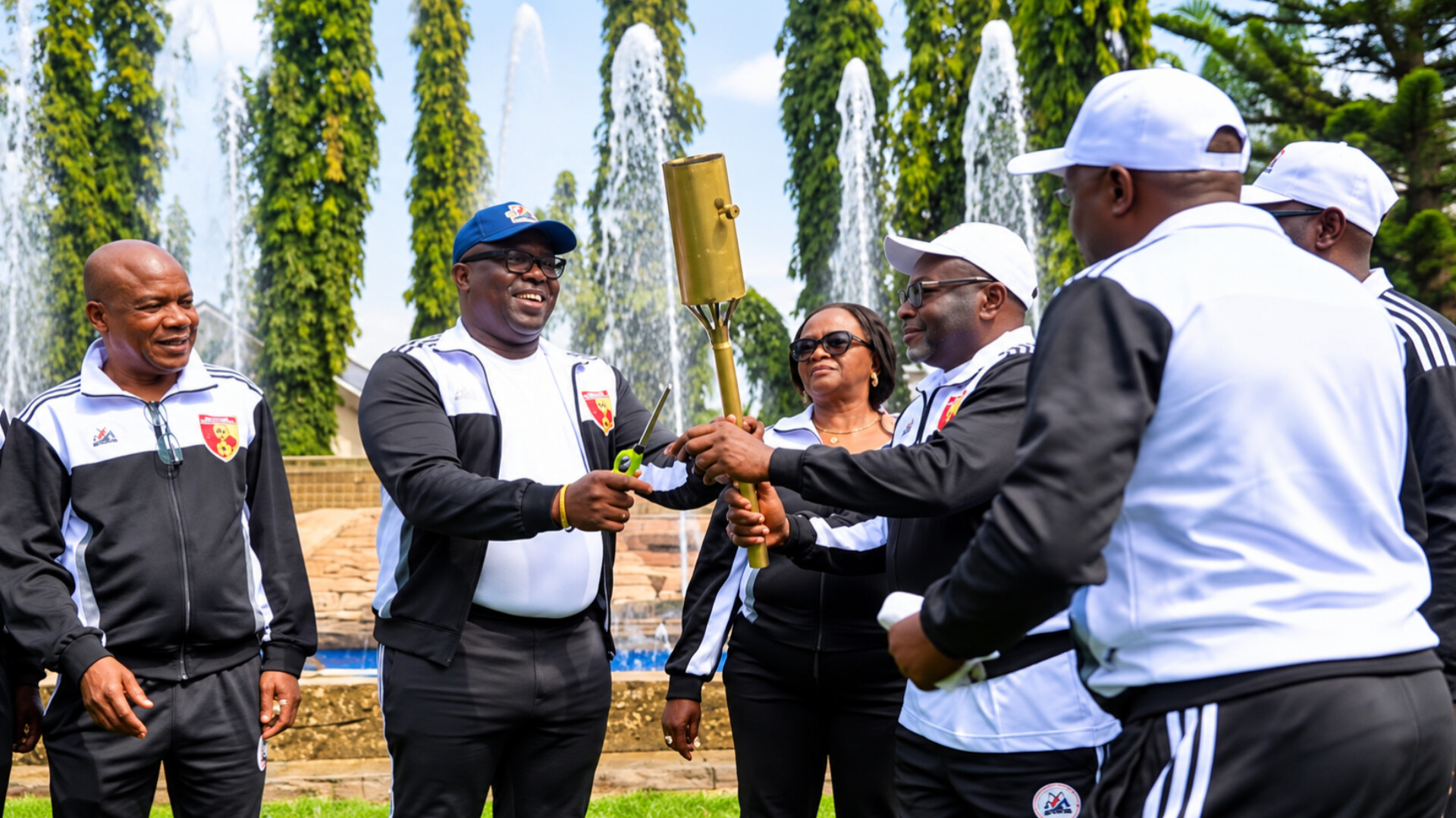
Abia Unveils Tertiary Sports Fiesta as Campuses Battle for Glory
Abia State is preparing for a major gathering of student athletes as the government unveils plans for the 2026 Abia Tertiary Education Sports Fiesta, an initiative designed to bring students from universities and other higher institutions together for competition, talent discovery and greater interaction.
The sporting event is scheduled to run from September 22 to 25, 2026, and is expected to feature tertiary institutions owned by the Federal Government, Abia State Government and private proprietors.
Beyond determining winners and awarding medals, organisers are positioning the fiesta as a platform for discovering young sporting talent and strengthening relationships among students studying across the state.
The initiative could also provide an opportunity for athletes who have largely remained unnoticed within their campuses to demonstrate their abilities before a wider audience.
Abia Targets Sporting Talent
Nigeria has produced many successful athletes through school and grassroots competitions, but inadequate opportunities for organised competition can leave talented young people undiscovered.
The Abia Tertiary Education Sports Fiesta seeks to create another pathway.
By bringing multiple institutions into one competition, outstanding performers can be compared against their peers rather than being restricted to occasional sporting activities within their individual schools.
This can make talent identification more effective.
An athlete who dominates a departmental or university competition may never know how competitive they are at a wider level until they face opponents from other institutions.
The forthcoming fiesta could provide exactly that test.
For Abia, the bigger opportunity will be ensuring that athletes identified during the competition have pathways to progress beyond the tournament.
Federal, State and Private Schools Included
One of the notable features of the programme is its inclusive approach to tertiary institutions.
Rather than restricting participation to state-owned schools, organisers expect federal, state and privately operated institutions within Abia to participate.
That creates the possibility of a broader competition representing different parts of the state’s tertiary education system.
It can also encourage interaction among students who may otherwise have limited opportunities to meet outside academic activities.
Sports have historically provided an effective platform for building relationships across institutional, ethnic and social boundaries.
Inside the arena, students compete for their schools.
Outside it, the same students can establish friendships, professional contacts and networks that survive long after graduation.
More Than Medals
The benefits of tertiary sports extend beyond winning competitions.
Students participating in organised sports can develop discipline, teamwork, resilience, leadership and time-management skills.
Balancing academic responsibilities with training and competition requires commitment.
Team sports, in particular, teach participants to work towards common goals even when individual personalities and abilities differ.
Those lessons can remain useful when athletes enter professional workplaces or entrepreneurship after graduation.
Sports can also provide a constructive outlet for young people at a time when concerns about unemployment, crime, substance abuse and other social pressures continue to affect Nigerian communities.
A properly organised tertiary sports programme therefore represents more than entertainment.
It can form part of wider youth-development policy.
Talent Discovery Must Continue After Fiesta
The true test of the Abia initiative will come after the closing ceremony.
Nigeria does not necessarily suffer from a shortage of talented young athletes.
The greater challenge is identifying them early, developing their abilities consistently and creating opportunities for them to advance.
A student who performs exceptionally during the fiesta should ideally have access to further trials, coaching or competitions.
Sports associations and professional clubs could potentially use events of this nature as scouting opportunities.
Organisers could also maintain records of outstanding performers so that promising athletes are not forgotten once the competition ends.
Without such follow-up, a sports fiesta risks becoming an exciting annual event with limited long-term impact.
With proper structures, however, it can become part of a genuine talent-development pipeline.
Schools Have Important Role
Participating institutions will also have responsibilities.
Preparing athletes requires more than selecting students shortly before a tournament.
Universities and other tertiary institutions need functioning sports units, coaches, training facilities and regular internal competitions.
Students should also be encouraged to participate without sacrificing their academic responsibilities.
That balance is important.
Very few student athletes will ultimately become full-time professional sportspeople, meaning education must remain central to their development.
At the same time, institutions should recognise that talented athletes can build successful careers when given appropriate opportunities.
Scholarships, flexible training arrangements and institutional support can help students pursue both goals.
Opportunity for Abia’s Sports Economy
Large sporting competitions can also generate economic activity.
Athletes, officials and spectators require transportation, food, accommodation and other services.
Local vendors and small businesses can therefore benefit when events attract significant participation.
If Abia develops a reputation for successfully hosting student competitions, larger regional and national events could follow.
That would require investment in sporting infrastructure.
Quality playing surfaces, athletics facilities, changing rooms, medical services and spectator areas all influence the standard of competitions a state can host.
Maintaining those facilities after tournaments is equally important.
Safety Must Remain Priority
With students expected to travel and compete during the four-day event, organisers will also need to prioritise safety.
Medical personnel should be available at competition venues, while emergency response arrangements should be established before events begin.
Security around venues and student accommodation will also require attention.
Athletes need appropriate rest periods, hydration and medical support, particularly during physically demanding competitions.
Successful sports administration is measured not only by the quality of competition but also by how well participants are protected.
Building Unity Through Competition
Nigeria’s tertiary institutions bring together young people from different backgrounds.
Sport offers one of the simplest ways of transforming those differences into healthy competition.
Students may arrive wearing different school colours, but the shared experience can help build connections across institutions.
That social value should not be underestimated.
At a time when public conversations can be deeply divided along political, ethnic and religious lines, young Nigerians need spaces where achievement depends primarily on ability, preparation and teamwork.
Sport can provide such a space.
Countdown Begins
With September 22 approaching, attention will turn to participating institutions, competition venues and the sporting events that will make up the fiesta.
Students hoping to represent their institutions will be competing not simply for medals but potentially for recognition that could open doors beyond campus.
For the Abia State Government, the challenge will be turning the initiative into more than a four-day celebration.
If the competition successfully identifies athletes and those athletes receive opportunities for further development, the benefits could continue long after the final whistle.
The strongest measure of success may eventually be the emergence of athletes who can trace their breakthrough to the Abia Tertiary Education Sports Fiesta.
For now, campuses across the state have a date with competition.
From September 22 to 25, attention will shift from lecture halls to sporting arenas as Abia’s tertiary students battle for pride, recognition and an opportunity to show just how much talent exists within the state’s higher institutions.
