
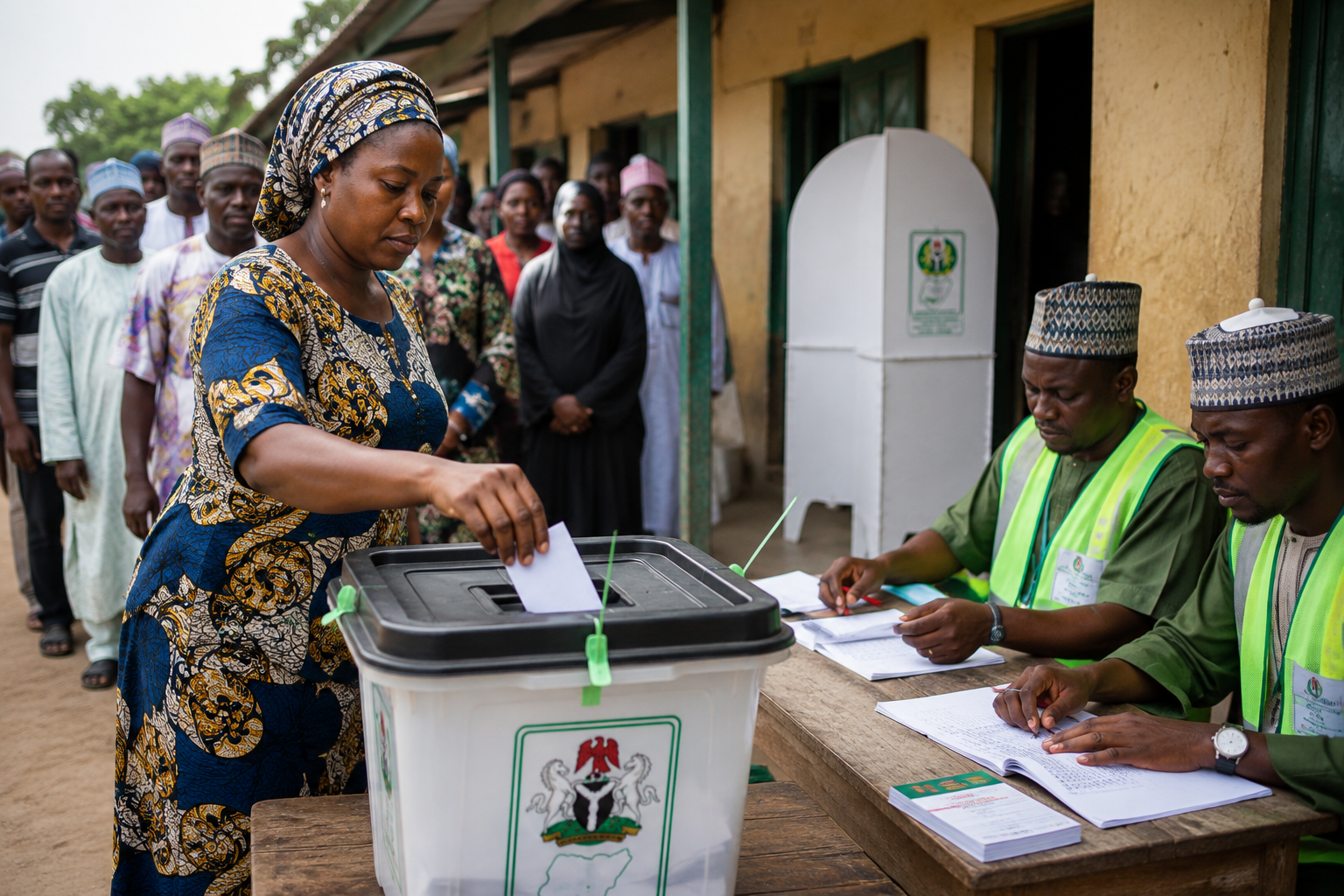
Nigeria Decides 2027: Placing the Needs of Many Above the Greed of a Few
As Nigeria moves gradually towards the 2027 general elections, political conversations are beginning to gather momentum across the country. Aspirants are positioning themselves, political parties are strengthening their structures and citizens are once again being confronted with an important responsibility: deciding who should be entrusted with political power.
For voters, however, the coming election should go beyond political slogans, party loyalty and the excitement that often accompanies election seasons. It should provide another opportunity to examine the quality of leadership Nigeria needs and the responsibility of citizens to place collective interest above personal benefit.
Democracy gives citizens the power to choose their leaders, but the value of that power depends largely on how it is exercised.
When voting decisions are based primarily on ethnicity, religion, personal relationships, immediate financial rewards or other narrow considerations, the wider interests of society can easily become secondary.
Nigeria’s development challenges require something different.
Citizens must increasingly evaluate candidates on competence, character, capacity, credibility and their understanding of the problems confronting the people they seek to govern.
Leadership should ultimately be about service.
Those seeking public office are entrusted with responsibilities that affect millions of people. Decisions taken by elected officials influence education, healthcare, security, infrastructure, employment, agriculture, economic opportunities and the overall quality of life of citizens.
This makes elections more than contests among politicians. They are decisions about the direction of communities, states and the country.
As 2027 approaches, Nigerians therefore have an opportunity to reconsider what they expect from those seeking political authority.
A credible candidate should be able to explain not only what he or she intends to do but how those promises will be achieved.
Campaigns should increasingly become platforms for discussing practical solutions to problems rather than opportunities for trading insults, exploiting divisions or making promises that disappear immediately after elections.
Nigeria continues to face significant socioeconomic challenges.
Many households are concerned about the cost of living. Young people want employment and opportunities to build sustainable livelihoods. Farmers need security, access to markets and support to improve productivity. Businesses require a stable environment in which they can grow.
Communities also continue to demand better roads, healthcare facilities, schools, electricity and other essential services.
These issues should occupy a central place in political conversations ahead of the next general elections.
The electorate should ask candidates difficult but necessary questions.
What is their record of public service?
How have they managed responsibilities previously entrusted to them?
What policies are they proposing?
Are those policies realistic?
How will they finance their promises?
What mechanisms will they establish to ensure accountability?
Such questions can help move political participation away from personality-driven campaigns towards issue-based engagement.
The responsibility does not rest with voters alone.
Political parties have an important role in determining the quality of choices eventually presented to the electorate.
If parties prioritise candidates solely on the basis of wealth, influence or political connections, citizens may find themselves choosing among options that do not adequately represent their aspirations.
Internal democracy within political parties is therefore important to the wider democratic process.
Parties should create credible systems that allow competent individuals to participate and compete fairly.
Candidates themselves must also recognise that political leadership should not be viewed merely as access to privilege.
Public office carries responsibility.
Nigeria’s resources belong collectively to its people, and those entrusted with managing them have a duty to ensure that public funds are used for public purposes.
This is where the principle of placing the needs of many above the greed of a few becomes particularly important.
Corruption and misuse of public resources have consequences that extend far beyond financial figures.
Money diverted from a healthcare project can mean inadequate services for patients.
Resources intended for education but mismanaged can affect the quality of learning available to children.
Funds meant for roads but poorly utilised can leave communities disconnected and businesses struggling with transportation costs.
The cost of poor governance is ultimately borne by ordinary citizens.
That is why accountability must remain central to the electoral conversation.
Candidates seeking office in 2027 should be prepared to demonstrate how they intend to manage public resources transparently and how citizens will be able to hold their administrations accountable.
But accountability should not begin only after elections.
Voters themselves must resist practices that weaken their ability to demand responsible leadership.
Vote buying remains particularly damaging because it reduces an important democratic decision to an immediate transaction.
The amount offered to a voter during an election cannot compensate for years of inadequate public services resulting from poor leadership.
Once political support is treated as something that can simply be purchased, elected officials may feel less accountable to citizens and more accountable to the interests that financed their campaigns.
Rejecting such practices requires courage, especially in difficult economic conditions.
Nevertheless, strengthening democracy requires citizens to understand that their votes have consequences extending far beyond election day.
Young Nigerians have an especially important role to play.
They constitute a major segment of the population and are among those most affected by unemployment, inadequate opportunities and weaknesses in public services.
Their participation should therefore go beyond social media conversations.
Young people can contribute by registering to vote, participating peacefully in political processes, examining candidates critically and refusing to become instruments of electoral violence.
Political actors have historically relied on young people for mobilisation. The challenge ahead of 2027 is for youths to demand something more substantial in return: policies that create opportunities, improve education and enable them to participate meaningfully in the economy.
Women must also have meaningful opportunities to participate in political decision-making.
A democracy that seeks to represent the needs of the entire population benefits when different sections of society are able to contribute to leadership and policy discussions.
The media and civil society equally have significant responsibilities.
Journalists should interrogate campaign promises, provide citizens with credible information and distinguish political propaganda from verifiable facts.
Civil society organisations can strengthen voter education, promote peaceful participation and monitor electoral processes.
Religious and traditional leaders also wield significant influence within communities. Their interventions should encourage peace, responsible citizenship and issue-based political participation rather than deepen divisions.
Nigeria’s diversity should not become a weapon for political manipulation.
Ethnic and religious identities are important aspects of society, but elections should not become contests over which group can dominate another.
The problems confronting Nigerians frequently cut across these divisions.
High living costs do not recognise ethnicity. Poor roads affect people of different religions. Unemployment affects young people across regions. Insecurity disrupts communities regardless of political affiliation.
Leadership should therefore be evaluated primarily on the ability to solve problems and serve the public.
Another important responsibility lies with institutions responsible for conducting and securing elections.
Public confidence in democracy depends significantly on whether citizens believe electoral processes are credible.
Electoral authorities, security agencies, political parties, candidates and voters all have roles to play in ensuring that elections are peaceful and conducted according to the law.
Violence should never become a pathway to political power.
The purpose of an election is to allow citizens to make choices, not to create conflict among communities.
Political disagreements are inevitable in a democracy, but they must be managed within lawful and peaceful processes.
As Nigeria approaches another major electoral cycle, citizens should remember that democracy does not end after ballots are counted.
Good governance requires continuous engagement.
Those elected into office must be monitored and questioned throughout their tenure. Campaign promises should be documented and compared with actual performance.
Citizens should demand explanations when public programmes fail and recognise progress when governments deliver measurable results.
The quality of democracy is strengthened when political leaders understand that elections are not blank cheques but temporary mandates subject to public scrutiny.
The 2027 elections will eventually produce winners and losers, but Nigeria’s greater interest should remain above individual political ambitions.
Political competition should ultimately produce governments capable of serving the people rather than merely rewarding a small circle of interests.
For voters, the decision ahead is therefore bigger than any candidate, political party or immediate incentive.
It is about the kind of country Nigerians want to build and the standards they are prepared to demand from those seeking to lead it.
As the political atmosphere intensifies ahead of 2027, one principle deserves to remain at the centre of the national conversation: public leadership must place the needs of the many above the greed of the few
