
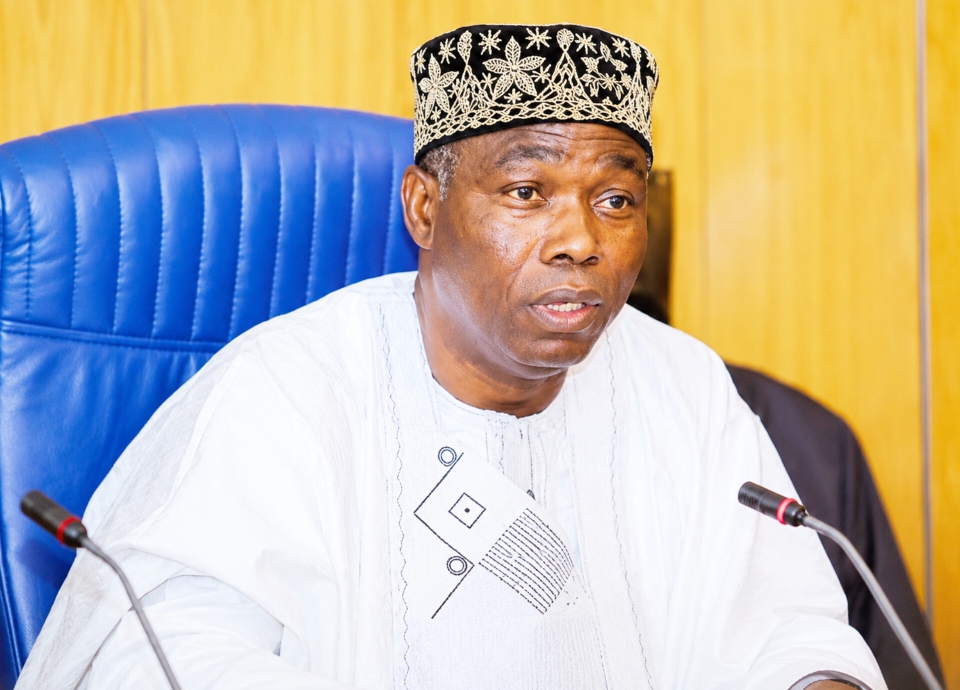
SDP presidential candidate Adewole Adebayo has criticised President Bola Tinubu’s absence from the 2027 Peace Accord, arguing that the decision raises questions about his commitment to peaceful elections.
Social Democratic Party (SDP) presidential candidate Adewole Adebayo has criticised President Bola Tinubu over his absence from the signing of the 2027 National Peace Accord, arguing that the President’s decision sends a negative signal about his commitment to peaceful elections.
The Peace Accord signing brought together political actors and representatives ahead of the 2027 general elections, with participants expected to commit themselves to peaceful political campaigns and respect for the electoral process.
Adebayo expressed his concerns over Tinubu’s absence during an interview in which he discussed the significance of the peace initiative and the responsibilities of political leaders ahead of the next general election.
According to the SDP candidate, the President’s physical presence at the ceremony would have carried important symbolic value, particularly because Tinubu is both the country’s sitting president and a potential participant in the 2027 political contest.
Adebayo argued that the absence could raise questions about the level of seriousness attached to the peace initiative by those in authority.
He maintained that political leaders should demonstrate their commitment to peaceful elections not only through statements but also through their participation in processes designed to prevent violence and electoral tension.
The SDP candidate’s criticism comes as political activities gradually intensify ahead of the 2027 presidential election. Political parties are already positioning themselves for the contest, while potential candidates and their supporters continue to discuss strategies for securing votes across the country.
The Peace Accord is intended to encourage political parties and candidates to conduct themselves responsibly throughout the electoral period. Such agreements typically focus on discouraging violence, hate speech, intimidation and other activities capable of undermining peaceful democratic competition.
For Adebayo, the participation of the President would have reinforced the importance of those commitments and sent a stronger message to political parties, supporters and security agencies.
President Tinubu was not personally present at the ceremony, with the Federal Government represented by the Secretary to the Government of the Federation, George Akume.
The development has therefore generated political discussion, particularly among opposition figures who believe that the President should have attended the event himself.
Adebayo’s comments should, however, be understood as a political criticism rather than proof that the President is unwilling to support peaceful elections. His statement reflects his interpretation of Tinubu’s absence and the message he believes it sends to the public.
The broader issue remains the responsibility of all political actors to ensure that the 2027 election is conducted in an atmosphere that allows citizens to freely exercise their democratic rights.
Nigeria has experienced politically sensitive elections in the past, with concerns over violence, inflammatory statements, voter intimidation and disputes over electoral results often becoming major issues during election periods.
Political parties and candidates are therefore expected to encourage their supporters to respect opponents and allow voters to make their choices without threats or pressure.
The significance of the Peace Accord extends beyond the ceremony itself. Its effectiveness will depend largely on whether political actors follow through on the commitments they make and whether institutions responsible for enforcing electoral laws act impartially.
For opposition parties such as the SDP, the upcoming election presents an opportunity to challenge the ruling All Progressives Congress and present alternative policies to Nigerian voters.
Adebayo, who contested the 2023 presidential election under the SDP, has continued to participate in discussions surrounding Nigeria’s political direction and the preparations for the next general election.
His latest comments add to the growing political debate over how the 2027 election should be conducted and the role that political leaders should play in maintaining peace.
As preparations continue, attention is likely to remain focused on the conduct of political parties, the statements of candidates and the actions of government institutions.
The 2027 election is expected to attract intense competition, making calls for peaceful participation particularly important.
While Adebayo has questioned the meaning of Tinubu’s absence from the Peace Accord ceremony, the responsibility for maintaining peace ultimately extends to all political stakeholders.
Candidates, party leaders, supporters, security agencies, election officials and voters all have roles to play in ensuring that political disagreements do not develop into violence.
The central message of the Peace Accord is therefore expected to remain relevant as the country moves closer to the 2027 elections: political competition should take place within the boundaries of democratic rules, while disagreements should be resolved through lawful and peaceful means.
Adewole Adebayo is a presidential candidate of the Social Democratic Party and was the party’s candidate in the 2023 presidential election. His criticism of President Tinubu follows the President’s absence from the 2027 National Peace Accord signing, where the Federal Government was represented by the Secretary to the Government of the Federation, George Akume.
