
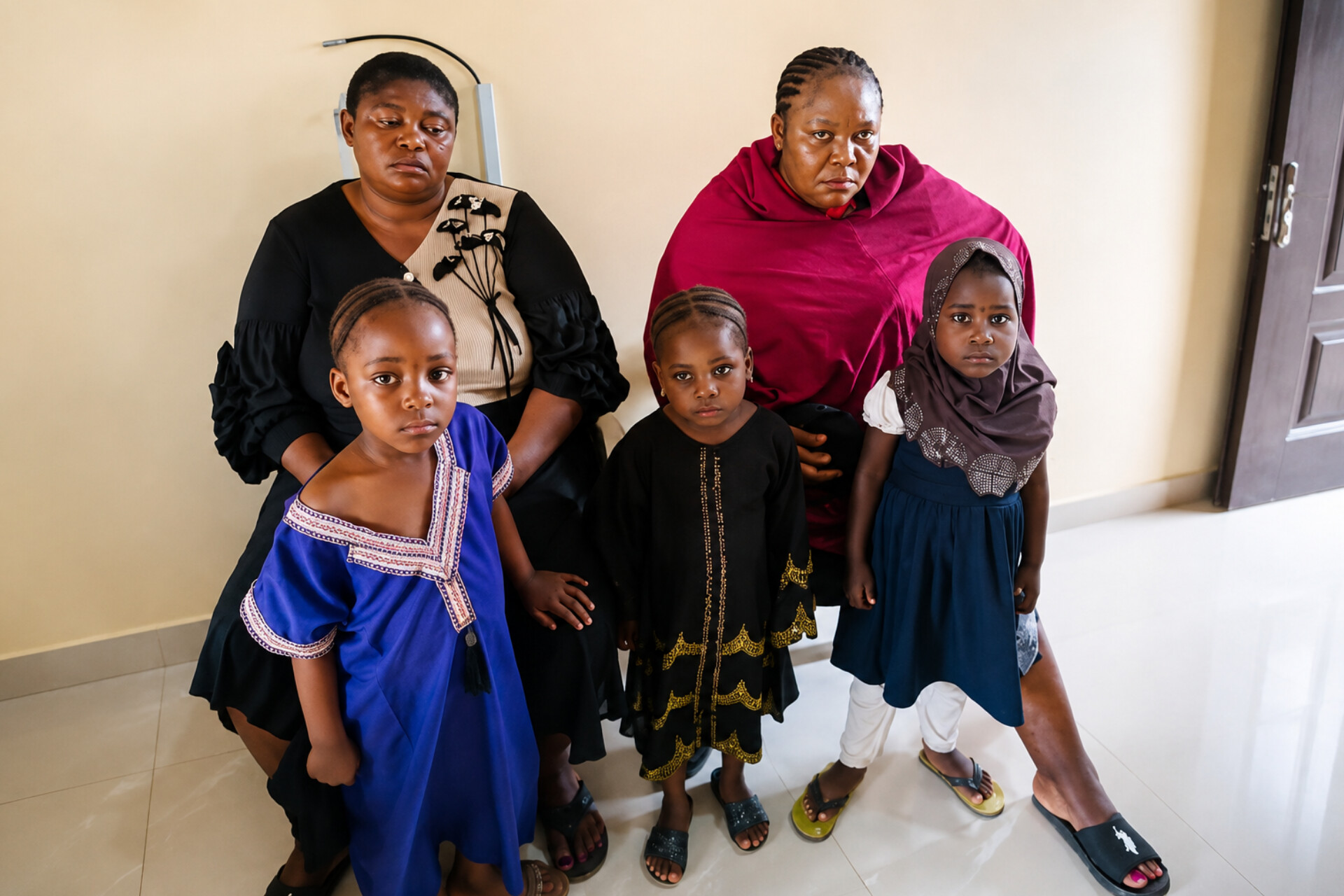
Taraba Police Bust Suspected Child Trafficking Attempt, Rescue Three Girls
The Taraba State Police Command has arrested two women over a suspected child trafficking attempt involving three young girls, following an intervention that reportedly began when a vigilant driver became suspicious of the circumstances surrounding the children’s journey.
The three girls, said to be between five and six years old, were reportedly being transported from Jalingo in Taraba State towards Adamawa State when concerns were raised about the movement.
Rather than ignore the situation, the driver reportedly alerted officials of the transport union, leading to the involvement of the police and the eventual rescue of the children.
The Taraba State Police Command confirmed the arrest of the two female suspects and the rescue of the three girls, while indicating that investigations were ongoing.
The incident has once again highlighted the dangers vulnerable children can face and the crucial role ordinary citizens, transport workers, communities and security agencies can play in identifying suspicious movements before they potentially turn into tragedy.
Driver’s Suspicion Triggers Intervention
The circumstances surrounding the rescue demonstrate how vigilance at the community level can make a major difference in protecting children.
According to available information, the driver transporting the passengers became uncomfortable with the situation involving the three young girls.
Instead of treating the matter as none of his concern, he reportedly drew the attention of transport union officials.
The matter was subsequently reported to the police.
That chain of action — suspicion, reporting and security intervention — ultimately led to the children being taken to safety and the two women being arrested for questioning.
While investigators will determine the full circumstances surrounding the incident, the driver’s decision to speak up provides an important lesson for commercial transport operators across the country.
Drivers, park officials and transport unions are often positioned at critical points through which people move between communities, cities and states.
That places them in a potentially important position to detect suspicious situations involving vulnerable passengers.
Three Young Girls Rescued
The ages of the children make the case particularly concerning.
At about five to six years old, children are highly dependent on adults and may be unable to understand dangerous situations, explain where they are being taken or seek help independently.
That vulnerability is one reason allegations involving the suspicious movement of children require swift and careful investigation.
Police intervention ensured that the girls were removed from the situation while investigators began efforts to establish the facts.
Authorities are expected to determine the identities of the children, establish their relationship — if any — with the arrested women, trace their parents or lawful guardians and determine the purpose of the journey.
Investigators will also need to establish where exactly the children were being taken and whether other individuals were involved.
Until those investigations are concluded, the arrested women remain suspects, and allegations against them should not be treated as established guilt.
Police Confirm Investigation
The spokesperson of the Taraba State Police Command, ASP Victor Mshelizah, confirmed the arrest and rescue.
Police investigations are expected to establish whether the incident constitutes an attempted trafficking operation or whether other circumstances explain the movement of the children.
That distinction is important.
An arrest does not amount to a conviction, and allegations must be tested through proper investigation and, where sufficient evidence exists, prosecution before a competent court.
At the same time, the age of the children and the suspicious circumstances reported by those involved make a thorough investigation necessary.
The authorities will need to establish a clear timeline of events and determine how the children came into the custody of the suspects.
Transport Workers Can Become a First Line of Defence
One of the strongest lessons from the incident is the role played by the transport system.
Human trafficking does not occur only in hidden locations.
Victims may be moved through motor parks, highways, border communities, airports and other transportation networks.
This means people working within the transport sector can sometimes encounter warning signs before security agencies do.
Commercial drivers and park officials can become important partners in protecting vulnerable people when they know what to watch for and how to report suspicious situations safely.
A very young child travelling with an adult is not, by itself, evidence of trafficking.
But unusual circumstances, conflicting explanations, visible fear or distress, uncertainty about a child’s destination or other suspicious behaviour may justify further attention.
The goal should not be indiscriminate suspicion of passengers.
It should be responsible vigilance.
In the Taraba case, raising concern allowed the appropriate authorities to step in and determine whether the journey was legitimate.
Child Protection Requires Community Participation
Security agencies cannot be everywhere at the same time.
That makes community participation an important component of child protection.
Parents, teachers, traditional leaders, transport operators, religious institutions, community organisations and residents all have roles to play.
People should know how to report suspicious activity without attempting to confront suspected traffickers themselves.
Where children appear to be in immediate danger, contacting the police or appropriate child-protection authorities is safer than taking actions that could escalate the situation.
Communities also need greater awareness about tactics that may be used to move vulnerable children.
Promises of schooling, domestic work, apprenticeships or better living conditions can sometimes be used to persuade families to release children into arrangements they do not fully understand.
Not every such arrangement constitutes trafficking, but parents and guardians should know exactly where their children are going, who will be responsible for them and what conditions await them.
Investigation Must Go Beyond the Arrest
The arrest of suspects should not mark the end of the case.
Investigators need to establish whether the incident involved only the two women arrested or whether there may be a wider network.
If evidence of trafficking emerges, authorities should examine who arranged the movement, who was expected to receive the children and the intended purpose.
The welfare of the rescued girls must also remain central.
Children involved in potentially traumatic situations require protection and careful handling.
Their identities should be protected from unnecessary public exposure, and interviews should be conducted in ways that prioritise their safety and dignity.
Reuniting them with verified parents or lawful guardians should also be handled carefully to ensure they are returned to a safe environment.
Vigilance Made the Difference
There is a broader message from the incident that extends beyond Taraba State.
Sometimes preventing a potentially serious crime begins with one person refusing to ignore something that does not look right.
In this case, a driver’s reported decision to raise concern set off a sequence that brought transport officials and the police into the matter.
Had the concern been ignored, the authorities might not have had the opportunity to intervene when they did.
The incident therefore demonstrates why public awareness and cooperation with security agencies remain important in protecting vulnerable children.
But it also reinforces the importance of allowing investigations to establish facts before conclusions are reached about the suspects.
For now, three young girls are safe, two women are in police custody, and investigators have the responsibility of establishing exactly what happened.
The next step must be a thorough investigation that answers the critical questions surrounding the children’s movement and determines whether anyone else was involved.
For communities, meanwhile, the lesson is unmistakable:
When the safety of a child appears to be at risk, responsible vigilance and timely reporting can make all the difference.
