
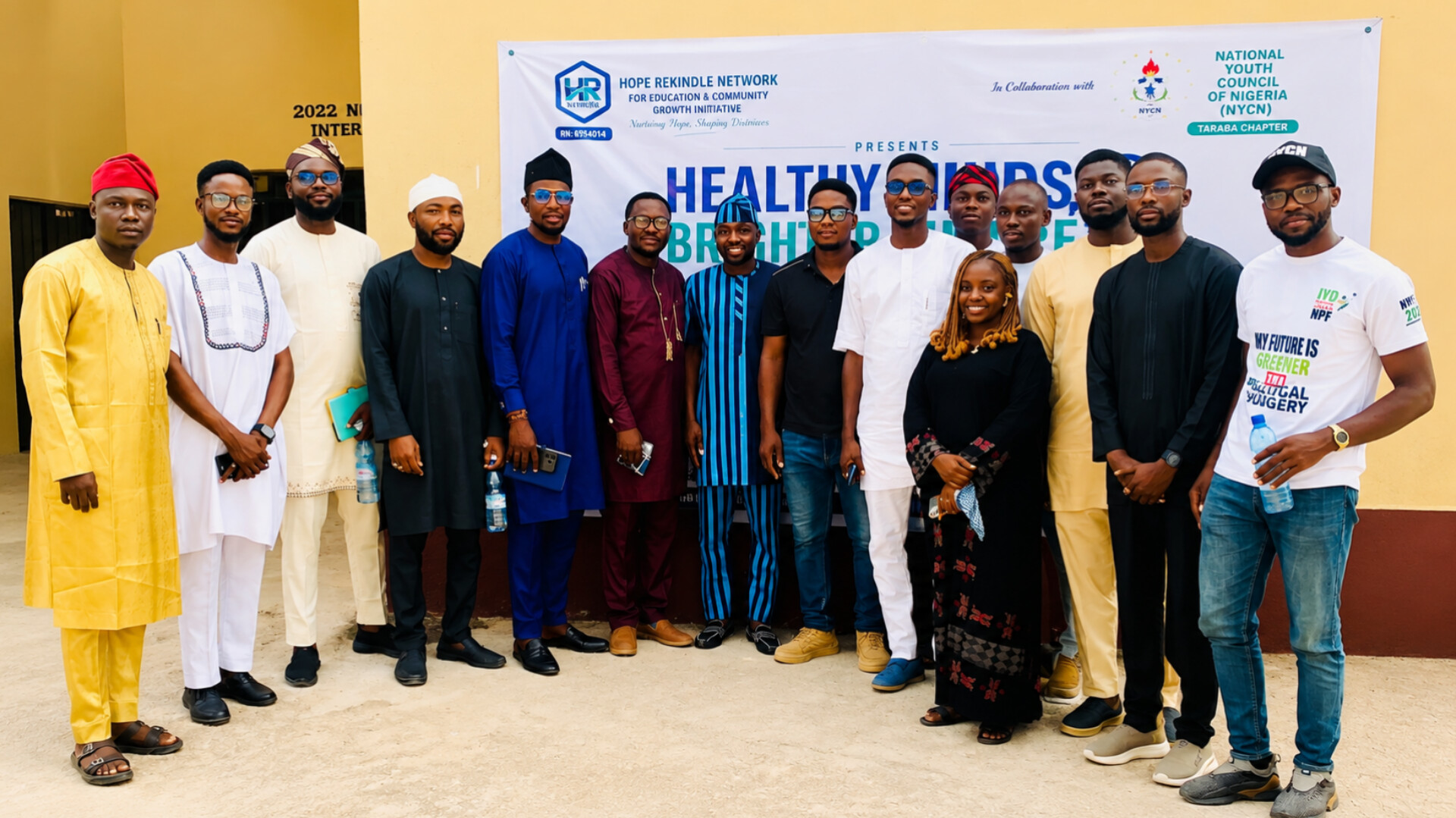
NYCN, Hope Recandle Take Anti-Drug Campaign to Taraba Campuses
The National Youth Council of Nigeria, Taraba State Chapter, has intensified efforts against drug abuse and cultism among young people, taking its sensitisation campaign to students of tertiary institutions in the state.
Working in collaboration with Hope Recandle Network, the council organised the “Healthy Minds, Brighter Future” programme at Zaku Hall, Taraba State Polytechnic, Suntai, Jalingo Campus.
The programme brought together students and youth representatives from tertiary institutions across Jalingo metropolis to discuss some of the major challenges threatening the future of young people.
Drug abuse, cultism, academic performance, mental wellbeing, personal development, entrepreneurship and responsible decision-making dominated discussions at the event.
NYCN Targets Drugs and Cultism
Substance abuse and cult-related activities remain serious concerns within many communities and educational institutions.
The campaign sought to confront these challenges by educating students about their consequences while encouraging young people to make choices capable of protecting their education and future.
Rather than concentrating solely on warnings, the programme also focused on helping participants identify positive alternatives.
Students were encouraged to pursue academic excellence, develop useful skills, build resilience and explore entrepreneurship as pathways towards a more productive future.
The initiative reflects a broader approach to youth development that combines prevention with empowerment.
NDLEA Joins Sensitisation Drive
Officials of the National Drug Law Enforcement Agency were among the resource persons who participated in the programme.
They engaged students on substance abuse prevention and the dangers associated with harmful social activities.
Their participation provided an opportunity for young people to receive information directly from officials involved in combating drug-related offences and promoting prevention.
Other speakers addressed academic excellence, mental wellbeing, resilience, personal development, skills acquisition and entrepreneurship.
The interactive sessions also allowed participants to discuss challenges affecting young people and explore practical approaches to dealing with them.
NYCN Chair Challenges Students
Taraba State NYCN Chairman, Comrade Hapson Haruna Babale, led the council’s delegation and served as keynote speaker at the programme.
Babale urged students to remain disciplined and protect their character while pursuing their education and future ambitions.
He cautioned young people against cultism, substance abuse, peer pressure and other social vices capable of undermining their future.
Students were encouraged to channel their energy and talents into activities that promote personal development, peace and positive contributions to society.
The message placed responsibility on young people to understand that decisions made during their school years can have long-term consequences.
Four Key Areas Take Centre Stage
The sensitisation programme concentrated on four major areas.
These included substance abuse and anti-cultism awareness, academic excellence and discipline, mental wellbeing and resilience, as well as skills acquisition and entrepreneurship.
The combination of these areas reflects the reality that youth challenges are often interconnected.
A student struggling academically or emotionally, for example, may become more vulnerable to negative peer influence or harmful behaviour.
Providing young people with relevant skills and economic opportunities can also strengthen their ability to pursue productive alternatives.
The organisers therefore sought to go beyond simply telling students what to avoid by exposing them to ideas capable of helping them build better futures.
Students Urged to Choose Their Future Carefully
Participants were encouraged to make responsible choices and resist influences capable of destroying their educational and career ambitions.
They were also challenged to remain committed to their studies while developing healthy ways of dealing with personal and social pressures.
Skills acquisition and entrepreneurship featured prominently in the discussions, with young people encouraged to build capacities that could strengthen self-reliance.
With employment opportunities increasingly competitive, acquiring practical skills alongside formal education can give young people additional pathways into economic participation.
Youth Organisations Push for Positive Change
Collaboration between youth organisations, civil society groups, educational institutions and government agencies can play an important role in addressing social problems affecting students.
The partnership between NYCN Taraba and Hope Recandle Network demonstrates an attempt to bring different stakeholders together around youth development.
Rather than waiting until young people become deeply involved in drugs or cultism, sensitisation programmes can help strengthen prevention by reaching students early.
However, sustained engagement will be important.
One-off campaigns may create awareness, but lasting change requires continued education, mentorship, counselling, skills development and opportunities that keep young people positively engaged.
Building a Brighter Future
The Taraba State chapter of NYCN reaffirmed its commitment to youth welfare, responsible leadership, peaceful coexistence, education and opportunities for young people.
The council also acknowledged Hope Recandle Network, participating institutions, resource persons and other stakeholders involved in the programme.
For students who attended, the central message was clear: their choices today can shape the opportunities available to them tomorrow.
Drug abuse, cultism and destructive peer pressure can derail promising futures, while education, discipline, resilience and useful skills can open doors.
Taking that message directly to tertiary institutions could prove important in helping more young people choose the second path.
