
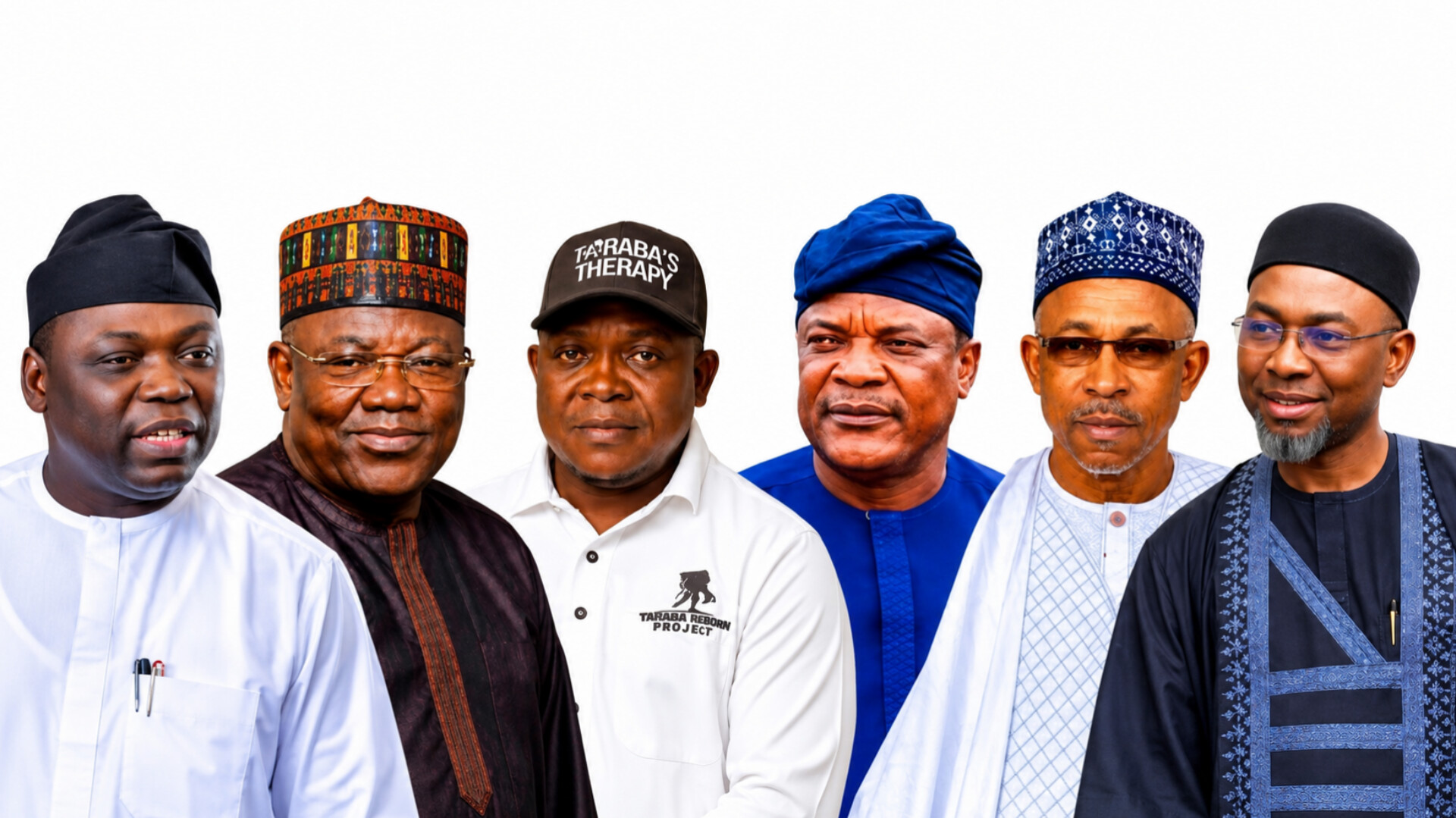
2027: INEC Lists 19 Candidates for Taraba Governorship Race
The race for Taraba Government House has entered a more defined phase following the publication by the Independent National Electoral Commission of candidates for the state’s 2027 governorship election, with 19 candidates appearing on the electoral body’s list.
Among the prominent political figures in the emerging contest are Governor Agbu Kefas, Senator Emmanuel Bwacha, Danjuma Usman Shiddi, popularly known as Danji SS, Professor Jerome Nyameh, Senator Sani Abubakar Danladi and Senator Joel Danlami Ikenya, also known as Tutare.
The publication of the candidates’ list moves Taraba closer to what is shaping up to be a competitive governorship election, with established politicians, opposition candidates and the incumbent preparing to make their cases before voters.
Beyond the personalities, however, the election is increasingly becoming a contest over the direction Taraba should take after 2027.
Issues ranging from education and healthcare to agriculture, security, infrastructure, employment and management of the state’s natural resources are already featuring prominently in the political debate.
Kefas Seeks Continuity
Governor Agbu Kefas enters the contest carrying the advantages and burdens that come with incumbency.
His supporters are expected to campaign heavily on the record of his administration, particularly interventions in education, road construction and rehabilitation, youth development, pensions and efforts to revive abandoned projects.
The governor’s camp has argued that ordinary residents benefiting from government programmes should be central to assessing his performance.
That position is likely to form the foundation of the continuity argument: that the administration has started reforms that require additional time to produce their full impact.
For Kefas, therefore, the 2027 election will largely become a referendum on his performance in office.
Voters will have an opportunity to decide whether the progress recorded under his administration is sufficient to justify another mandate or whether the state requires a different direction.
Danji SS Offers Alternative
Danjuma Usman Shiddi is emerging as one of the prominent opposition figures in the contest.
Shiddi has argued that government performance should be judged by measurable improvements in people’s lives rather than announcements alone.
Education has featured strongly in his criticism of the incumbent administration.
While acknowledging the importance of reducing the financial burden on parents, he has argued that free education must also be accompanied by motivated teachers, adequate classrooms, learning materials and conditions capable of producing quality outcomes.
Shiddi has also identified healthcare, security, agriculture and infrastructure as areas requiring greater attention.
His proposals include strengthening primary healthcare, improving access to specialist medical services and addressing difficulties faced by rural communities seeking quality healthcare.
Agriculture and entrepreneurship are also expected to form important components of his campaign, particularly as unemployment and limited economic opportunities continue to affect young people.
The challenge for Shiddi will be demonstrating that his proposals constitute an achievable alternative rather than simply criticism of the incumbent.
His own previous years in public office are also likely to face scrutiny as the campaign intensifies.
Nyameh Pushes Economic Transformation
Professor Jerome Nyameh is approaching the contest with a strong economic-development message.
Nyameh has argued that Taraba’s fundamental problem is not a shortage of natural resources but the inability to fully transform those resources into sustainable prosperity.
Agriculture sits prominently within his proposals.
His position emphasises mechanised farming, agro-processing, better access to markets and stronger agricultural value chains.
Instead of depending primarily on the sale of raw agricultural commodities, Nyameh has advocated processing and value addition as pathways towards creating jobs and increasing farmers’ incomes.
His economic argument extends beyond agriculture.
Taraba possesses mineral deposits, forests, water resources and tourism attractions, and Nyameh has maintained that these assets could contribute more substantially to employment and government revenue if properly developed.
He has also called for responsible exploitation of mineral resources, arguing that mining should generate economic benefits without sacrificing environmental protection or the interests of host communities.
Tourism similarly features in his vision, with the state’s mountains, forests, wildlife and other attractions identified as assets capable of generating economic activity if supported by infrastructure and effective promotion.
Familiar Political Heavyweights Return to Centre Stage
The appearance of figures such as Emmanuel Bwacha, Sani Abubakar Danladi and Joel Danlami Ikenya adds further political weight to the contest.
These are names with established histories in Taraba politics, meaning the election will not simply involve an incumbent confronting relatively unknown challengers.
Political structures, previous records in public office, grassroots networks and the ability of candidates to build support across Taraba’s diverse communities are likely to become important factors.
But political experience can work in two directions.
Candidates with long public records can point to their experience and relationships as evidence of their preparedness for office.
At the same time, voters can examine what they accomplished during previous opportunities to serve.
The 2027 contest therefore provides Tarabans with an opportunity to assess both the promises of emerging candidates and the records of established political actors.
Nineteen Candidates, One Government House
Having 19 candidates on the list creates a broad field, but the number alone does not necessarily mean the contest will remain equally competitive throughout the campaign.
As election day approaches, differences in party organisation, funding, grassroots structures, candidate popularity and geographical support are likely to become clearer.
Some candidates may build strong statewide campaigns, while others may concentrate on particular constituencies or issues.
Political alliances could also reshape the race.
What matters for voters is that the wider field provides an opportunity to demand competing ideas about Taraba’s future.
The governorship election should not be reduced to personalities, ethnic calculations or party loyalties.
Candidates seeking to govern the state should be expected to explain what they intend to do differently and how they plan to finance and implement their promises.
Agriculture Could Become a Deciding Issue
Taraba’s enormous agricultural potential makes farming one of the issues likely to dominate the election.
Across the state, thousands of households depend on agriculture for their livelihoods.
Yet farmers continue to confront challenges including limited mechanisation, expensive inputs, inadequate storage and processing capacity, and difficulties transporting produce to markets.
Candidates promising agricultural transformation will therefore need to move beyond general statements.
Tarabans can reasonably ask whether proposed programmes will increase productivity, create agro-processing industries, improve market access and generate sustainable employment.
The state has the land and farming population.
The political debate should increasingly focus on how those resources can translate into prosperity.
Roads, Healthcare and Education Remain Critical
Infrastructure is another unavoidable issue.
Communities across Taraba continue to experience difficult road conditions, particularly in rural areas where transportation problems can isolate settlements and increase the cost of moving agricultural produce.
Healthcare access remains equally important.
Strengthening primary healthcare facilities, improving staffing and expanding access to specialist services are issues candidates will need to address.
Education is already becoming one of the major battlegrounds of the campaign.
Kefas’ supporters are expected to defend the administration’s education interventions, while opponents will question their implementation and outcomes.
That debate should ultimately benefit voters if it moves beyond political rhetoric to measurable indicators such as school attendance, teacher availability, infrastructure and learning outcomes.
Security Will Remain on the Ballot
No development programme can succeed without security.
Taraba’s vast territory, forests, border communities and remote settlements create security challenges that require both effective law enforcement and preventive strategies.
Drug abuse, youth unemployment, communal disputes, illegal mining and criminal activities are among issues already entering discussions about security and social stability.
Candidates will need to demonstrate how their security proposals combine enforcement with intelligence gathering, community participation and interventions addressing factors that make young people vulnerable to criminal recruitment.
Tarabans Have a Choice to Make
The publication of 19 governorship candidates marks an important stage, but the real political contest will be determined by what happens between now and election day.
Campaign rallies will come.
Promises will multiply.
Political endorsements will be announced, alliances will shift and candidates will attempt to convince voters that they represent the best future for Taraba.
The responsibility of voters is to look beyond the noise.
Every candidate seeking the state’s highest political office should face serious questions about competence, integrity, previous performance and the practicality of their proposed programmes.
For the incumbent, the question will centre on whether his record deserves continuity.
For his challengers, the burden will be proving that they offer a credible and achievable alternative.
With 19 candidates seeking one seat, Tarabans have options.
The 2027 governorship election should ultimately be decided not by who makes the loudest promises, but by who can present the most credible plan for turning Taraba’s enormous potential into measurable improvements in the lives of its people.
