
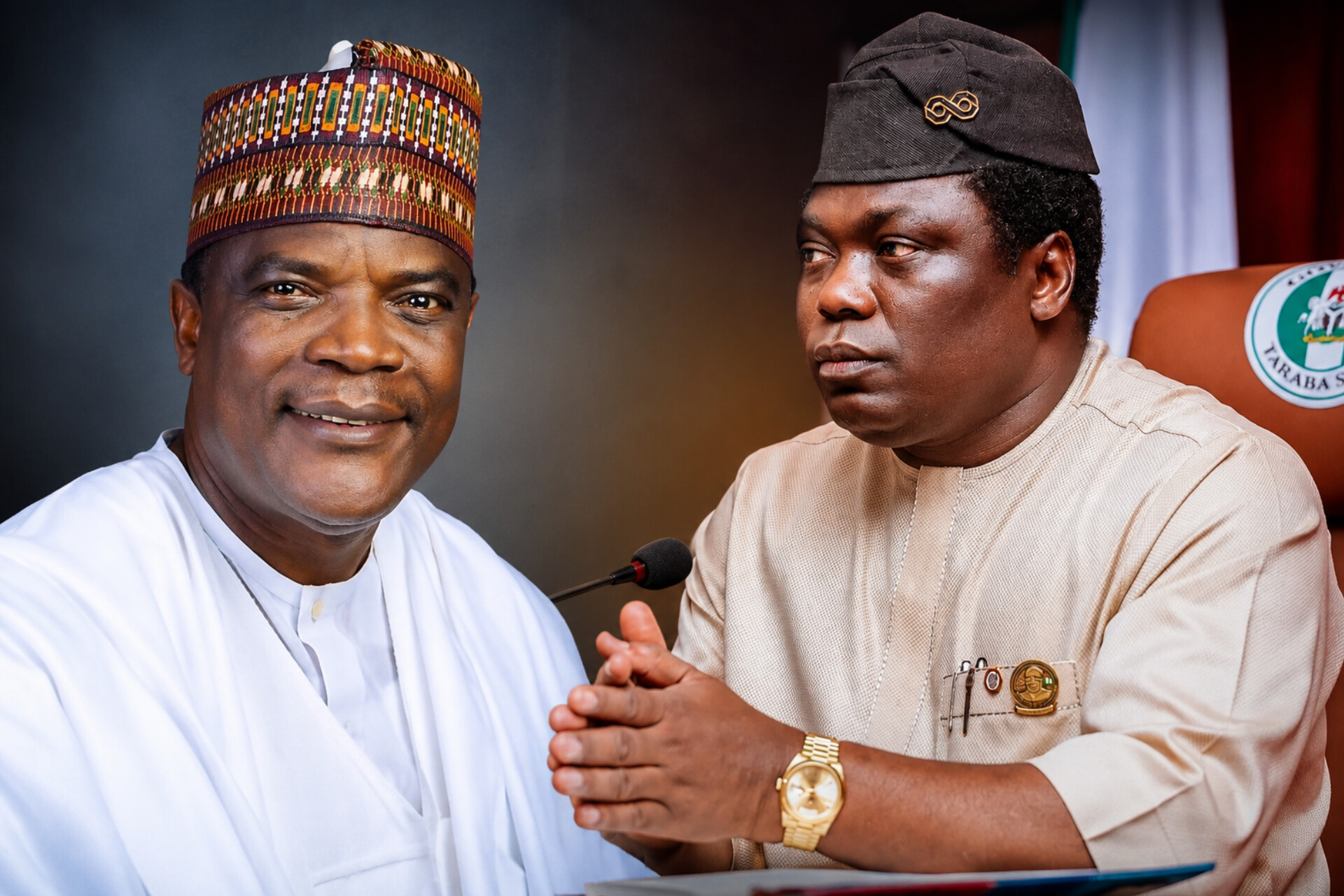
Kefas, Danji Camps Clash Over Taraba’s Progress
The political atmosphere in Taraba State is gradually heating up ahead of the 2027 governorship election, as supporters of Governor Agbu Kefas and the All Progressives Grand Alliance (APGA) governorship candidate, Danjuma Usman Shiddi, popularly known as Danji SS, trade contrasting views over the performance of the current administration.
The disagreement centres on whether Taraba State has recorded meaningful progress under Governor Kefas and whether the administration’s programmes have translated into measurable improvements in the lives of residents.
Danji SS has argued that Taraba deserves better, maintaining that government promises should be judged by their impact on ordinary citizens. Supporters of Governor Kefas, on the other hand, insist that the administration is already delivering results and extending the benefits of governance beyond political elites to ordinary Tarabans.
The exchange is emerging as an early indication of the issues likely to dominate political discussions as Taraba moves closer to another governorship election.
Danji SS Questions Government Performance
Danji SS has challenged the current administration to demonstrate how its policies and programmes have improved the lives of residents.
His position places emphasis on measurable outcomes rather than political promises, with the opposition candidate arguing that the people should be able to see and experience the impact of government policies in their communities.
For the APGA candidate, the assessment of government performance should focus on the everyday experiences of residents, including young people seeking employment, farmers working to improve their livelihoods, parents concerned about education and families requiring access to essential services.
Education is among the areas attracting attention in the emerging debate.
Governor Kefas has made education a major component of his administration, particularly through the introduction of a free education policy. Danji SS, however, argues that education should be assessed beyond the removal of financial barriers.
The opposition candidate’s position raises broader questions about the quality of education, availability of learning facilities, condition of schools, welfare of teachers and whether students are receiving the standard of education required to compete effectively.
For him, government policies should ultimately produce results that residents can measure rather than remain promises or announcements.
Youth unemployment and economic opportunities are also part of the concerns raised by the APGA candidate.
Danji SS has identified agriculture and entrepreneurship among areas capable of providing opportunities for young people and strengthening the state’s economy.
Healthcare, security and infrastructure are also among the areas he believes require sustained attention.
His emerging campaign message is therefore built around the argument that Taraba possesses considerable potential but needs stronger efforts to translate that potential into improvements in the lives of its people.
Kefas Camp Defends Administration
Supporters of Governor Kefas have rejected the opposition’s assessment, insisting that the administration has recorded progress across different sectors.
The Agbu Kefas Continuity Movement argues that the governor’s programmes are reaching ordinary residents and should not be assessed solely through the views of political actors.
The group maintains that schoolchildren benefiting from education programmes, parents experiencing reduced educational expenses, young people benefiting from government interventions, retirees receiving attention and communities benefiting from development projects should also be considered important stakeholders when assessing the administration.
According to the governor’s supporters, governance should ultimately reach people at the grassroots rather than remain concentrated around political elites.
The Kefas camp therefore believes that the administration should be assessed according to the programmes being implemented and their impact on residents.
This position presents a different interpretation of developments in Taraba.
While Danji SS argues that the state needs better and more measurable results, supporters of Governor Kefas maintain that progress is already being recorded and that some interventions require time to produce their full impact.
Danji’s Previous Record Enters Political Debate
The political exchange has also moved beyond Governor Kefas’ performance, with his supporters raising questions about Danji SS’ own record in public office.
The governor’s camp argues that anyone seeking to assess the performance of the current administration should equally be prepared to have his previous record subjected to public scrutiny.
Danji SS previously served in the National Assembly, and his political opponents are signalling that his years in federal office could become part of the 2027 campaign debate.
This means the emerging contest may not be limited to promises about the future.
Both sides could be required to defend their previous records before Taraba voters.
For Governor Kefas, the focus will naturally be on what his administration has achieved since assuming office in 2023.
For Danji SS, attention could turn to his previous years in public office and what those years reveal about his capacity to provide the alternative leadership he is presenting to voters.
Such scrutiny could potentially strengthen political accountability if the campaign remains focused on evidence and performance rather than personal attacks.
Taraba Voters Face Competing Narratives
The disagreement between the two camps presents residents with competing interpretations of the state government’s performance.
The opposition is asking whether government programmes have produced enough measurable improvements to justify continuity.
The governor’s supporters are asking residents to recognise ongoing interventions and allow the administration to consolidate its programmes.
Both arguments are likely to become more prominent as political activities intensify.
For residents, however, the most important questions may go beyond political statements.
Voters are likely to consider the condition of schools, healthcare facilities, roads, employment opportunities, agriculture, security and other public services when assessing competing claims.
They may also examine whether projects announced by government have been completed and whether completed projects are producing tangible benefits.
Similarly, opposition candidates seeking to replace the current administration will be expected to present credible alternatives rather than rely exclusively on criticism.
Performance Could Define 2027 Contest
The growing exchange between the Kefas and Danji SS camps suggests that performance could become one of the defining issues in the 2027 governorship election.
Governor Kefas will be seeking to convince residents that his administration has established programmes capable of delivering sustainable development and that continuity would allow those initiatives to mature.
Danji SS, meanwhile, will be seeking to persuade voters that the pace and scale of development have not met expectations and that Taraba requires a different approach.
The ultimate decision will rest with the electorate.
As campaigning gathers momentum, residents will have an opportunity to compare the claims of both camps against conditions within their communities.
The emerging political contest also creates an opportunity for citizens to demand greater accountability from all candidates.
Rather than allowing the election to revolve solely around personalities, political parties or campaign slogans, voters can ask specific questions about education, healthcare, security, agriculture, infrastructure, employment and public finances.
Candidates can equally be challenged to explain how their proposals would be funded and implemented.
For the Kefas administration, achievements already recorded will form an important part of the argument for continuity. For Danji SS and the opposition, demonstrating that they possess a credible and practical alternative will be equally important.
As Taraba moves towards 2027, the political disagreement between the two camps is likely to intensify.
What remains clear is that the debate over the state’s progress has begun, with Danji SS insisting that Taraba deserves better while the Kefas camp maintains that the governor is already taking governance and development to ordinary residents.
Ultimately, Taraba voters will determine which argument carries greater weight when they assess the records, promises and programmes presented before them.
