
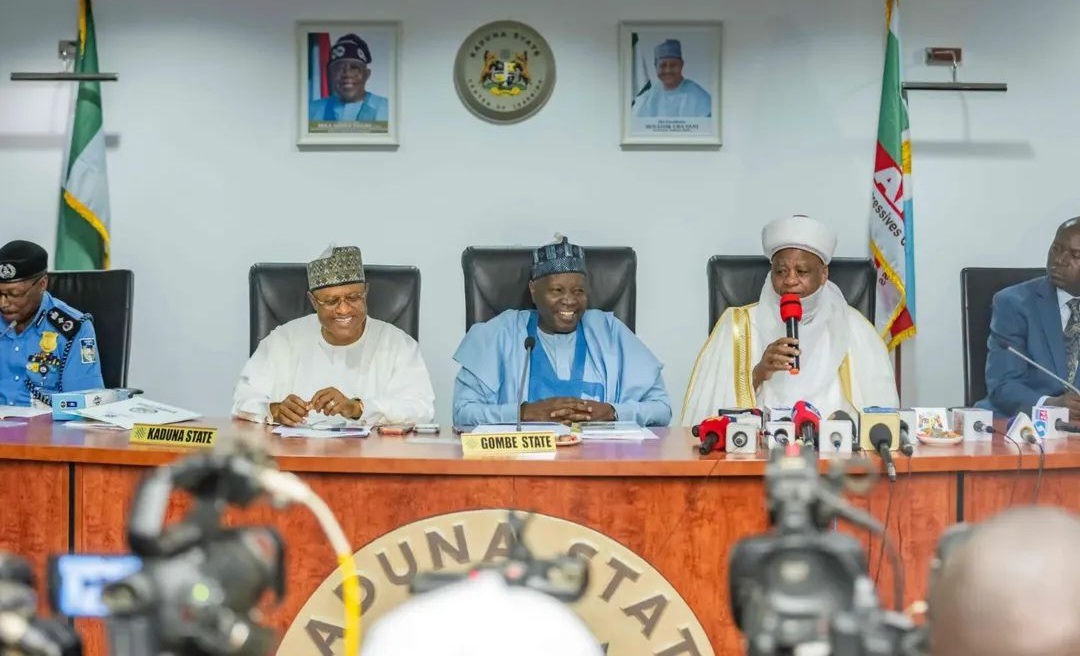
Northern Governors Back State Police, Launch Regional Security Fund to Tackle Rising Insecurity
Kaduna, Nigeria — Governors from Northern Nigeria have renewed their commitment to confronting the region’s worsening security situation, calling for urgent, coordinated action while endorsing the establishment of state police as part of a broader strategy to restore peace and stability.
The resolutions were reached during a joint meeting of the Northern Nigeria Governors’ Forum and the Northern Traditional Rulers’ Council held at the Sir Kashim Ibrahim House in Kaduna. The meeting brought together governors, traditional rulers, and key security stakeholders to deliberate on the persistent security threats affecting communities across the region.
Taraba State Governor, Dr. Agbu Kefas, disclosed the outcomes of the meeting in a statement shared on his official Facebook page, outlining a series of resolutions aimed at strengthening regional security and addressing the underlying factors fueling violence.
Governors Call for Immediate, Coordinated Response
According to the communiqué, the Forum expressed deep concern over the current security situation in Northern Nigeria, describing it as one that requires urgent, coordinated, and decisive intervention to prevent further deterioration.
The governors noted that insecurity continues to pose significant threats to lives, livelihoods, economic activities, and social stability across many northern states. They stressed that isolated responses would no longer be sufficient and emphasized the need for greater collaboration among governments, security agencies, traditional institutions, and local communities.
The meeting underscored the importance of adopting a comprehensive regional approach capable of responding effectively to challenges such as banditry, kidnapping, terrorism, communal conflicts, and other criminal activities.
Strong Support for State Police
One of the major outcomes of the meeting was the Forum’s endorsement of the ongoing constitutional process aimed at establishing state police.
The governors acknowledged the progress already made toward the initiative and commended President Bola Ahmed Tinubu and the National Assembly for advancing discussions on the constitutional amendments required to make state policing a reality.
According to the Forum, properly trained, adequately equipped, and professionally supervised state police formations could significantly strengthen local security architecture and improve intelligence gathering, rapid response, and community policing.
The governors argued that security challenges often vary from one state to another and that localized policing could provide more effective responses while complementing existing federal security agencies.
Northern Nigeria Security Trust Fund Receives Backing
The meeting also reaffirmed support for the newly inaugurated Board of Trustees of the Northern Nigeria Security Trust Fund, describing the initiative as an important step toward mobilizing sustainable resources for security operations across the region.
The governors urged members of the Board to discharge their responsibilities with diligence, integrity, transparency, and independence in order to build public confidence and ensure accountability.
In a significant financial commitment, member states pledged to contribute ₦1 billion monthly to the Security Trust Fund to strengthen regional security efforts.
The Forum called on all participating states to fulfill their financial commitments promptly, noting that consistent funding would be essential for the success of the initiative.
Beyond government contributions, the governors appealed to traditional rulers, civil society organizations, media practitioners, development partners, and citizens to support the Trust Fund and contribute to efforts aimed at improving security throughout Northern Nigeria.
Addressing the Root Causes of Insecurity
While emphasizing the importance of military and law enforcement operations, the Forum maintained that lasting peace cannot be achieved through security measures alone.
The governors resolved to intensify efforts to confront the social and economic conditions that continue to fuel insecurity across the region.
Among the priority issues identified were widespread poverty, unemployment, illiteracy, and the growing population of out-of-school children.
The meeting stressed that addressing these structural challenges would reduce vulnerability to criminal recruitment while creating better opportunities for young people.
To achieve this, the governors committed to strengthening investments in education, agriculture, youth empowerment programmes, vocational and skills development, entrepreneurship, and sustainable livelihoods.
They argued that improving access to education and economic opportunities would not only enhance development but also contribute significantly to long-term peace and security.
Traditional Institutions Recognized as Critical Partners
The joint meeting also highlighted the continued importance of traditional rulers in maintaining peace and promoting community cooperation.
The Forum emphasized that traditional institutions remain indispensable partners in intelligence gathering, conflict resolution, public sensitization, and strengthening trust between citizens and government.
Participants agreed that stronger collaboration between government authorities and traditional leaders would improve grassroots security coordination and enhance community resilience.
A Regional Commitment to Lasting Peace
The resolutions adopted at the Kaduna meeting reflect a growing consensus among Northern leaders that addressing insecurity requires both immediate security interventions and sustained investments in human development.
By combining support for state police, the creation of a regional security funding mechanism, and renewed commitments to tackling poverty, unemployment, and educational challenges, the Forum signaled its intention to pursue a more comprehensive approach to restoring stability across Northern Nigeria.
The meeting concluded with a collective call for cooperation among governments, security agencies, traditional institutions, civil society organizations, the media, and citizens, emphasizing that lasting peace can only be achieved through shared responsibility and sustained commitment.
This article is based on the resolutions released by Taraba State Governor Dr. Agbu Kefas following the joint meeting of the Northern Nigeria Governors’ Forum and the Northern Traditional Rulers’ Council in Kaduna.
