
Taraba’s New Master Plan: Can It Finally Fix the State’s Troubled Towns and Roads?
For more than three decades, Taraba State expanded without an enduring comprehensive development framework capable of guiding successive administrations, leaving roads, towns and public infrastructure to grow through largely government-by-government interventions.
Now, as the state moves towards a more coordinated development approach, the challenge is bigger than producing another planning document.
The real test is whether a master plan can finally change how Taraba develops its towns, connects communities, manages urban expansion and prioritises critical infrastructure.
At 35, the state has grown significantly since its creation in 1991. Jalingo has expanded, Wukari has grown, Takum remains an important commercial centre and Gembu occupies a strategic position on the Mambilla Plateau.
Yet across much of Taraba, many local government headquarters still lack the infrastructure expected of modern urban centres.
The question is whether long-term planning can finally change that.
Decades Without a Comprehensive Roadmap
One of the striking weaknesses in Taraba’s development history has been the absence of a comprehensive statewide development master plan capable of surviving changes in government.
For decades, administrations built roads, schools, offices, housing estates and other infrastructure, but projects were not always tied to one enduring framework setting out where the state wanted to be in 20 or 30 years.
The result is a familiar Nigerian development problem.
One administration arrives with its priorities.
Another government comes with a different agenda.
Projects may be abandoned, altered or replaced, while development becomes heavily dependent on the preferences of whoever occupies Government House.
A credible master plan could help break that cycle.
It could establish long-term priorities that remain relevant regardless of political party or governor.
Taraba Cannot Develop Jalingo Alone
Jalingo has understandably received substantial attention as the state capital.
But Taraba’s development challenge stretches across 16 local government areas.
Wukari, Takum, Gembu and other major settlements have significant economic potential, while numerous local government headquarters still retain largely rural characteristics.
That should matter.
A local government headquarters should ordinarily function as an economic and administrative centre.
It should have dependable roads, electricity, water, healthcare, organised commercial areas, telecommunications and other infrastructure capable of attracting businesses and supporting residents.
When such facilities are absent, economic opportunities become concentrated elsewhere.
That can accelerate migration into Jalingo while smaller towns struggle to attract investment.
A statewide master plan therefore needs to address the development of secondary towns rather than focusing almost exclusively on the capital.
Roads Must Be at the Heart of the Plan
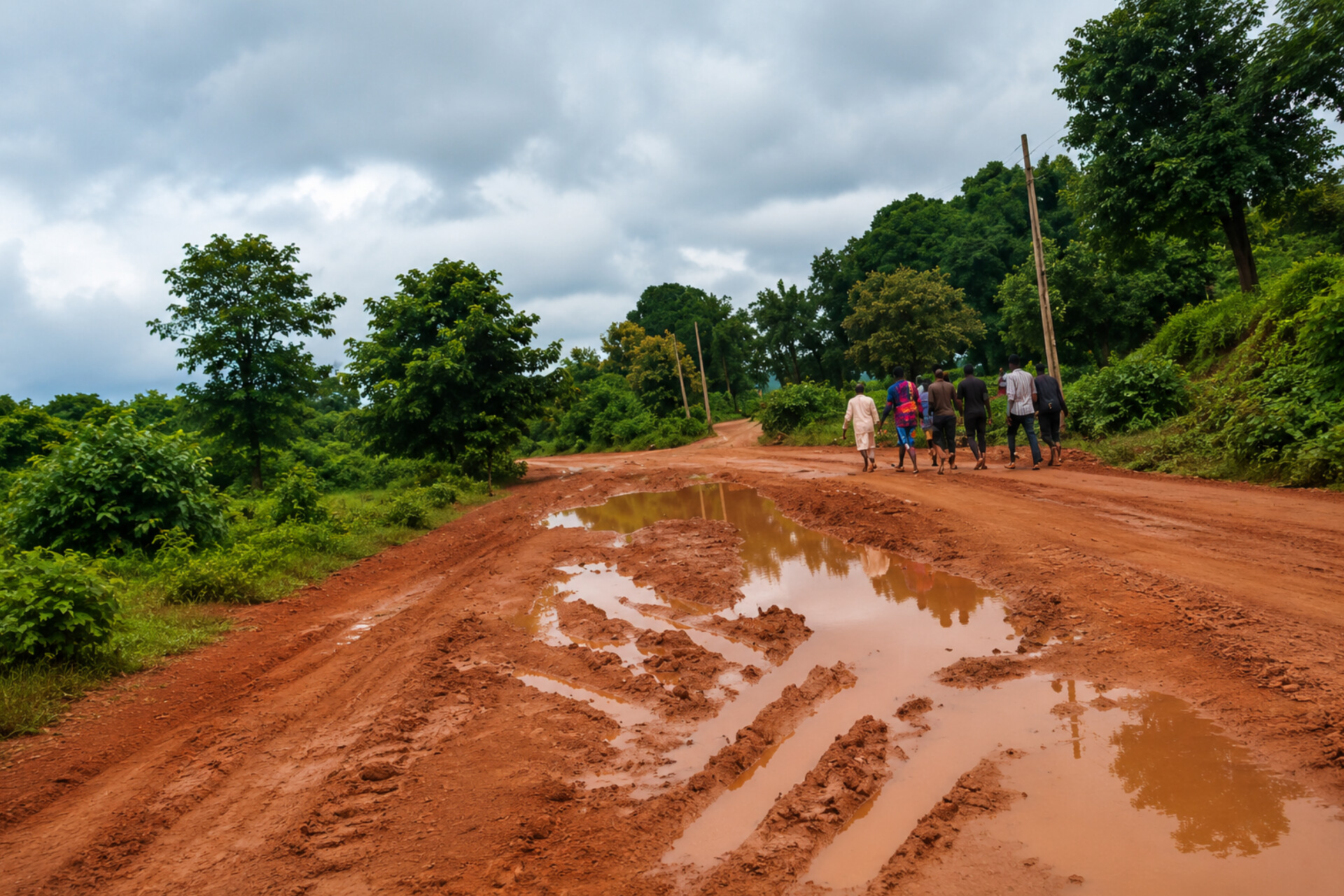
Perhaps no infrastructure problem demonstrates Taraba’s development challenge more clearly than roads.
The state’s geography makes connectivity difficult but also makes it essential.
Taraba is vast, mountainous in some areas and crossed by numerous rivers.
Communities depend on roads to reach schools, hospitals, markets and government services.
Farmers need them to transport produce.
Security agencies need them to respond to emergencies.
Businesses consider them when deciding where to invest.
Yet communities across parts of Yorro, Lau, Karim Lamido, Kurmi, Ussa and other areas continue to experience difficult road connections, particularly during the rainy season.
That makes road planning an economic necessity.
Taraba Needs More Than Emergency Road Repairs
A sustainable approach cannot depend solely on waiting for roads to deteriorate before intervention begins.
The state needs a clear connectivity strategy identifying strategic corridors, critical bridges, economically important rural roads and communities at risk of isolation.
Projects could then be prioritised according to their economic and social importance rather than political convenience.
A road connecting major agricultural communities to markets, for example, could have enormous economic impact.
Another connecting remote communities to healthcare facilities could save lives.
Strategic roads linking local government headquarters could improve administration, commerce and security.
A master plan can help government see these connections as part of one network rather than isolated construction projects.
Federal and State Roads Need Coordination
Taraba’s road problem is complicated by the fact that some important highways fall under federal responsibility.
Legally, that distinction matters.
For residents travelling over deteriorated roads, however, jurisdiction provides little comfort.
Where critical federal roads become difficult to use, the state needs sustained engagement with Abuja while exploring lawful forms of collaboration and emergency intervention where appropriate.
A comprehensive planning framework should therefore identify which strategic routes are federal, state or local responsibilities.
That would allow government to plan engagements and investments more effectively.
Citizens should not remain isolated indefinitely because different levels of government are debating responsibility.
Town Planning Must Go Beyond Roads
Roads are only one component of urban development.
Taraba’s towns also need effective drainage, organised housing, waste management, transportation systems, markets, water supply, electricity and spaces for future commercial and residential expansion.
Without planning, settlements can grow in ways that make infrastructure more expensive to provide later.
Buildings may emerge along natural waterways.
Road corridors can become congested.
Residential areas can expand without adequate drainage or access routes.
Commercial activities can spread into locations never designed for them.
A master plan should anticipate growth before these problems become difficult and costly to correct.
Land Management Will Be Critical
Effective urban planning also requires credible land administration.
Government must know which areas are designated for housing, commerce, industry, agriculture, public institutions and environmental protection.
This becomes particularly important as population and investment increase.
Uncontrolled development can create conflicts over land and complicate future infrastructure projects.
Planning authorities therefore need accurate spatial information, updated development layouts and effective enforcement.
A master plan that exists only as maps and documents will accomplish little if buildings continue to emerge without regard for approved development patterns.
Implementation will determine whether the plan actually reshapes Taraba’s towns.
Infrastructure Must Follow Economic Potential
Taraba repeatedly describes itself as a state rich in agriculture, tourism, minerals and energy resources.
Those resources have enormous potential.
But potential alone cannot create prosperity.
Agricultural products require roads, storage and processing facilities.
Tourism requires transportation, accommodation, security and reliable services.
Mining requires infrastructure, regulation and access to markets.
Industries require electricity, water and transport networks.
A long-term development plan should therefore connect infrastructure investment to economic opportunities.
Instead of constructing projects in isolation, government should be able to explain how roads, power, water, industrial areas and urban development work together to create economic growth.
The Plan Must Survive Politics
Perhaps the greatest challenge will come after the current administration.
Taraba does not simply need a plan for one governor’s tenure.
It needs a development vision capable of surviving elections.
A credible long-term framework should establish broad objectives that future administrations can improve upon rather than discard.
That does not mean preventing new governments from introducing their own priorities.
It means ensuring that the state’s fundamental development direction does not restart every four or eight years.
Taraba needs continuity in planning even when political leadership changes.
Residents Must See Measurable Results
The success of any new master plan will ultimately be judged outside government offices.
Can residents travel more easily?
Are local government headquarters becoming stronger economic centres?
Are roads being prioritised strategically?
Are towns growing in a more organised way?
Are drainage and waste-management systems improving?
Can businesses identify properly serviced areas for investment?
Are rural communities becoming better connected to markets and public services?
Those are the outcomes that matter.
Taraba has spent 35 years building a state. The next phase should focus on building a connected, properly planned and economically functional state.
A master plan can provide the roadmap.
But the document itself will not transform Taraba.
Political commitment, funding, professional planning, consistent implementation and continuity across administrations will determine whether it succeeds.
Taraba does not need another master plan that gathers dust on government shelves. It needs one that can finally connect its communities, organise its towns and turn decades of scattered development into a clear path towards the future.
