
No Movement: Adamawa Declares Three-Hour Traffic Shutdown for Saturday Sanitation Exercise
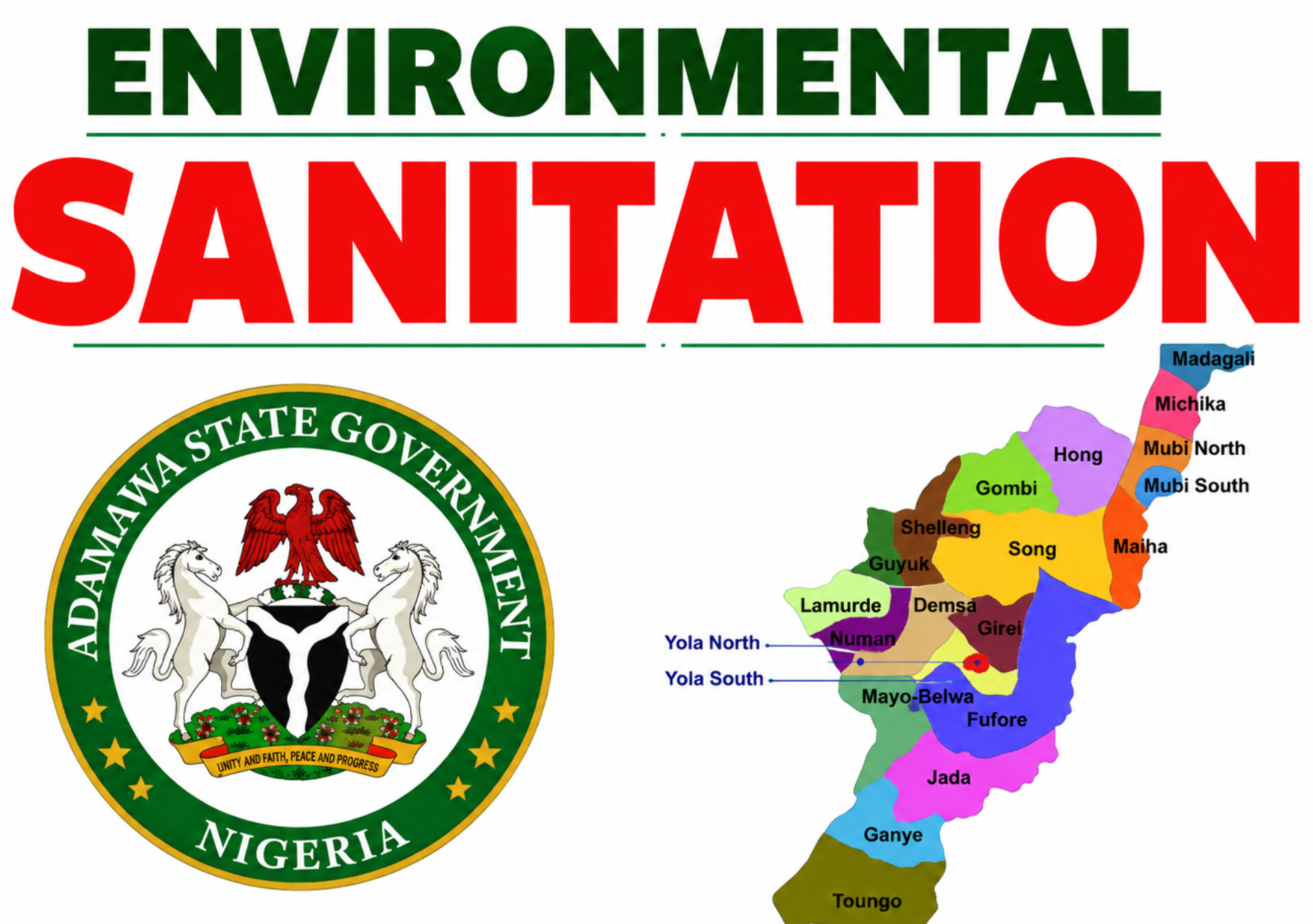
The Adamawa State Government has announced a three-hour restriction on vehicular movement across the state on Saturday, August 29, 2026, as residents participate in the monthly environmental sanitation exercise aimed at improving cleanliness, clearing drainage channels and reducing public health risks.
The movement restriction will be in force from 7:00 a.m. to 10:00 a.m. and will apply across all 21 local government areas of Adamawa State, effectively limiting regular vehicular traffic during the sanitation period.
The Ministry of Environment and Natural Resources said the temporary restriction is intended to provide residents, businesses and relevant government agencies with an uninterrupted period to clean their surroundings, evacuate refuse and clear drainage systems, particularly as concerns over flooding and sanitation-related illnesses remain important during the rainy season.
According to the ministry, security personnel and members of the environmental sanitation taskforce will be positioned at strategic locations to ensure compliance with the exercise and enforce the movement restriction.
The announcement means residents who have essential engagements on Saturday morning will need to make appropriate arrangements before the restriction takes effect or postpone their movements until after 10:00 a.m.
Ministry Calls for Full Participation
Speaking on behalf of the Permanent Secretary, Madam Syngana Dadah, the ministry’s Information Officer, Maryam Ajuji, described the monthly sanitation exercise as an important public health intervention rather than merely a routine environmental activity.
Residents have consequently been encouraged to make effective use of the three-hour period by cleaning residential compounds, shops, business premises, markets and surrounding public spaces.
Particular attention is expected to be given to drainage channels, where accumulated refuse can obstruct the free movement of rainwater and contribute to flooding.
The government also wants residents to remove waste from areas where stagnant water could accumulate and create conditions favourable for disease vectors.
Poor waste disposal remains a major environmental concern in many rapidly expanding Nigerian communities. Plastic materials, household waste and other debris dumped indiscriminately can block drainage systems, particularly during heavy rainfall.
When such channels become obstructed, water may overflow into roads, homes and commercial areas, potentially damaging property and creating additional sanitation challenges.
The state government’s monthly exercise is therefore designed to combine individual responsibility with coordinated public action.
Sanitation Takes on Greater Importance During Rainy Season
The timing of Saturday’s exercise makes the clearing of waterways particularly significant.
During periods of sustained rainfall, poorly maintained drainage channels can increase the likelihood of localised flooding. Floodwater may also mix with improperly disposed waste and other contaminants, creating potential environmental and public health problems.
Authorities are therefore urging residents not to treat the exercise simply as a restriction that keeps people indoors for three hours.
Instead, households are expected to participate actively by cleaning their immediate surroundings and ensuring that refuse does not end up in gutters, waterways or unauthorised dumping sites.
Markets and commercial establishments have similarly been advised to ensure their environments are properly cleaned.
Effective sanitation, however, extends beyond removing visible waste. Keeping drainage channels open, disposing of refuse through appropriate channels and preventing stagnant water from accumulating can contribute to healthier communities long after the monthly exercise has ended.
This makes sustained individual behaviour important alongside government-organised sanitation programmes.
Security Agencies to Enforce Restriction
The Ministry of Environment and Natural Resources said compliance with the movement restriction is mandatory.
Security agencies and sanitation taskforce personnel are expected to operate at designated locations across Adamawa during the exercise.
The ministry also warned that individuals who violate the restriction could face sanctions in accordance with applicable state environmental laws.
Residents should therefore avoid unnecessary travel between 7:00 a.m. and 10:00 a.m. and complete important journeys before the commencement of the exercise where possible.
People travelling into or through Adamawa on Saturday morning should equally take the restriction into consideration when planning their journeys.
While the government announcement establishes a general restriction on vehicular movement, residents with circumstances they believe may qualify as emergencies or exemptions should follow directives issued by the relevant authorities rather than assume that they are automatically exempt.
Businesses and Markets Expected to Participate
Commercial premises are also central to the exercise because marketplaces, shops and densely populated business districts can generate considerable quantities of waste.
Traders and business owners have been encouraged to clean their surroundings and properly dispose of accumulated refuse.
A successful sanitation exercise will depend significantly on participation at household and community levels. Government workers cannot independently clean every street, drainage channel, market and residential neighbourhood across all 21 local government areas.
The exercise therefore places responsibility on residents to address environmental problems within their immediate surroundings while government agencies coordinate broader sanitation activities.
Community participation can also help identify blocked drains and waste accumulation points before they develop into more serious environmental hazards.
Beyond the Three-Hour Exercise
Although Saturday’s restriction lasts only three hours, environmental cleanliness requires more sustained action.
Indiscriminate waste disposal immediately after sanitation exercises can quickly reverse whatever progress is achieved during the designated period.
Residents can contribute to longer-term improvements by avoiding the disposal of household waste in drainage channels, keeping their premises clean and using approved waste collection and disposal systems where available.
The government, on its part, faces the continuing responsibility of ensuring that waste collected during sanitation exercises is properly evacuated. Cleaning drainage channels without removing excavated refuse can allow waste to return to the waterways when rainfall occurs.
Environmental sanitation therefore works best when household participation is supported by effective waste collection, drainage maintenance, enforcement and public education.
Saturday’s exercise provides another opportunity for authorities and communities to reinforce those responsibilities.
Residents Advised to Adjust Saturday Plans
With the restriction scheduled to begin at 7:00 a.m., residents have been advised to plan ahead.
Those intending to travel, conduct business or undertake other activities requiring vehicular movement during the affected period should adjust their schedules accordingly.
Normal movement is expected to resume after the sanitation exercise ends at 10:00 a.m., subject to any further official directives.
For the Adamawa State Government, the exercise is intended to reinforce the message that environmental cleanliness is directly connected to public health and safety.
As communities across the state’s 21 local government areas participate on Saturday, attention will not only be on compliance with the three-hour movement restriction but also on whether residents use the period for its intended purpose — clearing refuse, opening blocked drainage channels and creating cleaner surroundings.
The central message from the Ministry of Environment and Natural Resources is straightforward: between 7:00 a.m. and 10:00 a.m. on Saturday, August 29, 2026, residents should limit movement and devote the period to improving the environment around them.
