
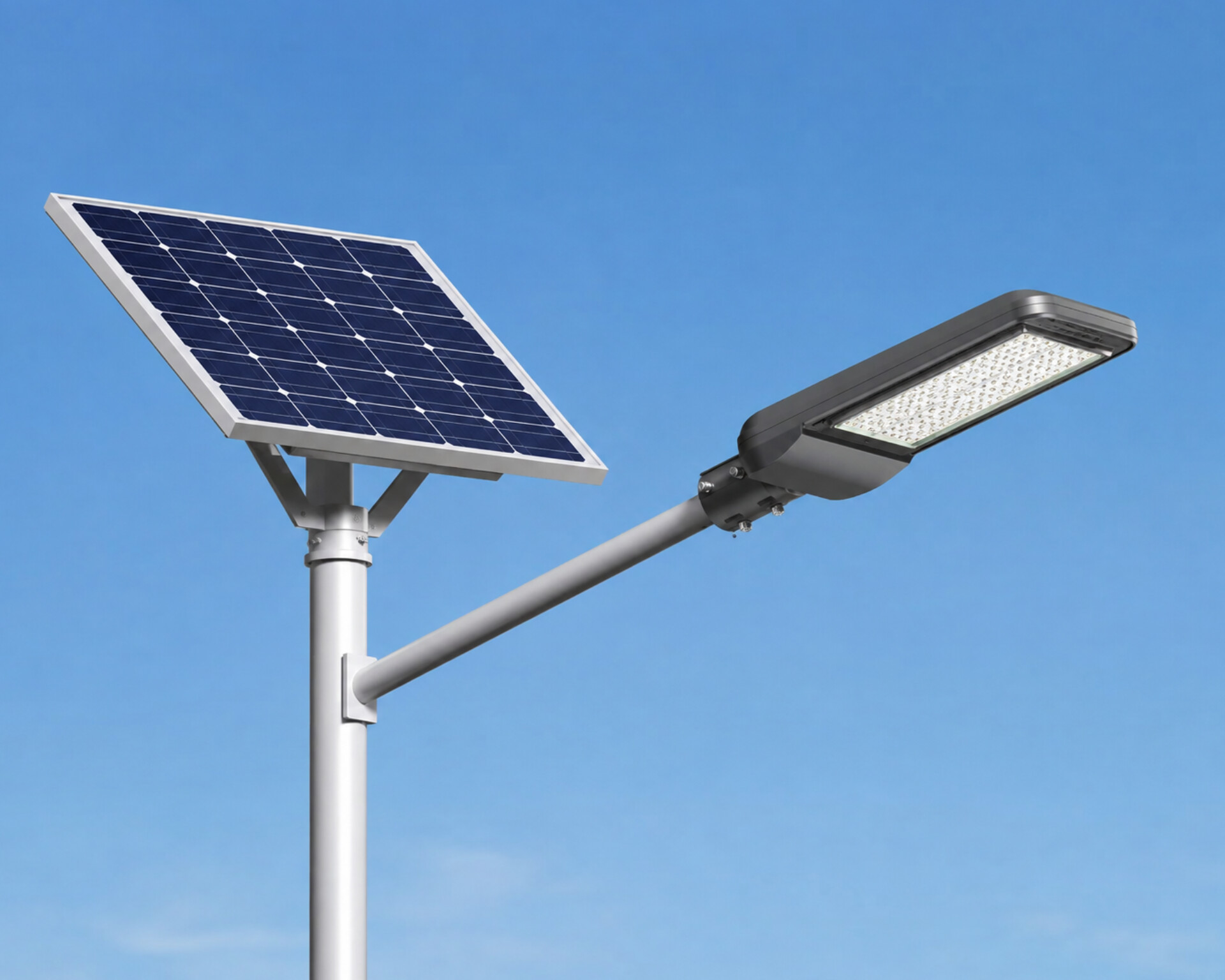
NEDC Begins Solar Rollout Across Adamawa’s 21 LGAs
The North East Development Commission has commenced the installation of solar-powered systems across Adamawa State’s 21 local government areas in a major intervention expected to expand access to electricity, support small businesses and improve security in underserved communities.
The project is being implemented as part of the commission’s broader development strategy for the North-East, a region where unreliable electricity continues to affect commercial activities, education, healthcare delivery and household livelihoods.
NEDC’s Adamawa State Coordinator, Alhaji Khalifa Lawan, disclosed that more than 2,000 solar-powered systems would be installed in Yola, the state capital. He added that the programme would extend to all the local government areas, with 350 systems planned for different locations in each council.
According to him, the first phase of the intervention will cover 1,000 locations across the state’s 21 local government areas. The installations are separate from the solar-powered boreholes already being implemented in some communities.
The announcement represents a significant development for residents who have struggled with prolonged power outages, unstable supply and the rising cost of alternative energy. Many households and businesses in Adamawa depend on petrol or diesel generators, rechargeable lamps and privately acquired solar equipment to meet their daily electricity needs.
For small business owners, particularly barbers, tailors, welders, food vendors, phone-charging operators and shopkeepers, unreliable electricity often translates into reduced working hours and higher operational costs. The solar rollout could provide an alternative source of power capable of supporting local enterprises and allowing some businesses to operate beyond daylight hours.
Lawan said the project was designed to stimulate economic activities while contributing to community safety. He explained that improved lighting could discourage criminals who take advantage of dark streets and poorly illuminated public spaces.
Beyond its economic benefits, reliable public lighting can improve movement within communities, particularly for women, students, healthcare workers and traders who return home after sunset. It can also strengthen visibility around markets, schools, health facilities, motor parks and other areas where people gather.
The solar systems are being introduced under the North-East Stabilisation and Development Master Plan, which guides the NEDC’s interventions across Adamawa, Bauchi, Borno, Gombe, Taraba and Yobe states.
The commission was established to coordinate recovery, reconstruction and sustainable development in a region affected by insurgency, displacement, poverty and infrastructure deficits. Its responsibilities extend beyond emergency relief to investments in education, agriculture, healthcare, roads, water supply, energy and economic empowerment.
Communities to influence project selection
Lawan said the NEDC would continue to consult beneficiary communities before selecting and executing projects. According to him, the commission does not impose interventions without considering the immediate needs of residents.
Under the approach, communities are expected to identify their most pressing development priorities, whether electricity, water, roads, schools or healthcare facilities. The commission can then align its interventions with those identified needs.
This community-driven model is important because development projects are more likely to remain functional when residents understand their purpose, participate in their implementation and take responsibility for protecting the facilities.
The coordinator urged beneficiaries to safeguard the solar installations against vandalism, theft and misuse. Solar panels, batteries and related components have increasingly become targets of vandalism in some communities, undermining public investments and leaving residents without the services the projects were designed to provide.
Local government authorities, traditional rulers, community associations and security agencies may therefore need to establish effective arrangements for monitoring and maintaining the installations. Without adequate protection and maintenance, the benefits of the intervention could diminish after the initial commissioning.
The publicly available announcement did not provide a detailed completion timetable or specify the exact communities that would benefit during the first phase. Residents will consequently expect the commission to publish the selected locations, implementation schedule and criteria used in distributing the systems.
Transparent disclosure would allow communities to monitor progress and ensure that the installations reach areas with the greatest electricity challenges.
Solar energy gaining ground in Adamawa
The NEDC intervention adds to a growing number of renewable-energy projects being implemented in Adamawa State. The Rural Electrification Agency has also identified Adamawa as one of the states receiving standalone solar systems under national electricity-access programmes.
As of April 2026, more than 830,000 solar home systems had been deployed across Nigeria under the Distributed Access through Renewable Energy Scale-Up project, according to the Rural Electrification Agency. The installations reportedly provided clean electricity to nearly 3.9 million people across the country, including households and women-led businesses.
Adamawa is also benefiting from the Energising Education Programme at Modibbo Adama University, Yola. The programme is developing a solar-hybrid power system intended to provide reliable electricity for academic activities, improve campus security and offer practical renewable-energy training.
These interventions show that decentralised renewable energy is becoming an increasingly important response to Nigeria’s electricity deficit. Unlike major grid projects that can require extensive transmission infrastructure, standalone solar systems and mini-grids can be deployed directly in underserved communities.
However, the success of such projects depends on more than installing solar panels. Authorities must ensure that the equipment meets appropriate technical standards, batteries are properly maintained and trained personnel are available to handle repairs.
Clear arrangements must also be established for ownership, replacement of damaged components and long-term maintenance. Communities need to know which agency to contact when a system develops a fault and whether any service charges will apply.
The NEDC has asked communities to protect the projects and ensure they continue serving the public. This responsibility will require cooperation among residents, government institutions and contractors.
Potential boost for local economies
If properly implemented, the solar rollout could create benefits beyond street lighting. Reliable electricity can support refrigeration for food and medicines, digital services, agricultural processing, evening learning and communication.
In rural farming communities, solar-powered equipment can contribute to irrigation, crop processing and storage. Health facilities can use renewable energy to preserve temperature-sensitive medicines, provide emergency services at night and power essential medical equipment.
Schools can also benefit through improved lighting, access to computers and longer study periods. For communities without stable grid electricity, even modest solar installations can substantially improve the delivery of essential services.
The project could additionally create short-term and long-term employment opportunities for technicians, installers, security personnel and maintenance workers. Giving qualified Adamawa residents roles in the installation and management of the systems would strengthen local ownership while expanding renewable-energy skills within the state.
Nevertheless, residents will judge the programme by the number of functional systems delivered, their locations and their condition after installation. Effective monitoring, transparent procurement and regular maintenance will be essential to translating the announcement into lasting improvements.
For Adamawa’s households and entrepreneurs, the solar intervention offers the prospect of more productive hours, reduced dependence on costly generators and safer public spaces. Its ultimate impact will depend on whether implementation is equitable, technically sound and sustained beyond the commissioning stage.
