
Benue Governor Visits Otukpo Attack Victims, Vows Justice as State Takes Over Medical Bills
OTUKPO, BENUE STATE — Benue State Governor Hyacinth Alia has visited Otukpo to commiserate with families affected by the recent deadly attacks on Akpachi and Otukpo-Nobi communities, reiterating his administration’s resolve to restore peace and protect residents from recurring violence linked to suspected armed herders.
The governor’s visit comes amid heightened concerns over persistent attacks in parts of Benue State, where several communities have endured repeated incidents of killings, displacement, and destruction of property. During the visit, Alia met with grieving families, community leaders, and traditional authorities, assuring them that his government would not relent in confronting insecurity across the state.
Speaking during the visit, the governor described the attacks as senseless and heartbreaking, emphasizing that the suffering of affected families was a burden shared by the entire state government.
According to him, safeguarding the lives and property of every resident remains both a constitutional obligation and a moral duty of his administration.
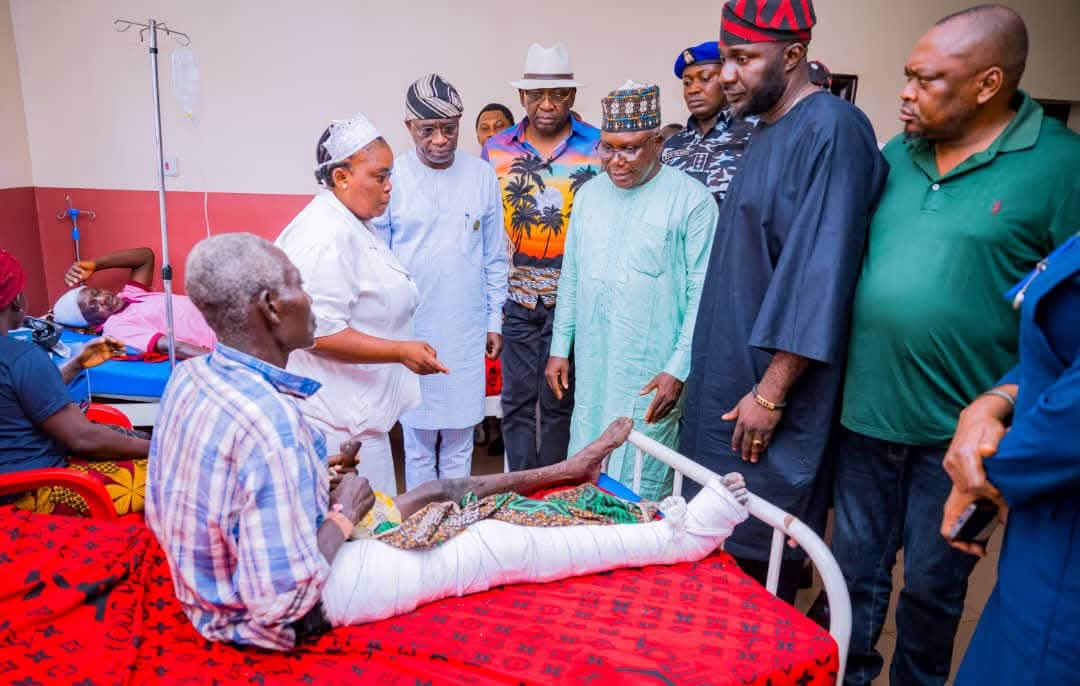
As part of the visit, Governor Alia also proceeded to the Federal University of Health Sciences Teaching Hospital in Otukpo, where victims injured during the attacks are receiving medical attention. He interacted with patients and medical personnel, expressing sympathy to those recovering from their injuries while reassuring them that they would not be left to bear the financial burden of treatment.
The governor immediately directed that the Benue State Government should assume full responsibility for the medical expenses of all victims receiving treatment at the hospital.
The decision, according to the governor, is aimed at ensuring that survivors receive adequate healthcare without additional hardship following the traumatic attacks.
Observers say the move is expected to provide relief for affected families who have already suffered significant emotional and financial losses as a result of the violence.
Governor Alia also paid a visit to the palace of His Royal Majesty, the Ochi’Idoma, where he held consultations with the traditional ruler and other stakeholders on strategies to restore lasting peace to the affected communities.
During the meeting, the governor reaffirmed his administration’s commitment to strengthening security operations throughout Benue State, particularly in vulnerable communities that have experienced repeated attacks.
He disclosed that the state government has continued to support security agencies through the provision of logistics, operational assistance, and motivation designed to enhance their effectiveness in combating criminal activities.
According to him, the government will sustain its collaboration with security agencies until terrorists, armed herders involved in criminal activities, and other violent groups are completely eliminated from the state.
The governor stressed that security cannot be achieved by government alone, calling on residents to remain vigilant and actively support security agencies with credible information capable of preventing future attacks.
He urged community members to promptly report suspicious movements and unusual activities within their localities, noting that intelligence supplied by residents remains critical to successful security operations.
Governor Alia emphasized that protecting communities requires collective responsibility involving government institutions, security agencies, traditional rulers, and citizens working together toward a common goal.
The latest attacks have once again drawn attention to the lingering security crisis in Benue State, which has for years remained one of Nigeria’s most affected states by violent clashes involving suspected armed herders and farming communities.
Thousands of residents have been displaced over the years, while many farming communities have struggled to return to normal economic activities because of persistent insecurity.
The recurring violence has continued to generate widespread concern among residents, civil society organisations, religious leaders, and humanitarian groups, many of whom have repeatedly called for stronger security interventions and lasting solutions to the crisis.
Governor Alia assured residents that his administration remains fully committed to protecting every community within the state and restoring confidence among citizens.
He maintained that no effort would be spared in ensuring that perpetrators of violence are confronted through lawful means while peace and stability are gradually restored across Benue.
The governor also appealed for unity among the people, urging them not to allow fear or intimidation to divide communities that have coexisted for generations.
He reassured the people that government would continue pursuing every legal and constitutional measure necessary to secure lives, protect property, and preserve the state’s heritage.
“We will not surrender our land. We will not abandon our people,” the governor declared while reaffirming his administration’s determination to return normalcy to every affected community.
His visit has been widely viewed as both a humanitarian gesture and a demonstration of government solidarity with victims who continue to grapple with the consequences of the attacks.
While security operations continue in affected areas, residents remain hopeful that renewed collaboration between government, security agencies, and community leaders will translate into lasting peace and improved safety across Benue State.
For many families mourning loved ones or caring for injured relatives, the governor’s commitment to fund medical treatment and intensify security efforts offers some reassurance. However, many residents insist that beyond emergency interventions, lasting peace will depend on sustained security operations, accountability for perpetrators, and long-term strategies capable of preventing future attacks.
As Benue continues to confront one of its most pressing security challenges, the state government’s response in the aftermath of the Otukpo attacks is expected to remain under close public scrutiny, with citizens hoping that promises of justice, protection, and peace will translate into meaningful action on the ground.
