
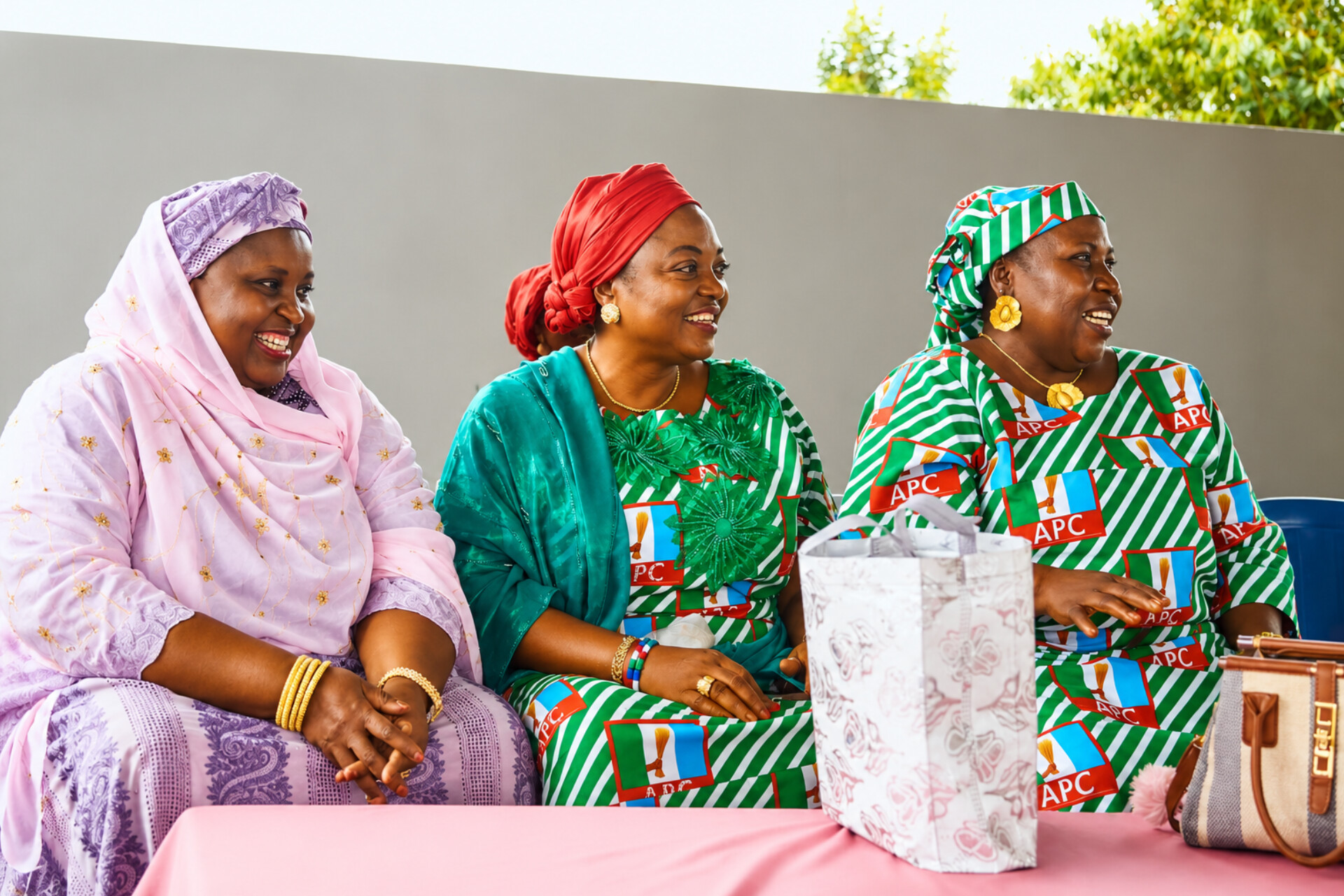
APC Chairman’s Wife Empowers 50 Taraba Widows
Fifty widows in Taraba State have received start-up support from Hajiya Amina Abubakar Bawa, wife of the state Chairman of the All Progressives Congress (APC), in an initiative aimed at helping vulnerable women establish small businesses and strengthen their financial independence.
The empowerment programme, held at the Fast Track Arena, provided beneficiaries with start-up packages, cash assistance to begin trading and wrappers as part of efforts to support their livelihoods.
Speaking during the programme, Hajiya Amina said the initiative was designed to give widows greater opportunities to become self-reliant rather than remain entirely dependent on assistance from relatives, political leaders or other members of society.
She maintained that supporting vulnerable women should remain an important responsibility for leaders, particularly those in positions where they can mobilise resources and opportunities to improve people’s lives.
The programme also had a political dimension, with Amina linking the intervention to the APC’s broader agenda while calling on women and other party supporters to remain committed ahead of the 2027 general elections.
Widows Receive Cash and Start-Up Packages
The 50 beneficiaries received different forms of assistance intended to help them begin small-scale commercial activities.
The support included cash to commence trading, start-up packages and wrappers.
While the available information does not specify the exact amount of money received by each beneficiary or the total financial value of the programme, the organisers presented the intervention as an effort to help vulnerable women build sources of income.
Amina said the objective was to provide widows with opportunities to improve their livelihoods and move towards greater economic independence.
Small-scale businesses can be particularly important for women responsible for supporting their households.
Activities such as petty trading and other micro-enterprises can provide an income stream where access to formal employment is limited.
However, the long-term impact of an empowerment programme depends not only on distributing financial assistance but also on whether beneficiaries are able to convert the support into sustainable businesses.
For the women involved, the immediate assistance could provide initial capital needed to enter or expand small-scale trading.
Focus on Self-Reliance
Amina placed self-reliance at the centre of her message to beneficiaries.
The initiative, she said, was intended to provide women with opportunities to improve their economic circumstances through productive activities.
Widows can face particular economic challenges where the death of a spouse removes an important source of household income.
The impact can extend beyond the individual woman to children and other dependants who rely on her for food, education, healthcare and other basic needs.
Economic empowerment programmes targeted at widows can therefore have effects at household level when the assistance is effectively utilised.
Providing business capital may allow a beneficiary to establish a source of recurring income instead of relying solely on one-off assistance.
The challenge is ensuring that the capital is sufficient and that beneficiaries have access to the conditions needed for their businesses to survive.
Initiative Complements Women’s Welfare Efforts
Amina also linked her intervention to efforts being made to promote the welfare of women and families in Taraba State.
She specifically acknowledged the wife of the Taraba State Governor, Mrs. Agyin Kefas, whom she described as a role model in advancing the welfare of women and families.
According to Amina, her intervention was intended to complement such efforts by reaching vulnerable women and helping them pursue financial independence.
The programme reflects a wider trend in which political and community leaders undertake empowerment initiatives targeting women, young people and other economically vulnerable groups.
For beneficiaries, however, the most important measure of success will be the practical impact of the assistance.
A start-up package becomes meaningful when it enables a recipient to establish a viable business, generate income and improve her household’s economic security.
Women Central to Grassroots Politics
Beyond the economic intervention, the event also reflected the growing political mobilisation ahead of Nigeria’s 2027 general elections.
Amina urged APC members and supporters to remain committed to the party, stressing the importance of working towards electoral success for President Bola Ahmed Tinubu, Governor Agbu Kefas and other APC candidates.
She also emphasised the role of women in grassroots mobilisation.
Women represent an important component of political organisation at community level, where mobilisation often depends on ward structures, local government networks and direct engagement with voters.
Amina indicated that women would remain central to the APC’s grassroots strategy ahead of the elections.
Her remarks demonstrate how empowerment initiatives and political mobilisation can sometimes intersect, particularly as elections approach.
For news reporting, it is important to maintain that distinction clearly: the event provided material support to 50 widows while also serving as a platform for political messaging and mobilisation.
APC Women Leaders Attend Programme
The programme attracted women leaders and party stakeholders from different parts of Taraba State.
Among those reported to have attended were the State APC Woman Leader, Hon. Princess Margret; the Deputy Woman Leader, Hon. Mrs. Rose; zonal women leaders and local government women leaders.
Their participation gave the event a wider party structure beyond the immediate empowerment of beneficiaries.
The presence of women leaders from different levels of the APC also reflects the party’s increasing focus on organising its female membership ahead of 2027.
As political preparations intensify, women’s groups are likely to play an increasingly visible role in voter engagement, mobilisation and campaign activities.
Beneficiaries Express Appreciation
The beneficiaries expressed appreciation for the support they received.
The event was characterised by prayers, expressions of gratitude and optimism among the women.
For the recipients, the next stage will be putting the assistance into productive use.
The value of the programme will ultimately depend on whether the start-up support translates into sustainable improvements in their livelihoods.
One-off interventions can provide immediate relief, but sustainable economic empowerment usually requires beneficiaries to maintain viable income-generating activities beyond the initial distribution.
Business mentoring, financial literacy and follow-up support can also help small enterprises survive, although the source information does not state whether those components form part of this particular programme.
It would therefore be inappropriate to suggest that additional training or long-term financing was provided unless subsequently confirmed.
Empowerment Beyond Immediate Assistance
The initiative also raises a broader conversation about how vulnerable women can be supported sustainably.
Financial assistance is important, particularly for people without sufficient capital to start businesses.
But empowerment is strongest when beneficiaries can convert assistance into recurring income.
For widows, this can mean developing enterprises capable of supporting their families and reducing long-term dependence on external assistance.
Successful micro-enterprises can also contribute to local economic activity by circulating money within communities.
Even relatively small businesses can provide income for households and, where they grow, potentially create opportunities for others.
That makes the effectiveness of start-up interventions worth monitoring beyond the initial presentation ceremony.
Politics and Social Intervention Ahead of 2027
The timing of the programme also places it within an increasingly active political environment in Taraba.
Political parties and their stakeholders are beginning to strengthen grassroots structures ahead of the 2027 elections.
Women are expected to be a major part of that mobilisation.
Amina connected the empowerment programme with support for the APC’s political agenda and called for continued commitment to the party.
This does not change the immediate fact that 50 widows received assistance, but it provides important context for understanding the event.
As political activities increase, voters are likely to see more interventions combining social assistance, community engagement and political mobilisation.
News organisations will therefore have a responsibility to distinguish between government-funded programmes, privately sponsored interventions and party political activities so the public can understand who funded an initiative and its purpose.
In this instance, the available source describes the intervention as an empowerment programme undertaken by Hajiya Amina Abubakar Bawa.
Supporting Widows Through Economic Opportunity
For the beneficiaries, political messaging surrounding the programme may be secondary to the economic opportunity presented by the assistance.
The immediate objective is to use the start-up support to establish or strengthen businesses capable of generating income.
Amina said supporting vulnerable women remains an important responsibility and presented the initiative as part of efforts to promote self-sufficiency.
The empowerment of 50 widows may be modest compared with the wider number of economically vulnerable women across Taraba, but its impact can still be meaningful for individual beneficiaries if the assistance leads to sustainable income.
The programme ultimately brings together two themes likely to receive increasing attention in Taraba as 2027 approaches: women’s economic empowerment and their growing importance in grassroots political mobilisation.
For the 50 beneficiaries, however, the more immediate test will be whether the support received at the Fast Track Arena can become the foundation for businesses that provide greater financial security for themselves and their families.
