
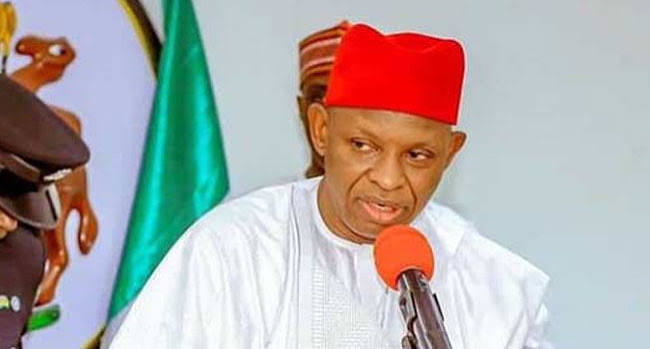
Yusuf Directs Traffic at Busy Kano Junction, Enforces Road Discipline
Kano, Nigeria In a move aimed at improving traffic flow and promoting road safety, Yusuf personally supervised traffic management at one of Kano’s busiest road intersections, demonstrating the state government’s commitment to restoring order on major roads and encouraging compliance with traffic regulations.
The intervention attracted the attention of motorists, commercial transport operators, pedestrians, and residents who witnessed the official actively directing vehicles and ensuring that road users adhered to established traffic rules. The exercise formed part of broader efforts to address increasing congestion in Kano metropolis while reinforcing discipline among motorists who frequently violate traffic regulations.
The busy junction, known for experiencing heavy vehicular movement during peak hours, has long been identified as one of the city’s traffic hotspots. Commercial buses, tricycles, motorcycles, private vehicles, and heavy-duty trucks often compete for limited road space, resulting in prolonged delays and occasional gridlock.
During the traffic control exercise, Yusuf was seen coordinating the orderly movement of vehicles, ensuring that motorists obeyed traffic signals and lane markings while discouraging dangerous driving practices. Security personnel and traffic management officials worked alongside him to regulate traffic flow and assist pedestrians crossing the busy intersection safely.
Eyewitnesses said the presence of the senior government official immediately influenced the behavior of many motorists, with drivers becoming more cautious and willing to obey traffic instructions. Commercial drivers who are often accused of stopping indiscriminately to pick up passengers were also compelled to comply with traffic regulations throughout the operation.
Residents described the exercise as a practical demonstration of leadership by example, noting that government officials should remain actively involved in initiatives that directly affect the daily lives of citizens. Several commuters praised the improved movement of vehicles during the operation, saying traffic congestion was significantly reduced compared to previous days.
Road safety experts have repeatedly stressed that discipline among road users remains one of the most important factors in reducing accidents and improving transportation efficiency. They argue that while road infrastructure is essential, compliance with traffic laws ultimately determines how effectively transport systems operate.
According to traffic management authorities, common violations contributing to congestion in Kano include illegal parking, wrong-way driving, reckless overtaking, disregard for traffic signs, and unauthorized loading or unloading of passengers along major roads. Such practices often obstruct the free flow of traffic and increase the risk of road crashes.
Officials involved in the operation reportedly cautioned motorists against violating road regulations, emphasizing that enforcement would continue beyond the day’s exercise. They warned that drivers found engaging in reckless driving or other traffic offences would face appropriate sanctions in accordance with existing traffic laws.
Commercial transport operators acknowledged that traffic congestion remains one of the major challenges affecting their daily operations. Many drivers admitted that while delays often encourage some motorists to violate traffic rules, stronger enforcement and improved road discipline could ultimately benefit all road users by reducing travel time and enhancing safety.
Pedestrians also welcomed the initiative, noting that crossing busy intersections has become increasingly difficult due to motorists who ignore pedestrian rights of way. They expressed hope that continued enforcement would encourage greater respect for all categories of road users.
The traffic control exercise also highlighted the importance of collaboration among relevant government agencies responsible for road management. Officials from transportation, road safety, and law enforcement agencies were observed working together to coordinate vehicle movement and respond promptly to emerging traffic situations.
Urban planning experts have consistently argued that rapidly growing cities require comprehensive traffic management strategies to keep pace with increasing vehicle ownership. They recommend improved road infrastructure, functional traffic lights, dedicated bus stops, effective public transportation, and sustained public awareness campaigns to complement enforcement measures.
Beyond directing traffic, Yusuf reportedly interacted with motorists and transport operators, urging them to prioritize safety over speed. He reminded drivers that reckless driving not only endangers their lives but also places passengers, pedestrians, and other road users at significant risk.
The official further emphasized that maintaining discipline on the roads remains a shared responsibility requiring cooperation between government authorities and the public. He encouraged citizens to obey traffic regulations voluntarily rather than only when enforcement officers are present.
Road safety advocates believe such public demonstrations by senior government officials can positively influence public attitudes toward compliance with traffic regulations. They argue that visible leadership often strengthens confidence in government initiatives while encouraging citizens to support ongoing reforms.
In recent years, Kano has experienced rapid urban growth accompanied by increasing traffic volume, particularly within commercial districts and major transport corridors. The expansion of business activities has contributed to greater demand on existing road infrastructure, making efficient traffic management an increasingly important priority for authorities.
Transportation analysts note that addressing urban congestion requires a combination of infrastructure development, effective law enforcement, driver education, and responsible road use by citizens. They maintain that consistent enforcement rather than occasional operations remains the key to achieving lasting improvements in traffic conditions.
Residents expressed optimism that the latest exercise would mark the beginning of sustained efforts to restore order on Kano roads. Many called for regular monitoring of busy intersections, installation of additional traffic control devices, and continuous public education campaigns aimed at promoting safer driving habits.
As traffic volumes continue to rise across Nigeria’s urban centres, initiatives focused on discipline and responsible road use are expected to play a critical role in reducing congestion and improving road safety. Authorities believe that sustained compliance with traffic regulations will not only improve mobility but also contribute to economic productivity by reducing travel delays and minimizing road accidents.
The traffic enforcement exercise concluded with renewed assurances from relevant authorities that measures aimed at improving traffic management would continue across strategic locations in Kano. Officials reiterated that ensuring safer roads remains a priority, urging every motorist and pedestrian to play their part in creating a more orderly and secure transportation system for all.
