
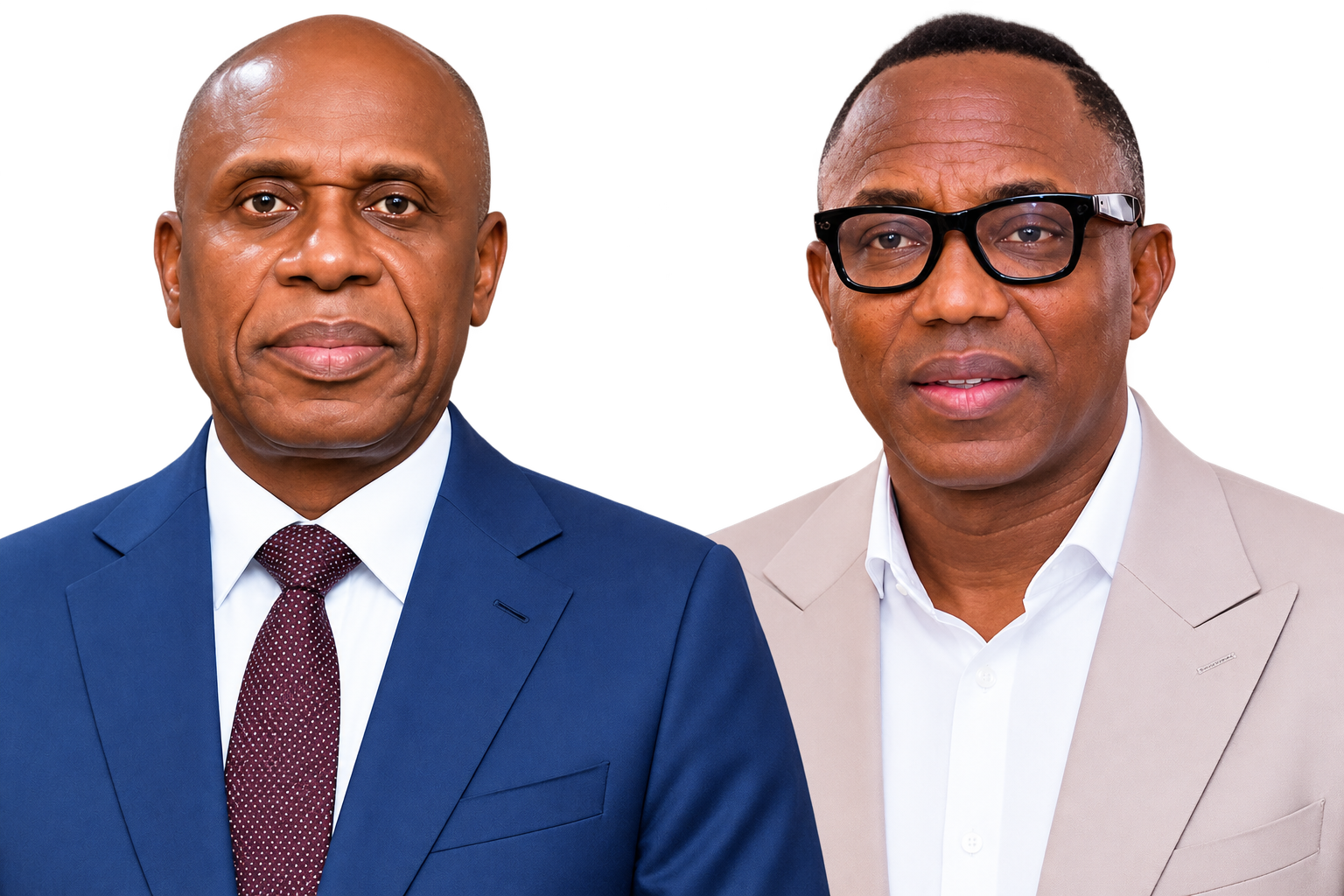
Amaechi Fires at Sowore Over Political Experience, Tells Activist to ‘Keep Quiet’ When Politicians Speak
Former Minister of Transportation, Rotimi Amaechi, has taken a swipe at human rights activist and former presidential candidate Omoyele Sowore, questioning his depth of political experience and telling him to “keep quiet” when experienced politicians are discussing political matters.
The sharp exchange adds another layer to Nigeria’s increasingly intense political conversation as politicians, activists and opposition figures position themselves ahead of the 2027 general election.
Amaechi’s remarks, delivered during a political discussion involving Sowore, centred on the distinction between activism and practical experience in the political arena. The former Rivers State governor appeared to argue that participating in electoral politics and political activism does not necessarily amount to having the institutional experience accumulated through years of holding political office.
Addressing Sowore during the exchange, Amaechi told him, in substance, that he lacked the experience required to speak authoritatively on some aspects of practical politics and should allow experienced politicians to make their points.
The comment immediately stood out because both men represent significantly different traditions within Nigeria’s political space.
Amaechi has spent decades within mainstream Nigerian politics. His political career includes serving as Speaker of the Rivers State House of Assembly from 1999 to 2007, governor of Rivers State between 2007 and 2015, and Minister of Transportation under former President Muhammadu Buhari from 2015 until 2022.
That record gives Amaechi extensive experience in legislative politics, state administration, federal government and party organisation.
Sowore, on the other hand, built much of his public reputation outside the traditional political establishment. He is widely known as an activist, pro-democracy campaigner and founder of Sahara Reporters. He later entered partisan politics, established the African Action Congress and contested Nigeria’s presidential elections in 2019 and 2023.
Two Different Political Backgrounds
The confrontation therefore goes beyond the words exchanged between two prominent personalities. It raises a broader question about what should qualify as political experience in a democracy.
From Amaechi’s perspective, experience acquired from occupying political office can provide an understanding of political negotiations, government institutions, party structures and the realities involved in converting political promises into government decisions.
Having served as a state legislator, governor and federal minister, Amaechi has participated in Nigerian politics from several levels of government.
Sowore’s political identity has developed differently.
Rather than spending decades rising through the structures of Nigeria’s dominant political parties, he became prominent through journalism, activism and political mobilisation. His campaigns have frequently challenged the political establishment and called for fundamental changes to Nigeria’s governance system.
His #RevolutionNow campaign, for example, emerged from demands relating to governance, insecurity, corruption, wages and access to education.
Consequently, supporters of the activist could argue that political understanding should not be measured exclusively by the number of government positions a person has occupied.
They may contend that opposition politics, civic mobilisation, election campaigns and activism also provide significant experience with Nigeria’s democratic system.
Amaechi’s argument, however, appears to draw a distinction between observing or challenging government and actually operating within the institutions where political decisions are negotiated and implemented.
2027 Political Conversation Intensifies
The exchange comes as political discussions surrounding the 2027 general election continue to gather momentum.
Nigeria’s opposition landscape has witnessed increased conversations about alliances, candidates and strategies capable of challenging the ruling political establishment.
Amaechi himself remains a significant figure in those conversations. After serving as governor and minister, he contested the All Progressives Congress presidential primary ahead of the 2023 election and finished behind Bola Tinubu in the race for the party’s ticket. He has since become associated with the African Democratic Congress.
Sowore has meanwhile maintained his political activism while continuing to challenge both the government and established opposition politicians.
Recent political commentary attributed to Sowore has included criticism of leading opposition figures and questions about whether familiar political actors can provide the kind of change Nigerians are demanding.
The differences between the two men therefore reflect a potentially important debate ahead of 2027: whether Nigeria needs experienced establishment politicians, disruptive outsiders, or a combination of both approaches.
Experience Versus New Political Thinking
Political experience can be valuable in governance.
Running a government requires knowledge of budgeting, legislation, public administration, negotiations and institutional processes. Leaders who have spent years within those systems may understand how government machinery operates in ways outsiders initially do not.
But experience alone does not automatically guarantee effective leadership.
Nigeria has had numerous experienced politicians at different levels of government, yet citizens continue to raise concerns about economic hardship, corruption, insecurity, unemployment, infrastructure and public-service delivery.
This is one reason anti-establishment political movements continue to attract attention.
Activists and political outsiders often argue that remaining outside traditional political structures gives them greater freedom to challenge practices that established politicians may have become accustomed to.
The Amaechi-Sowore encounter therefore highlights two competing ideas of political credibility.
One is credibility derived from years of direct participation in government.
The other is credibility derived from years of challenging government, mobilising citizens and proposing alternatives from outside established power structures.
A functioning democracy arguably has room for both.
Nigerians Likely to Decide What Experience Matters
Ultimately, Nigerian voters will determine which type of political experience they consider most valuable.
For some voters, Amaechi’s long record in government may represent valuable institutional knowledge. Having moved from state legislative leadership to governorship and eventually the federal cabinet, he possesses first-hand experience across different layers of government.
Others may identify more strongly with Sowore’s history of activism and his willingness to confront political institutions and established leaders.
Sowore’s participation in two presidential elections also means that, while his background differs substantially from Amaechi’s, he is no longer entirely an outsider to electoral politics.
The heated exchange consequently illustrates a deeper struggle over who gets to define political competence in Nigeria.
As preparations and political manoeuvring ahead of 2027 continue, similar disagreements are likely to become increasingly common. Politicians will defend their records, activists will challenge the establishment, and emerging political movements will attempt to convince Nigerians that they represent a credible alternative.
Amaechi’s message to Sowore may have been direct, but the debate it raises is much larger than either man.
Should political authority come primarily from years spent inside government, or can years of activism, campaigning and opposition provide equally valuable political insight?
For millions of Nigerian voters, the answer may eventually influence not just political debates, but the choices they make when the country returns to the polls.
